Last updated: November 18, 2026
Why Northern China Winter Rides Demand Extra Buffer Time
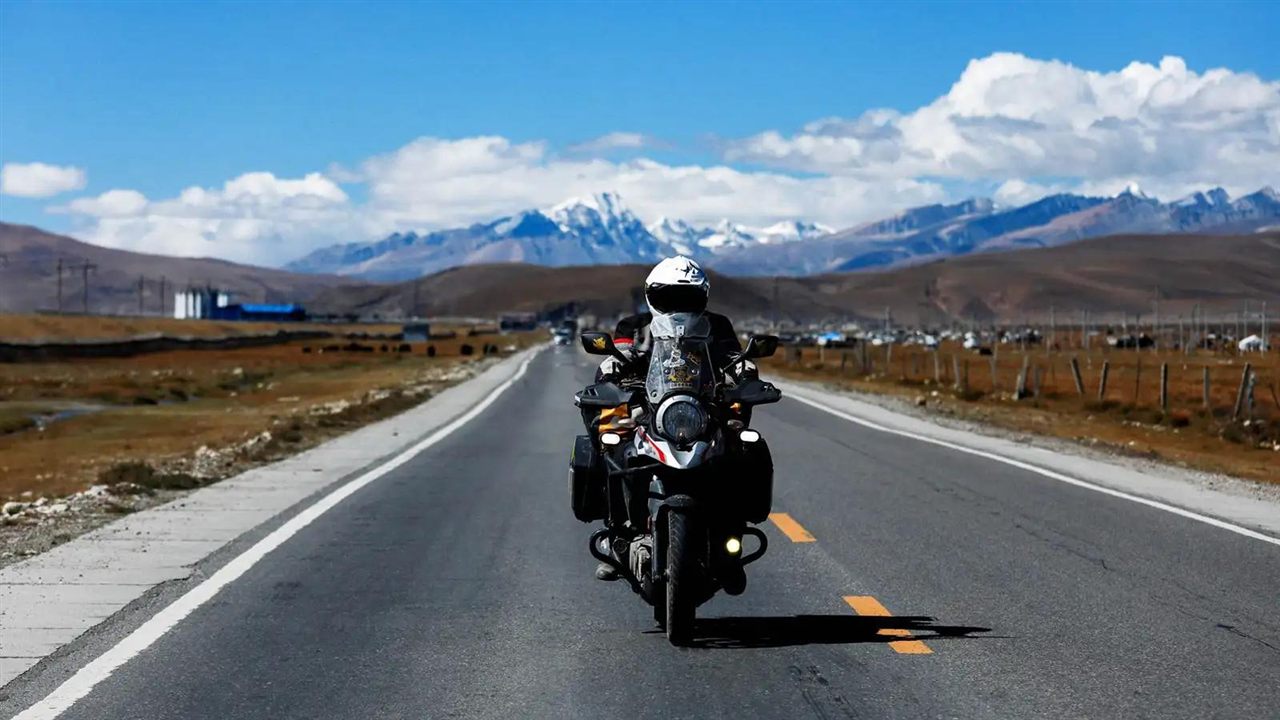
I still remember the crisp, 2°C morning I rolled across the 磨憨 border on my 2017 Thai-registered Honda CB500X, its left-hand-drive layout taking me a full 20 minutes to adjust to after three weeks riding through northern Laos. I’d planned a tight 28-day loop up to Inner Mongolia, chasing autumn foliage before the first winter snow set in, and I’d scoffed at the travel agent’s note suggesting I add 3 extra buffer days for weather delays. “I ride in the Scottish Highlands every winter,” I’d told them over a video call, tapping my waterproof riding gloves on the desk. “I can handle a bit of snow.”
Two weeks later, I was stuck in a tiny roadhouse outside Hohhot, watching 12cm of fresh snow bury the road ahead, my tight itinerary completely unraveled. That mistake taught me a hard lesson: motorcycle entry into China for northern winter rides isn’t just about clearing customs—it’s about building flexibility into your schedule that matches the region’s famously unpredictable weather, especially when you’re riding on a motorcycle temporary plate China that has a fixed 3-month validity window.
Most riders who come for a China motorcycle road trip focus on the paperwork first, and that’s smart. But northern China’s winter snow doesn’t care how neatly you’ve filed your route. High passes between Inner Mongolia and Gansu can close without 12 hours’ notice, and even major highways can grind to a halt when wind drifts block the carriageway. Rushing to stick to a rigid schedule when roads are slippery is how you end up in a ditch, or stuck somewhere you never planned to stay.
Sorting Your Entry Paperwork Before You Even Think About Snow
Before you start mapping buffer days, you need to get the core entry process sorted, because you can’t ride a single kilometre on Chinese roads without the right documentation. I learned early on that foreign motorcycle temporary entry China doesn’t work the way it does in Southeast Asia—you can’t just roll up to a border and declare your bike on your own. A qualified travel agency has to act as your guarantor, because individual travellers have no standing to clear customs on their own. The agency has to hold a RMB 1.6 million tourism quality deposit and three years of operation to even handle this work, so you know you’re working with a regulated partner.
When I went through Mohan border motorcycle customs clearance for my CB500X, the total service fee for entry was RMB 5,500 (Laos-registered vehicles pay RMB 4,000, for context). That fee covered everything: customs declaration, immigration formalities, my Temporary China Licence, the temporary plate, exit clearance, route filing, and on-site assistance at the port. It didn’t matter that I was staying 28 days, not 7—the fee is flat, no per-day charges, which is a huge relief if you end up stuck somewhere longer than planned.
Quick note on ports: the four land entry points for foreign vehicles are 磨憨 (China-Laos), 霍尔果斯 (China-Kazakhstan), 吉隆 (China-Nepal), and 二连浩特 (China-Mongolia). All accept left- and right-hand-drive vehicles, same fees, no surcharges. If you’re coming from Kazakhstan, entry at 霍尔果斯 costs RMB 6,000–9,000; if you’re doing a cross-through entry (in at 霍尔果斯, out at 磨憨 or reverse), the full package is RMB 8,000. For northern trips, 二连浩特 entry is RMB 8,500, which is what I’d use if I was riding in from Mongolia next time.
Two non-negotiable bits of cash you need to plan for first: the RMB 10,000 customs deposit, paid into the agency’s corporate account (never a personal account) at least 3 days before you enter. If it’s late, your declaration gets cancelled and the service fee isn’t refunded. And mandatory compulsory traffic insurance—no insurance, no temporary plate, full stop. The agency arranges it before entry, you pay the actual cost. Commercial third-party cover starting at RMB 500,000 is optional, but I’d recommend it for winter riding, when skids and minor scrapes are far more likely.
Oh, and don’t even think about bringing your International Driving Permit—China doesn’t recognise it. The agency arranges your China temporary driving licence as part of the package, and that’s the only document you need to ride legally. The temporary plate itself is valid for 3 months, full stop. There’s no extension, no renewal, so all your planning has to fit inside that window.
Building Snow Buffers Into Your Cross-Province Itinerary
Now for the part I messed up that first trip. When I got stuck outside Hohhot, I’d only allocated 1 buffer day for the entire 28-day ride, thinking I’d be fine as long as I avoided the high Tibetan passes. That was stupid. Northern China’s winter snow hits at lower elevations than you’d expect, especially between October and March.
Here’s the system I use now, after three more winter rides up through Inner Mongolia and Gansu:
- Add 2 buffer days per 10 riding days in northern provinces. Not at the end of the trip—scatter them along your route, so you can pull into a small town and wait out a snowfall without derailing your whole schedule. I used to stack all my buffer time at the end, which meant if I got stuck early, I was already cutting into my exit deadline.
- Plan alternate routes around high passes. The section between Baotou and Yinchuan, for example, has a 1,800m pass that gets icy fast. I now map a longer, lower-altitude detour via the G6 highway that adds 40km but rarely closes in snow. The extra fuel cost is worth not being stuck for 12 hours.
- Stick to your filed route. The agency files your planned route with customs, and you can’t just veer off into restricted border areas. Some border zones in Xinjiang and Gansu are off limits to foreigners, and the new Minfeng no-man’s-land highway is closed entirely. If you need to detour because of snow, let the agency know—they can adjust the filing remotely, and they’ll provide supporting documents if you get stopped at a checkpoint. No escort or lead vehicle is required, which is a relief when you’re riding solo.
I also learned to check the local road authority updates every morning before I ride. On that fateful Hohhot trip, I’d ignored a post the night before saying the highway ahead was closed, because I thought “it’s just a dusting.” It wasn’t. By the time I got to the roadblock, ploughs hadn’t been through for 6 hours, and the only option was to turn back 30km to the nearest town. That ate up 2 full days of my schedule, and I had to rush the rest of the ride to make my exit deadline at 磨憨, riding on icy tarmac far longer than I should have.
One more thing: if you’re planning to head into Tibet, you need a full-time guide and a Tibet permit, full stop. The legal highways in are G109, G318, and G214, but those high passes get snowed in constantly in winter. If you’re coming from Xinjiang, you can’t take the direct route to Tibet—you have to detour via Golmud on G109, because the G219 sections at Dahongliutan and the Kashgar/Yecheng to Ritu stretch are closed to foreigners anyway. Build extra buffer time for that detour, too, because G109 can get icy even in October.
Staying On Schedule To Hit Your Exit Window
The worst thing you can do with a temporary plate is overstay it. When you exit, your RMB 10,000 deposit gets fully refunded in 3–5 working days, but only if you exit on time, have no outstanding traffic fines, and no unpaid fees or unfinished customs matters. That’s why those snow buffers aren’t just for comfort—they’re for making sure you don’t get stuck and miss your exit deadline.
On my last winter ride, I hit a snowfall outside Datong that closed the expressway for 8 hours. Because I’d built an extra buffer day into that leg, I didn’t panic. I found a small hotel, drank too much hot tea, and waited for the ploughs to clear the road. I still made it to my exit port on time, no fines, no stress, and got my deposit refunded without any hassle.
It’s easy to get caught up in the excitement of a China motorcycle road trip—the vast landscapes, the amazing food, the novelty of riding on the right side of the road after years of UK riding. But northern China’s winter weather doesn’t care about your excitement. Build the buffers, get your paperwork sorted early, and don’t be stubborn like I was that first trip. The ride will be far better for it.