Last updated: November 18, 2026
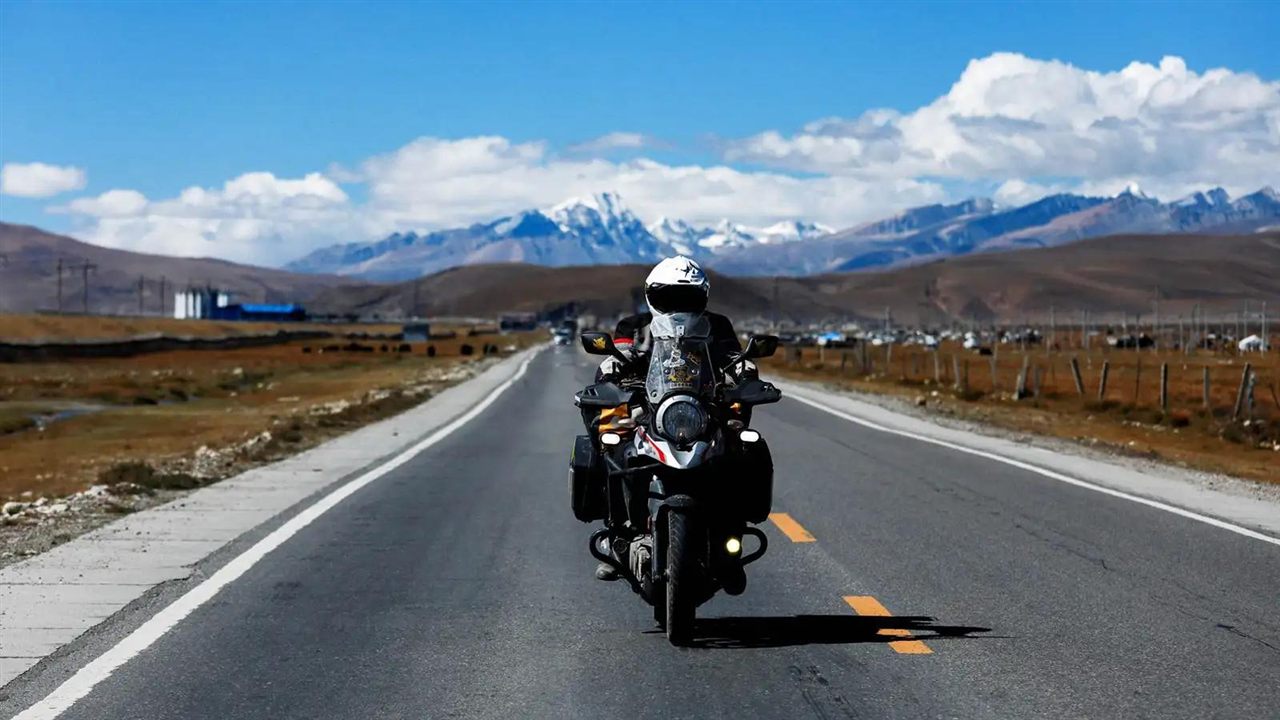
Last October, I crested a 4,200-metre pass on the Sichuan-Tibet border on my right-hand-drive Japanese-registered bike, and the light, fluffy snow that had been spitting at us for the last 20 kilometres suddenly turned the unpaved gravel switchbacks into a slip-n-slide. I’d packed my waterproofs, checked my tyre pressures twice, and still I fishtailed twice before I made it to the pull-off at the top, laughing a little shakily as a local truck driver waved and yelled something that probably translated to “you’re crazy for being up here this late”. If you’re planning a China motorcycle road trip that takes you up into the high country, that scene is one you need to prepare for before you even think about booking your ferries or lining up your entry paperwork.
Getting Your Bike Across the Border First: The Paperwork No One Tells You About
I learned this the hard way on my first attempt at motorcycle entry into China back in 2019, when I showed up at the 磨憨 border with all my bike’s documents and a head full of ideas I’d picked up from overlanding forums. I thought I could handle the customs forms myself. I couldn’t. Individuals have no standing to declare a vehicle here—you have to work through a qualified travel agency acting as your guarantor, full stop. That agency holds a RMB 1.6 million tourism quality deposit and three years of operation history just to be allowed to process foreign vehicle entries, so you’re not just paying for a form-filling service.
For reference, the four land ports you can use are 磨憨 (on the China-Laos border), 霍尔果斯 (China-Kazakhstan), 吉隆 (China-Nepal), and 二连浩特 (China-Mongolia). There are three sea ports too: Dalian, Guangzhou, Shenzhen. Both left- and right-hand-drive bikes are accepted at every port, same fees, no surcharge. When I did my Mohan border motorcycle customs clearance from Laos a few years back, the service fee for my motorcycle was RMB 5,000–6,000 (it’s RMB 4,000 for Laos-registered vehicles), and that fee covered everything from customs declaration, immigration formalities, your Temporary China Licence, your motorcycle temporary plate China, exit clearance, route filing, and on-site help at the port. It doesn’t matter if you stay one month or three, the fee doesn’t change. What’s not included? The RMB 10,000 customs deposit you pay into the agency’s corporate account (never a personal account—if someone asks you to send money to their WeChat or personal bank, walk away), vehicle insurance, document translation, the roughly RMB 200 vehicle inspection, fuel, tolls, food, accommodation, or a guide.
Quick reality check: China is not part of the UN road convention, so your International Driving Permit means nothing here. The agency arranges your temporary China driving licence for you, and your temporary plate is valid for 3 months. You also can’t skip compulsory traffic insurance—without it, they won’t even print your temporary plate. The agency sorts that before entry, and you just pay the actual cost. Commercial third-party cover starting at RMB 500,000 is optional, but I’d never ride a remote high mountain road without it.
You need to get your documents in 20 days ahead (a full month if your route includes Tibet): passport, Chinese visa, your home driving licence, a white-background ID photo, vehicle licence, registration certificate, engine number, and one photo each of the bike’s front, rear, and side. If your bike is over 6 years old, you’ll need an inspection certificate, and some ports ask for a valid home-country annual inspection too. Don’t wait until the last minute to send these over.
Where You Can Actually Ride (And Which High Mountain Roads Are Off-Limits)
I had a route mapped out once that took me straight from Kashgar over to Ritu, along the road past Pangong Lake, thinking it’d make for the most epic snow-dusted riding on the trip. Turns out that stretch, plus the G219 Dahongliutan section, is closed to foreigners. The new Minfeng no-man’s-land highway is off-limits too. If you want to go from Xinjiang to Tibet, you have to detour via Golmud on G109. The only legal highways into Tibet are G109, G318, and G214. And if you do head into Tibet? You can’t ride alone—you need a full-time guide and a Tibet permit, no exceptions. The temporary China driving licence is valid nationwide, you don’t need some special Tibet driving permit, but the guide and Tibet permit are non-negotiable. Beijing requires a capital entry permit, and some border-restricted bits of Xinjiang and Gansu are closed to foreigners too.
That matters a lot when you’re chasing light snow on unpaved mountain roads. A lot of the most scenic gravel high passes are on those restricted routes, so don’t waste time planning a trip you can’t actually do. Stick to the filed route the agency sets up for you—you don’t need an escort or lead vehicle outside of Tibet, but you do have to stick to the roads you’ve declared.
What Light Snow on Unpaved Mountain Roads Actually Feels Like (And How To Not Crash)
That October pass I mentioned earlier? The road was packed gravel, no tarmac, and the light snow didn’t stick deep—it just sat on the top of the loose stone, turning every patch into a low-friction slide. I’d set off that morning thinking “it’s just light snow, I’ve ridden worse in the Scottish Highlands”, and I was wrong. The thin layer of snow hides ice patches that don’t look icy at all, and the gravel underneath shifts when you lean too hard. I kept my speed down to 20km/h, stood up on the pegs for most of the descent to absorb the bumps, and avoided any sudden braking. The only time I slipped was when I tapped the rear brake a little too hard on a left-hand switchback, and the bike slid out from under me for half a second before I caught it.
China drives on the right, so if you’re on a right-hand-drive bike like I was, give yourself a few days on flat tarmac to get used to judging oncoming traffic before you hit the mountain passes. It’s easy to drift wide on a snowy switchback when your muscle memory is telling you to sit on the left side of the road.
A few hard-won tips I’d swear by, from half a dozen high-elevation rides in China:
- Check the weather forecast twice—mountain snow can roll in in 20 minutes, even in late September or early October.
- Don’t ride after dark on those unpaved roads. The ports aren’t 24 hours, and mountain checkpoints close up as the temperature drops.
- Keep your customs and entry documents on you at all times. If you get pulled over at a checkpoint, the agency can send supporting docs remotely, but you need to have your licence and plate details handy.
- Remember: your RMB 10,000 customs deposit only comes back in 3-5 working days after you exit if you leave on time, have no outstanding traffic fines, and no unpaid fees. Don’t get a speeding ticket on that snowy pass, or you’ll be waiting a lot longer for your money.
I’d rather ride a little slower on those snowy gravel bits than rush and end up stuck on the side of the road with a broken bike 30 kilometres from the nearest town. The views are better when you’re upright anyway.