Last updated: November 18, 2026
Why Packing Smart Matters More Than Loading Up For Your China Motorcycle Road Trip
I’ve lost count of the number of times I’ve watched riders pull up to the 磨憨 (Mohan) border crossing in mid-November, panniers crammed so full of thick, bulky winter gear they can barely swing a leg over their bike. Last year, I met a Belgian rider on a KTM 1290 Super Adventure, his right-hand-drive machine stacked high with three heavy one-piece textile suits, two pairs of thick leather gauntlets, and a stack of fleece midlayers that added nearly 30kg to his load. By the time we reached the first climb out of Yunnan into the mountains, he was sweating through his base layer so badly his gloves were damp, and he had no room left to stow the layers he’d peeled off. A cold-season China motorcycle road trip doesn’t require you to haul half your wardrobe across the border — it requires you to pack layers that work as hard as you do, without overloading your bike before you even clear customs.
When you’re planning motorcycle entry into China, the last thing you want is to be sorting overflowing luggage at the border while officials wait to process your paperwork. The good news? You don’t need to choose between staying warm and keeping your bike manageable. I’ve done this route three times now, starting from Laos through Mohan, riding north up to Chengdu and west to the edges of the Tibetan plateau, and I’ve refined my packing system to cut 25kg of unnecessary bulk from my load, while still being warm enough for -10C dawn starts on high passes.
My Layered Gear System That Fits In Two Panniers And A Tail Bag
Let’s be clear: I’m not the kind of rider who rides 1000km a day on a fixed schedule. I stop for tea, I take wrong turns, I linger at viewpoints when the light is good. So my packing system is built for flexibility, not speed. The key is ditching the heavy, insulated one-piece suits most riders bring for cold weather, and building a modular layering system that weighs less, dries faster, and lets you adjust to temperature shifts without stopping to change your whole outfit.
Base Layers: Skip The Cotton, Go Thin And Quick-Dry
On my first trip through Yunnan, I made the mistake of bringing thick cotton thermal tops. By the time I’d ridden 40 minutes uphill in the midday sun, I was soaked through, and when the temperature dropped 15C as we climbed to 3000m, I was shivering so hard I could barely hold the handlebars. Now I bring two thin, merino-blend base layers, no thick thermal knits. They weigh almost nothing, they don’t hold sweat, and they’re warm enough even when damp. I tuck one in each pannier, so if I need to wash one at a guesthouse, I have a spare. I never bring more than two — drying time is fast enough that you don’t need a whole rotation.
Mid Layers: One Versatile Fleece, One Puffer Vest, No Extras
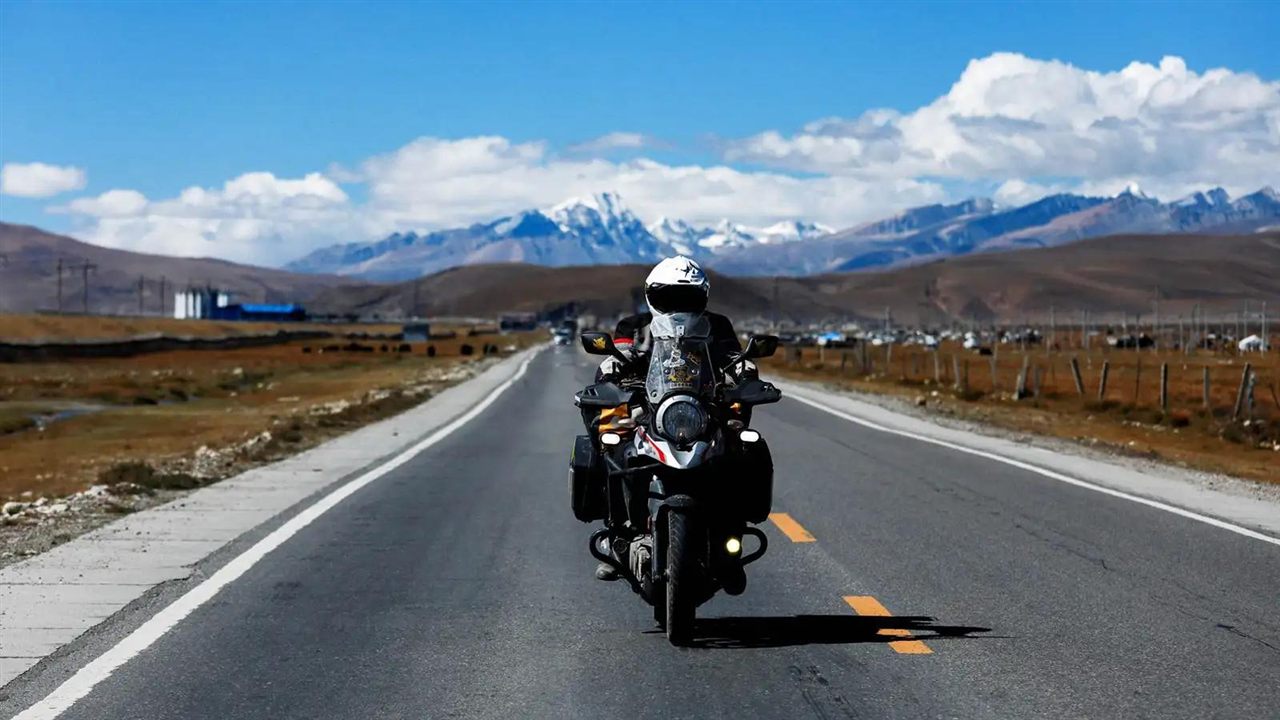
This is where most riders overpack. I used to bring three different fleece jackets, a thick woollen jumper, and a down parka, and I ended up only wearing the same two items every single day. Now I travel with a single lightweight, wind-resistant fleece (the kind that packs down to the size of a grapefruit) and a thin down vest. That’s it. The fleece works as an extra layer under my jacket on cold mornings, or on its own when I’m stopped at a roadside restaurant eating noodles. The vest adds core warmth without bulk, and it folds up small enough to slip into my tail bag when I don’t need it. I’ve ridden through -5C mornings on the G109 with just these two mid layers, paired with my outer shell, and I’ve been perfectly comfortable.
Outer Shell: Your Waterproof, Windproof Jacket And Trousers Are Non-Negotiable
Don’t waste space on heavy, insulated textile gear. I use a lightweight, three-layer waterproof riding shell, no built-in armour bulk, and I tuck thin, CE-certified armour pads into the pockets. It’s windproof, it sheds rain (and the occasional road spray from a lorry overtaking you on the mountain passes), and it packs down small when the weather warms up. I don’t bring a separate rain suit — this shell does double duty. The only extra outer layer I bring is a thin, packable neck gaiter, which saves you from frozen windburn on your face when you’re riding into a headwind at 4000m. It weighs 50g. It’s the single most useful item I own for cold rides.
Hands, Feet, Head: The Small Items That Make All The Difference
Most riders stuff three or four pairs of gloves into their luggage, and end up using the same thin waterproof pair every day. I bring two pairs: a thin, breathable summer glove for warm afternoons, and a pair of thin, windproof winter glove liners that fit under my summer gloves for cold mornings. No thick, bulky gauntlets. No separate winter boots. I wear my usual perforated riding boots, and bring two pairs of thin merino socks, plus a pair of thick woollen socks for when I stop riding for the day. That’s all. I’ve ridden through frosty mornings where the tarmac was crusted with ice at the edges, and this setup kept my hands and feet warm enough. The trick is keeping layers thin, not thick — thick, bulky items trap less air, and they take up twice as much space.
How I Cut Luggage Bulk Without Sacrificing Warmth
Last year, I rode with a group of three other riders from Kunming to Shangri-La, and we all started the trip with different luggage setups. One rider had 42kg of luggage on his bike, another had 28kg, and I had just 11kg total, including all my camping gear (which I rarely used, but brought just in case). The difference? I got rid of every item I didn’t use on my previous trip. I left the heavy insulated suit at home. I left the second pair of waterproof overtrousers at home. I left the thick woollen jumper I’d only worn once on my last trip at home.
Here’s the rule I stick to: if you haven’t used the item on your last two long trips, leave it at home. You don’t need it. The temperature shifts in China’s mountain regions are dramatic — you can start the day at 15C in the valley, ride up to a pass where it’s -5C, and be back down to 20C by lunchtime. A modular layering system lets you adjust on the move, without carrying a huge stack of heavy, single-purpose gear.
The Practical Entry Basics You Need To Sort Before You Pack Your Bike
All this packing advice is useless if you haven’t sorted your entry paperwork first. When you’re arranging foreign motorcycle temporary entry into China, you can’t clear customs on your own — you’ll need to work with a qualified travel agency acting as your guarantor, as individual riders have no standing to submit the required motorcycle customs declaration China authorities require. I’ve used this system for three crossings now: once via 磨憨 (Mohan) coming from Laos, once via 霍尔果斯 (Khorgos) coming from Kazakhstan, and once via 吉隆 (Gyirong) coming from Nepal. The process is consistent across all four land ports, and both left- and right-hand-drive bikes are accepted at every port, with no surcharge for either configuration.
For reference, the service fee for Mohan entry is RMB 5,000-6,000 (RMB 4,000 for Laos-registered vehicles), which covers customs declaration, immigration formalities, your Temporary China Licence, your motorcycle temporary plate China, exit clearance, route filing, and on-site port assistance. The temporary plate is valid for 3 months, and the fee is the same whether you stay one month or three. With the agency’s guarantee, the customs deposit you pay is only RMB 10,000, paid into the company’s corporate account (never a personal account), and fully refunded 3-5 working days after you exit, as long as you exit on time, have no outstanding traffic fines, and no unfinished customs matters. Compulsory traffic insurance is mandatory — without it, you won’t get your temporary plate issued, and the agency arranges this purchase before entry, with you covering the actual cost.
Don’t forget: China doesn’t recognise the International Driving Permit, so the agency will arrange your temporary driving licence for you, which is valid nationwide. If you’re planning to ride into Tibet, you’ll need a full-time guide and a Tibet permit, and you’ll need to submit your documents a month in advance, rather than the standard 20 days for other routes. The legal highways into Tibet are G109, G318, and G214 — some sections of the Xinjiang-Tibet route are closed to foreigners, so plan your route carefully before you load up your panniers.
At the end of the day, packing for a cold-season China ride isn’t about how much gear you can bring. It’s about bringing the right gear, so you can focus on the road, not on your overloaded bike. I’d rather ride light, stop for extra noodles at a roadside stall, and enjoy the mountains, than haul 30kg of unused winter gear across the border just to be “prepared”.