Last updated: November 16, 2026
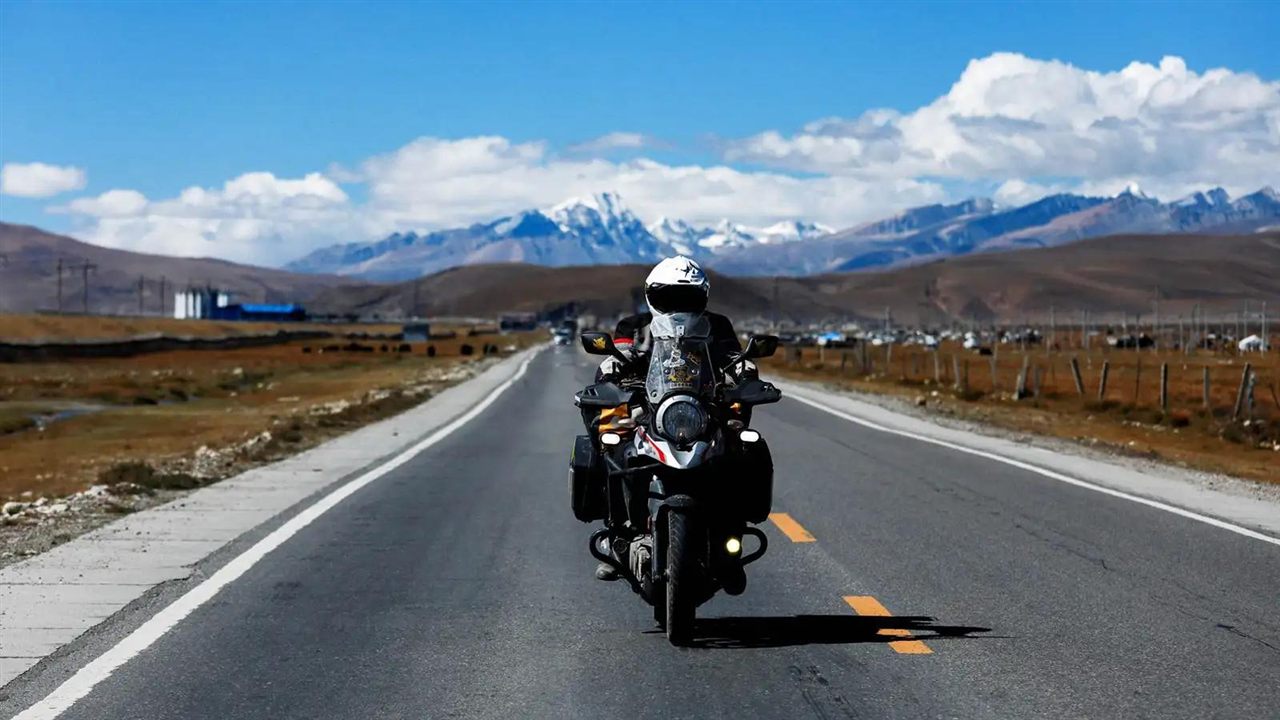
I was halfway through a three-week China motorcycle road trip last October, perched on the edge of a plastic chair in a teahouse in a small Tibetan county town, when I patted my jacket pocket for the third time and felt cold dread. The little laminated Temporary China Licence, paired with my motorcycle temporary plate China paperwork, was gone. I’d ridden 400km that day from Lhasa, the air thin enough that my ears popped every time I crested a pass, and I’d stopped only to take photos of the prayer flags strung across the G318 tarmac. That was the only window I’d taken my gloves off. It must have slipped out when I leaned against a stone wall to adjust my camera strap.
If you’re planning foreign motorcycle temporary entry China, or navigating Mohan border motorcycle customs clearance to kick off your overland adventure, this is the nightmare scenario no one warns you about. Small Tibetan county towns don’t have motor vehicle offices on every corner. The nearest one was three hours’ drive away. And I was on a tight schedule to make it to the next checkpoint before dark.
First: Don’t Panic, Don’t Wander Off to Look for It Alone
My first instinct was to jump back on my bike and retrace every kilometre of the day’s ride. But the teahouse owner, a woman who’d lived in the town for 20 years pulling double shifts as a part-time village guide, pulled me back by the sleeve. “You’ll ride until dark and find nothing,” she said, pouring me another cup of butter tea that tasted like salty sheep fat. “First call the people who sorted your entry. They know the rules better than any local cop here.”
She was right. When I’d sorted my motorcycle entry into China months earlier, I’d gone through a qualified travel agency acting as guarantor — the only legal way to handle motorcycle customs declaration China, since individual travellers can’t declare vehicles on their own. The service fee for my entry out of 磨憨 had covered everything: customs declaration, immigration formalities, my temporary driving licence, the temporary plate, exit clearance, route filing, and on-site port assistance. I’d paid RMB 5,000 for the entry, plus the RMB 10,000 customs deposit that goes straight to the company’s corporate account, not a personal wallet, and is fully refunded 3-5 working days after you exit via the same route. I’d also paid the actual cost of mandatory compulsory traffic insurance before entry — no temporary plate is issued without it, and I’d skipped the optional RMB 500,000 commercial third-party cover to save cash, a call I was now regretting a little.
I fished out my phone, squinting at the screen in the fading plateau light, and pulled up the 24/7 support line the agency had given me at the port. I expected a long hold, a runaround, a lecture about being careless. Instead, someone picked up in two rings.
What the Agency Can (and Can’t) Do Remotely
I explained the situation: lost the physical Temporary China Licence, small town, no local vehicle office, riding a Thai-registered right-hand-drive bike (accepted at all ports, same fees as left-hand drive, no surcharge, I’d checked) that I’d ridden across the border at 磨憨 three weeks earlier. My temporary plate was valid for 3 months, so I still had 6 weeks left on the paperwork — no need to sort out plate issues, since the plate itself was still bolted securely to my rear rack, untouched.
The support agent walked me through the steps slowly, no condescension. They confirmed two key things immediately: first, my lost physical licence copy didn’t invalidate my temporary plate, which was still legally valid for its full 3-month term. Second, they could send digital supporting documents to the local traffic checkpoint within 20 minutes, so I wouldn’t be turned away or fined if I got stopped while waiting for a replacement.
Here’s what they couldn’t do, and don’t let anyone tell you otherwise: they couldn’t magic up a new physical laminated copy in the middle of a Tibetan county town. The replacement document had to be processed at the nearest motor vehicle management office, which was three hours away in the prefecture seat. They also reminded me that China doesn’t recognise International Driving Permits — my temporary licence was the only valid driving document I had, so losing it meant I couldn’t legally ride unsupervised until I had a replacement, even though my temporary plate was still valid.
They also walked me through the refund conditions for my customs deposit, just to make sure I didn’t accidentally mess that up: I had to exit on time with no overstay, no outstanding traffic fines, no unpaid fees or unfinished customs matters. Losing a document wasn’t a fine on its own, but riding without a valid licence would be, and that would hold up my refund. I nodded along, scribbling notes on a napkin while the teahouse owner refilled my tea.
The Next 48 Hours: What I Actually Did
I didn’t ride back up the mountain to look for the lost licence. The teahouse owner put me in touch with a local driver who was heading to the prefecture seat the next morning for RMB 300, and I left my bike locked in the teahouse courtyard, chained to a water buffalo trough, with the owner keeping an eye on it. I didn’t fancy leaving it unattended on the street in a town where most vehicles were heavy 4x4s kicking up dust.
Along the way, the support agent sent me a digital copy of my declaration paperwork, my route filing confirmation, and a note explaining the lost document situation, addressed to the motor vehicle office. When I got to the office, the staff didn’t bat an eye — they see foreign overlanders passing through every week, especially during autumn road trip season. They pulled up my entry record in the system, cross-checked my passport and my original visa (I’d gotten a 60-day tourist visa via an invitation letter the agency had helped with, since the standard 30-day visa-free entry wouldn’t have been long enough for my route), and printed me a replacement physical Temporary China Licence on the spot. The only extra cost was the RMB 200 vehicle inspection fee I’d already budgeted for, since my bike was 4 years old — no extra processing charges, no hidden fees.
By mid-afternoon the next day, I was heading back down the mountain to the teahouse, replacement licence tucked into a waterproof plastic wallet I’d bought from a roadside shop. I never did find the original laminated copy. I’m pretty sure it’s still sitting on that stone wall, flapping in the wind above the G318, a tiny warning to the next overlander who stops to take photos.
Hard-Won Tips for Anyone Riding Through Tibet
Let’s get the obvious stuff out of the way first. When you’re in Tibet, you can’t just ride wherever you want — legal highways are G109, G318, and G214 only, and you must have a full-time guide and a Tibet permit for the whole trip. I’d already sorted that before I left Lhasa, so that wasn’t an issue. But there are a few small, easy mistakes that trip people up, especially when they’re tired from long days in the saddle.
- Stick your Temporary China Licence and your motorcycle temporary plate China paperwork in a waterproof, zipped pouch that’s bolted to your bike, not just in your jacket pocket. I now carry three copies: one on the bike, one in my riding bag, one digital copy saved offline on my phone.
- Don’t skip the mandatory route filing. The agency sorted mine when I entered, but if you deviate from the filed route without letting them know, checkpoints will flag you down, and that’s a hassle you don’t need in a small town.
- Remember the closed sections: G219 at the Dahongliutan stretch, the Kashgar/Yecheng to Ritu (Pangong Lake) road, and the new Minfeng no-man’s-land highway are all off-limits to foreigners. If you’re heading from Xinjiang to Tibet, you have to detour via Golmud on G109 — no shortcuts.
- If you’re riding a right-hand-drive bike, take it slow on the plateau. China drives on the right, and the thin air makes reaction times slower. I’d gotten used to it after three weeks, but I still caught myself drifting left on empty mountain roads a few times.
The best part? When I got back to my bike, the teahouse owner had left a plate of tsampa and a jar of pickles next to it, with a note in broken English: “No more losing papers.” I laughed, locked the new licence in its pouch, and rode off toward the next pass, the wind whipping at my sleeves. It was a stupid mistake, losing that piece of paper. But it could have been a lot worse. If you’re planning a China motorcycle road trip, the most important thing isn’t a fancy bike or a perfect route — it’s having a team on the other end of the line who knows how to fix the messes you make when you’re tired, cold, and distracted by the view.