Last updated: November 16, 2026
I’ve ridden my own right-hand-drive BMW R1200GS through the 磨憨 (Mohan) border crossing from Laos twice now, and on my last trip I needed to get the bike from Lhasa to Xining fast — the G109 detour between Xinjiang and Tibet was the only legal route, and the high passes in late October were already dusted with snow. I didn’t fancy 1,900km of frozen tarmac on a loaded bike, so I booked a hard sleeper on the overnight train, and packed the bike into the rail freight hold alongside it. If you’re planning a China motorcycle road trip that skips that long plateau stretch, this is how to pull it off without invalidating your paperwork.
First: Your Motorcycle Entry into China Paperwork Has to Be Sorted Before You Even Book the Train
I learned early on that you can’t just ride a foreign bike across a Chinese border on your own. When I first rolled up to Mohan back in 2023, I tried to ask the customs desk directly how to declare my bike, and the officer just pointed me to the rule: individuals have no standing to declare a foreign vehicle. You have to work with a qualified travel agency acting as guarantor — one that holds the required RMB 1.6 million tourism quality deposit and three years of operation doing this exact work. No agency, no entry.
That agency handles all the bits that feel like black magic when you’re new: customs declaration, immigration formalities, arranging your China temporary driving licence, issuing your motorcycle temporary plate China, exit clearance, route filing, and on-site help at the port. The service fee for Mohan entry sits between RMB 5,000 and 6,000 for most bikes, or RMB 4,000 for Laos-registered vehicles — and it covers you whether you stay one month or three, no daily charges. It doesn’t cover the RMB 10,000 customs deposit you pay directly to the agency’s corporate account (never a personal account, ever), vehicle insurance, document translation, the roughly RMB 200 vehicle inspection, fuel, tolls, food, accommodation, or any guide fees.
Quick check: when you’re doing motorcycle customs declaration China, the deposit has to land in that corporate account three full days before entry. If it’s late, your declaration gets cancelled and the service fee is non-refundable. I missed this window on my first trip and had to wait three extra days in Luang Prabang — not fun, even with good coffee.
That temporary plate you get is valid for three months only. It doesn’t get renewed, extended, or updated mid-trip — plan your route around that window, not the other way round. China doesn’t recognise the International Driving Permit, either; the temporary driving licence the agency arranges is the only valid document for riding, and it works nationwide, including Tibet, as long as you meet Tibet’s separate guide and permit rules.
Why the Lhasa–Xining Train Is the Only Sensible Move for This Stretch
Let’s get the riding rules straight first, because this is non-negotiable (no, really — the checkpoints on this route are strict). If you’re riding in Tibet, you need a full-time guide and a Tibet permit, full stop. The China temporary driving licence is valid here, you don’t need a separate Tibet licence, but the guide requirement is real. I rode G318 from Chengdu to Lhasa with a guide last spring, and it saved me from two wrong turns into restricted border zones near the Nepali border.
Now, the route rules: the only legal highways into Tibet are G109, G318, and G214. Some border-restricted areas in Xinjiang and Gansu are off limits, the G219 Dahongliutan section is closed to foreigners, the Kashgar/Yecheng to Ritu (Pangong Lake) stretch is shut, and the new Minfeng no-man’s-land highway is off-limits too. If you want to get from Xinjiang to Tibet, you have to detour via Golmud on G109.
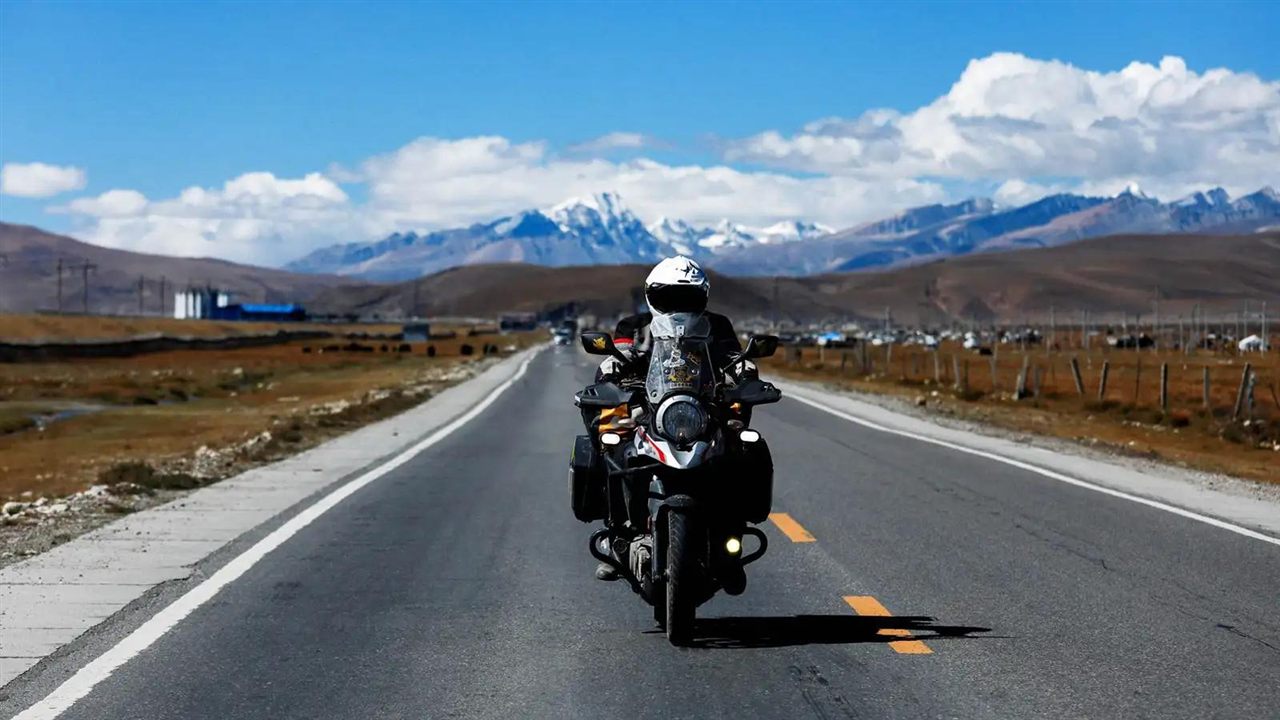
That G109 stretch from Lhasa to Xining? It’s 1,900km of high-altitude tarmac, crossing passes over 5,000m, with wind that can knock a loaded adventure bike sideways. I did it in May, when the ice was just melting, and I spent two nights in tiny roadside towns with barely heated rooms. When I needed to do it again in October, with temperatures forecast to drop to -10C at the passes, the train made sense.
How the Bike Gets Loaded, With Your Active Temporary Plate Still Fitted
You don’t need to remove your motorcycle temporary plate China to put the bike on the train. I was worried about this at first — I thought rail staff would make me strip all identification off the bike — but the freight staff at Lhasa station just checked that the plate was securely fixed, matched the VIN to the paperwork I carried, and rolled it onto the flat freight wagon secured with ratchet straps. The plate stays on. It’s an active, legally issued Temporary China Licence plate, and the agency’s route filing covers the rail transfer between these two points.
You’ll need to bring all your documents with you on the train, not lock them in the bike’s panniers: your passport, Chinese visa, temporary driving licence, the plate registration slip, and the agency’s contact details for remote support at checkpoints. I kept mine in a waterproof neck pouch, because the train’s hard sleeper carriages get drafty and damp at altitude.
One thing I messed up on the first attempt: I tried to ride the bike into the freight yard myself, but the station staff wouldn’t let private vehicles into the secured loading area. You have to hand the bike over to the authorised freight handlers at the designated drop-off point — don’t try to cut corners here. It costs a small handling fee paid directly to the station, no hidden agency mark-up.
What You Don’t Have to Worry About
You don’t need an escort or lead vehicle for this train transfer, obviously — the only mandatory escort in the whole country is that full-time Tibet guide when you’re actually riding on Tibetan roads. You also don’t need to do any extra inspections when you pick the bike up in Xining, as long as you haven’t modified it, and you’ve kept the plate intact.
Remember: compulsory traffic insurance is mandatory, or you can’t get that temporary plate issued in the first place. The agency purchases it before entry, and you pay the actual cost — you don’t need to sort insurance at the station, or hunt for a desk at the border. Commercial third-party cover starting at RMB 500,000 is optional, but I always take it; potholes on the G109 can crack a wheel rim faster than you can react.
When you eventually exit the country, that RMB 10,000 customs deposit is fully refunded via the same route within 3-5 working days — as long as you exit on time, have no unpaid traffic fines, no outstanding fees, and no unfinished customs matters. If you overstay the 3-month plate validity, you won’t get that deposit back, and you’ll be stuck sorting out fines at the exit port. Don’t be that rider.
By the time I pulled the bike off the wagon in Xining, the sun was setting over the Qilian mountains, and the tarmac was dry, no ice. I’d covered the 1,900km stretch in 22 hours flat, slept in a proper bed on the train, and arrived ready to ride east on G6 without battling plateau wind chill. It’s not the most romantic way to cross the plateau, but it’s pragmatic — and that’s half the fun of a long China motorcycle road trip anyway.