Last updated: November 16, 2026
Last April, I rolled my 2018 Thai-registered Honda CB500X (right-hand drive) up to the 磨憨 (Mohan) border post, my panniers crammed with a 200W foldable solar panel, a beat-up 20L camping stove, and a dented aluminium dry box full of freeze-dried meals. I’d spent three weeks researching motorcycle entry into China, and I’d made the stupid mistake of assuming my camping gear would just slide through customs without a second thought. I was wrong.
The border officer tapped my declaration form, pointed at the empty “personal effects” section, and said, in slow, deliberate English: “You list the panel. You list the stove. Or you leave them here.” That 20-minute delay cost me my planned sunset stop in Xishuangbanna, but it taught me a lesson every rider heading to China’s remote western provinces needs to hear: getting your motorcycle temporary plate China and Temporary China Licence is only half the battle. Your camping gear, especially portable solar panels, needs to be declared properly, or you’ll be stuck hauling your kit back across the border before you even hit the G318.
Why Your Camping Gear Matters More for Western Provinces
Let’s be honest: most riders doing China motorcycle road trip stick to the eastern cities, where you can grab a hot meal and a hotel room at every exit. But if you’re heading west — to the grasslands of Qinghai, the empty stretches of Gansu, or the high passes of Sichuan — you’re going to rely on your camping kit. And customs knows that.
Last year, I met a German rider at a petrol station outside 霍尔果斯 (Khorgos) who’d tried to sneak a 300W solar panel under his sleeping bag. He told me the officer found it during a random inspection, and he had to pay a “storage fee” to leave it at the border for three weeks while he rode to Urumqi and back. He was furious, but honestly? It was avoidable. The rules for foreign motorcycle temporary entry China are clear: any item that could be used for commercial purposes (yes, even a solar panel) needs to be listed on your motorcycle customs declaration China form.
Here’s the thing: you can’t declare this stuff yourself. China requires all foreign vehicles to be declared through a qualified travel agency acting as guarantor — individuals have no standing to clear customs on their own. The agency has to meet strict requirements, including a RMB 1.6 million tourism quality deposit and three years of operation. That’s not a hoop to jump through; it’s the only way you’ll get your Temporary China Licence and motorcycle temporary plate China without a fight.
What You Actually Need to Declare (And What You Don’t)
I’ve had riders ask me if they need to declare their toothbrush. No. But here’s the line I’ve drawn from personal experience, after three border crossings (磨憨, 霍尔果斯, and 吉隆 (Gyirong)):
- Must declare: Portable solar panels (any wattage), camping stoves (gas or electric), portable power stations, rooftop tents, and any electronic gear worth more than RMB 1,000. I once forgot to list my 20Ah portable power station at 二连浩特 (Erenhot), and it took an hour of back-and-forth with the agency’s on-site staff to get it cleared.
- Don’t waste time declaring: Sleeping bags, pads, cutlery, freeze-dried meals, and your basic first-aid kit. As long as it’s clearly for personal use, the officers don’t care.
- Tricky middle ground: Gas canisters. I’ve had them waved through at 磨憨, and confiscated at 吉隆. My rule now: buy them in China once you’re inside. It’s not worth the hassle.
When you’re filling out the form, be specific. Don’t write “camping gear” — write “200W foldable portable solar panel, 1 unit; 20L portable camping stove, 1 unit; 10kg freeze-dried food, personal use only”. The more detail you give, the fewer questions you’ll get. I learned this after my first crossing, where I’d written “solar panel” and the officer asked me to prove it wasn’t for resale. A quick photo of it strapped to my panniers, pulled up on my phone, solved it in 30 seconds.
How the Declaration Process Actually Works (No, You Can’t Do It Alone)
Let’s walk through the 磨憨 border motorcycle customs clearance process, since that’s the one I know best. I arrived at 9am, already sweaty in the April heat, with my agency’s on-site waiting for me.
First, they checked my documents: passport, Chinese visa, driving licence, white-background ID photo, vehicle licence, registration certificate, engine number, and photos of my bike’s front, rear, and side. My bike was 5 years old, so I didn’t need an inspection certificate, but the agency told me vehicles over 6 years old need one — plus a home-country annual inspection certificate at some ports. They handle all the Chinese translation for non-Chinese documents, which is a relief, because my Thai vehicle licence was a mess of script I could barely read.
Next, the customs declaration. The agency’s staff pulled up my form on their laptop, and I walked them through every item I’d brought. We listed the solar panel, the stove, the power station, even my portable water filter. Then they submitted it to customs. While we waited, they sorted my compulsory traffic insurance — without it, you can’t get a motorcycle temporary plate China. They purchase it before entry, and I just paid the actual cost. I also opted for commercial third-party cover for RMB 500,000, which I’d recommend for anyone heading to remote areas where traffic accidents can mean long waits for help.
The customs deposit was RMB 10,000 — that’s all I pay, thanks to the agency’s guarantee. I’d transferred it to their corporate account three days before entry, which is mandatory; if you’re late, the declaration gets cancelled and the service fee isn’t refunded. I was nervous about losing it, but the agency explained it’s fully refunded 3-5 working days after I exit, as long as I leave on time, have no outstanding traffic fines, and no unpaid fees.
Then came the part everyone dreads: the vehicle inspection. It cost about RMB 200, and it was quick — they checked the engine number, the VIN, and made sure the bike wasn’t modified in a way that didn’t match my registration. Ten minutes later, I had my Temporary China Licence and my motorcycle temporary plate China. The plate is valid for 3 months, which was enough for my 8-week trip west.
The service fee for 磨憨 entry was RMB 5,500 — that’s for Laos-registered vehicles, which mine was. It included everything: customs declaration, immigration formalities, temporary driving licence, temporary plate, exit clearance, route filing, and on-site port assistance. It didn’t include the customs deposit, insurance, translation, inspection, fuel, tolls, food, or accommodation. And it didn’t matter if I stayed 2 weeks or 3 months; the fee is the same, no daily charges.
Tips for Western Provinces That No One Tells You
Last summer, I rode from 磨憨 up to Chengdu, then west on the G318 to 拉萨. I learned a few things the hard way that I wish someone had told me before I left.
First, your route is filed. You can’t just decide to take a random side road. When I tried to detour to a remote lake off the G214, a police checkpoint stopped me and asked for my route filing. The agency’s staff sent over the supporting documents remotely, and I was on my way in 10 minutes. No escort, no lead vehicle — just the paperwork. But for Tibet, you need a full-time guide and a Tibet permit. Your Temporary China Licence is valid nationwide, but Tibet has its own rules, and I don’t recommend trying to bend them.
Second, some areas are off-limits. I’d planned to ride the G219 from 叶城 (Yecheng) to 日土 (Ritu) near Pangong Lake, but the agency told me that section is closed to foreigners. So is the G219 at Dahongliutan, the new Minfeng no-man’s-land highway, and some border areas in Xinjiang and Gansu. To get from Xinjiang to Tibet, you have to detour via Golmud on the G109. It’s a longer ride, but it’s the only legal way. Beijing also requires a capital entry permit, so I skipped it on my last trip.
Third, China drives on the right. My Thai bike was right-hand drive, and it took me a full day to get used to looking left before pulling out. I had a few close calls at junctions, but after a week, it felt normal. Just give yourself time to adapt — don’t hit the highway the second you get your plate.
And finally, ports aren’t open 24 hours. I arrived at 吉隆 at 7pm last October, and the border was closed. I had to camp just outside the post until 9am the next day. It was a cold night, but it taught me to check port hours before I head over.
What to Do If You Mess Up (Yes, It Happens)
I once forgot to declare my portable water filter at 霍尔果斯. The officer found it during inspection, and I thought I’d have to leave it behind. But the agency’s on-site staff just pulled up the form, added the filter, and resubmitted it. It took 15 minutes, and I was on my way.
The key is to be honest. Don’t try to hide stuff — customs officers see it all. And don’t wait until the last minute to sort your documents. I recommend getting everything ready 20 days before entry; if you’re doing a Tibet itinerary, give it a month. And remember: the 30-day visa-free entry is great for short trips, but if you want to stay longer, the agency can issue an invitation letter to help you get a longer tourist visa. Just don’t confuse that with extending your plate — it’s only valid for 3 months, no exceptions.
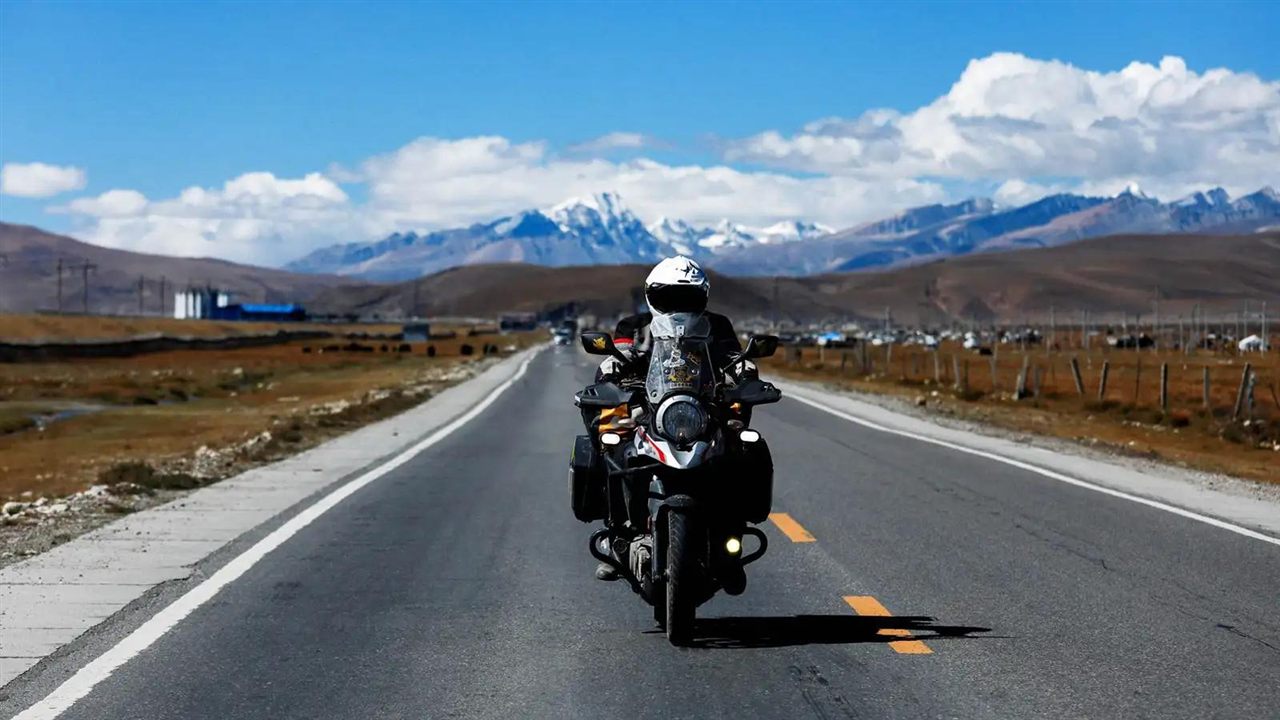
At the end of the day, motorcycle customs declaration China isn’t as scary as it sounds. You just need to be prepared, list your gear properly, and let the agency handle the paperwork. I’ve done three crossings now, and each time it’s gotten easier. The western provinces are worth the hassle — the empty roads, the snow-capped passes, the quiet campsites where you can run your solar panel all day and watch the stars at night. Just don’t be like me, and forget to list your solar panel at the border. It’s not worth the 20-minute delay, or the missed sunset.