Last updated: November 16, 2026
Last October, I rolled up to the 磨憨 (Mohan) border post with five other riders, our bikes strung out along the hot, dusty tarmac, exhausts ticking as they cooled after the run from Vientiane. We’d spent three months planning our China motorcycle road trip, and the last thing any of us wanted was to spend half a day arguing with customs while our permits lapsed. Group entry for foreign motorcycle temporary entry China trips isn’t like rolling through a European border with a stamp in your passport — it’s coordinated, structured, and if you cut corners, it falls apart fast. This is what I learned getting six bikes across that line, no delays, no missed paperwork.
Why you can’t just ride up and declare on your own
I made that mistake once, years earlier, showing up at a different border with a van full of camping gear, convinced I could talk my way through. I stood at the counter for 20 minutes while the officer kept pointing to a line on the form, and eventually realised: individuals have no standing to declare a foreign vehicle into China. You must go through a qualified travel agency acting as guarantor, full stop. These agencies carry a RMB 1.6 million tourism quality deposit, plus three years of operational experience, to back every vehicle they bring in. You can’t cut them out to save cash — it just won’t work.
That group of six? We’d locked in our agency three weeks out, and when we pulled up to the Mohan border motorcycle customs clearance lane, a rep was already waiting under the awning, clipboard in hand, to walk every bike through inspection.
Group inspection coordination: what actually happens at the lane
We lined the bikes up in a neat row, tyres still caked with Laotian red dust, while the rep walked each customs officer along the line. They checked engine numbers against our paperwork, snapped quick photos of each bike’s front, rear and side, and cross-referenced every VIN against the pre-submitted declaration. It took 40 minutes total for all six bikes — half the time I’d budgeted, because we’d sorted every document before we arrived.
Left- and right-hand-drive bikes are treated exactly the same at Mohan, no surcharges, no extra hoops. Two of our group rode right-hand-drive bikes registered in Thailand, and no one batted an eye. The only quick check that caught us out? One rider’s bike was seven years old, so we had to dig out his home-country annual inspection certificate before they’d let him proceed. That’s the kind of small thing that can hold up a whole group if you don’t sort it ahead of time.
Fees, deposits, and what you’re actually paying for
Let’s talk numbers, because vague fee talk is the bane of every overlander’s life. For Mohan entry, the per-vehicle service fee runs RMB 5,000–6,000 — and if your bike is Laos-registered, that drops to RMB 4,000. That fee covers everything: motorcycle customs declaration China paperwork, immigration formalities, your Temporary China Licence, your motorcycle temporary plate China, exit clearance, route filing, and that on-site assistance from the rep at the border.
It doesn’t cover a few extras: the customs deposit, mandatory vehicle insurance, document translation, the ~RMB 200 vehicle inspection, fuel, tolls, food, or accommodation. The best part? That fee is the same whether you stay one month or three. It’s not charged per day, so no panic about stretching your trip to get your money’s worth.
With the agency’s guarantee, the customs deposit per bike is only RMB 10,000. It gets paid into the agency’s corporate account — never a personal account, that’s a hard rule — and has to land three full days before you enter. If it’s late, your declaration gets cancelled, and the service fee isn’t refunded. I set a calendar reminder two weeks out to send that money, and it came back to my account three working days after we exited, no faff, as long as we’d left on time, had no outstanding traffic fines, and no unfinished customs matters.
You also can’t skip compulsory traffic insurance — without it, they won’t issue your temporary plate at all. The agency sorts this before entry, and you just pay the actual cost. We added optional commercial third-party cover for RMB 500,000, just for peace of mind on long highway stretches.
Licences, plates, and the paperwork you can’t skip
Let’s get one thing out of the way: China doesn’t recognise the International Driving Permit. I saw a rider at the border last year waving his IDP at the officer, getting more and more frustrated, because he’d read online it worked. It doesn’t. You need a China temporary driving licence, which the agency arranges as part of the package. It’s valid nationwide — no separate licence needed for Tibet, just the mandatory guide and permit for that region.
Your temporary plate is valid for three months. No extensions, no renewals, so plan your route accordingly. If you want to stay longer than the standard 30-day visa-free entry, the agency can issue an invitation letter to help you get a longer tourist visa — but don’t mix that up with plate validity. The plate still runs for three months, full stop.
We submitted all our documents 20 days before arrival: passports, Chinese visas, home driving licences, white-background ID photos, vehicle licences, registration certificates, engine numbers, and those three bike photos each. The agency handled all the Chinese translations for us, so we didn’t have to hunt down a translator at the last minute.
What you can actually ride, once you’re across
Once we’d got our plates and licences, we were free to ride nationwide — with a few hard limits. Tibet requires a full-time guide and a Tibet permit, no exceptions. Beijing needs a capital entry permit. Some border-restricted areas in Xinjiang and Gansu are off limits, the G219 Dahongliutan section is closed to foreigners, the Kashgar/Yecheng to Ritu stretch by Pangong Lake is out, and the new Minfeng no-man’s-land highway is off limits too. If you’re riding from Xinjiang to Tibet, you have to detour via Golmud on G109 — the legal highways into Tibet are G109, G318, and G214.
China drives on the right. Our two right-hand-drive riders took a day to adjust, especially at roundabouts — don’t rush that first stretch out of the border post. Ports aren’t open 24 hours, so don’t roll up at 10pm expecting to clear. If you get stopped at a checkpoint, the agency can send supporting documents remotely, so you don’t have to dig through a folder of papers on the side of the road. We stuck to our filed route, no lead vehicle needed — only Tibet requires that mandatory guide, and we planned that leg for a later trip.
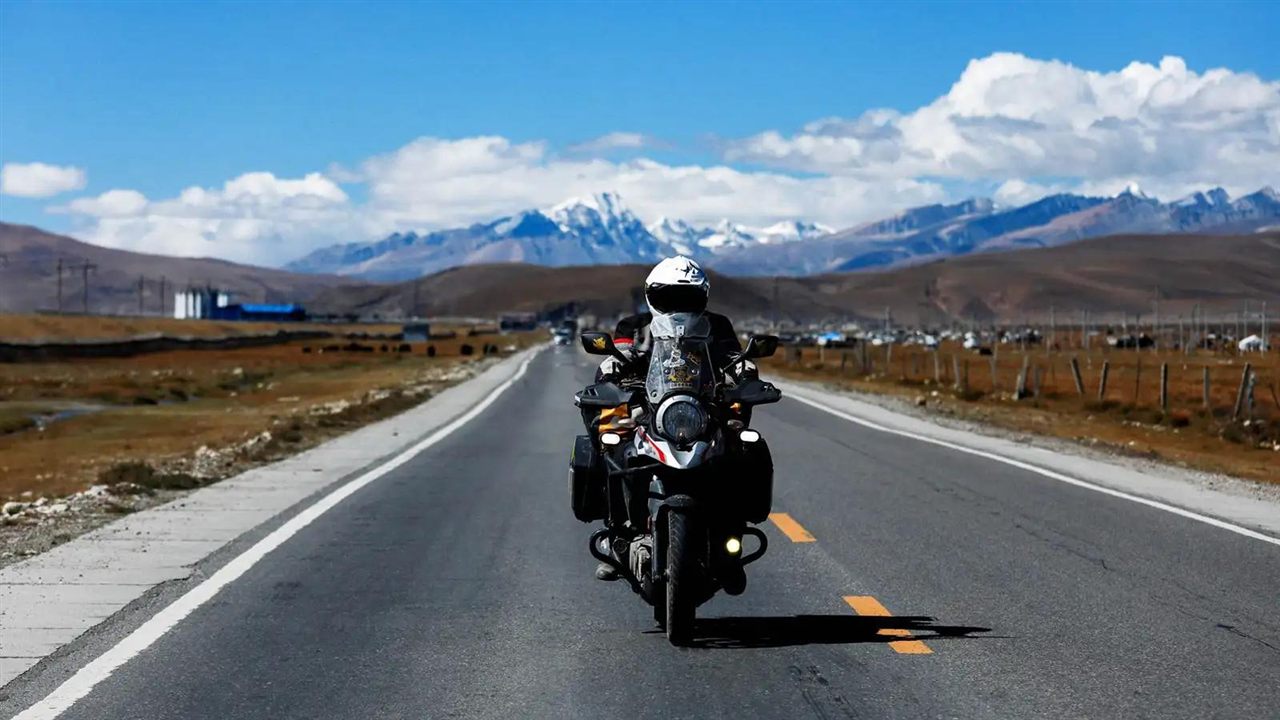
That run out of Mohan, wind in our faces, the temporary plates glowing white on our rear fenders? It was smooth. The only way group entry works is if you do the prep before you reach the border. Don’t leave it to chance.