Last updated: November 4, 2026
"motorcycle fuel China" and "中国摩托加油" are practical questions. Is refueling a motorcycle convenient in China? In big cities, no problem at all; in remote areas you plan ahead. Gas station density, whether registration is needed, whether 92-octane is enough, and whether you can carry spare fuel - this guide gives you the practical experience from roads I have ridden, all in one place. Fuel, handled right, is not a thing at all; handled wrong, it wastes your time.
Big cities and national highways: gas stations are dense
China's gas station density is high by any world standard. In big cities a station sits every few kilometres, and along national highways and expressway service areas they are denser still, with big signs visible from far away. Riding in big cities and on national highways, refueling is something you never think about - you can fill up anytime.
Service-area refueling is easy too: drive into a service area and there is a station, with 92, 95 and 98 octane plus diesel. A motorcycle fills up there the same as a car and rides off.
Remote areas: plan the gaps in Tibet and Xinjiang
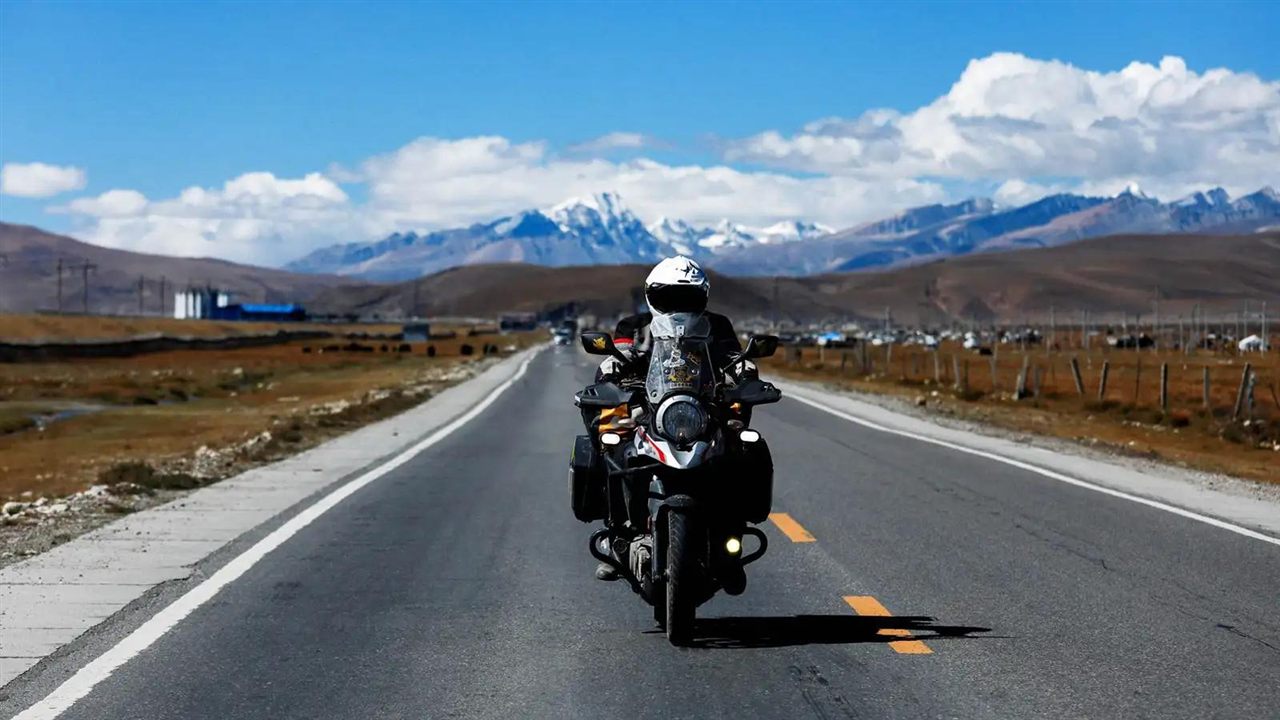
The places that actually need planning are remote: on stretches of Tibet, Xinjiang and Inner Mongolia, stations can be over a hundred kilometres apart.
- Xinjiang: between north and south Xinjiang and along the desert highways, station spacing is long - fill up before entering uninhabited stretches.
- Tibet: west of Lhasa, stretches of several hundred kilometres with no station exist - fill every morning and plan the next stop.
- Inner Mongolia: towns are sparse on the grassland - fill before entering it.
My habit: fill every morning before departure, and halfway through, if the tank is past half, top up at any station you pass rather than waiting for the light. That habit saves a lot of trouble.
Do motorcycles need registration to refuel?
Most stations have no special registration requirement for motorcycles - just fill up. Individual stations, especially some in remote areas, ask to see documents or register - that is a local rule, just cooperate. For the bike itself: stop, switch off, and push it into the station - some stations require motorcycles not to be ridden into the fueling area. Follow the staff's direction.
On spare fuel, one separate point: China does not allow carrying loose fuel privately, and buying loose fuel at a station needs a permit. Do not plan on strapping a jerrycan on for a long run - it can be confiscated if found, and there is a safety risk besides. Plan fuel by "fill up - plan the next station", not by spare cans.
Is 92-octane enough?
China's petrol grades: 92, 95 and 98. The vast majority of motorcycles run fine on 92; high-compression models use 95 per the manual. At altitude with power loss, some riders report smoother running on the higher grade - follow your bike's manual, do not improvise.
On fuel quality: stations in big cities and service areas are stable; occasional remote small stations vary, but regular licensed stations are fine. On long runs, prefer the big brands - Sinopec and PetroChina - especially in remote areas; do not chase cheap unofficial stations.
Range calculation, while we are here: check your model's combined fuel consumption and tank capacity, work out the approximate range per tank, then compare with the station spacing on your stretch. For example, a 15-litre tank at 4 litres per 100 km gives roughly 350 km of range; if your stretch exceeds that, fill before or top up on the way. Altitude raises consumption a little, so plan range at about 80% to be safe.
Refueling operations and station rules
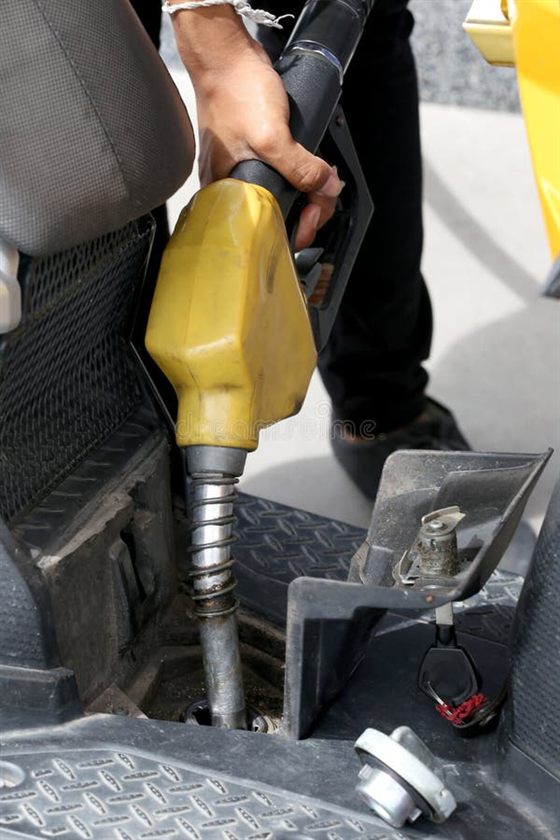
The basic flow at a Chinese station: ride in, stop, switch off; some stations require pushing the bike into the fueling area. The attendant fills by your tank's grade, and you push it out to start. Some remote stations ask for registration - register and move on.
Expressway service areas are the easiest: big stations, stable fuel, standard service. Follow the signs on entering, park the bike at the motorcycle position, and do not block the car lanes - that delays others and yourself.
Winter and plateau details: at altitude, pumps and fuel lines can misbehave in the cold - check before departure; in winter in the north, watch the fuel cap freezing and park in the sun. One thing beginners miss: look at the pump handle. Chinese stations have 92, 95 and 98 pumps, with different colours and branding - do not fill the wrong grade. One wrong fill can mean rough running at best and engine damage at worst; state the grade clearly to the attendant before filling.
Experience from roads I have ridden
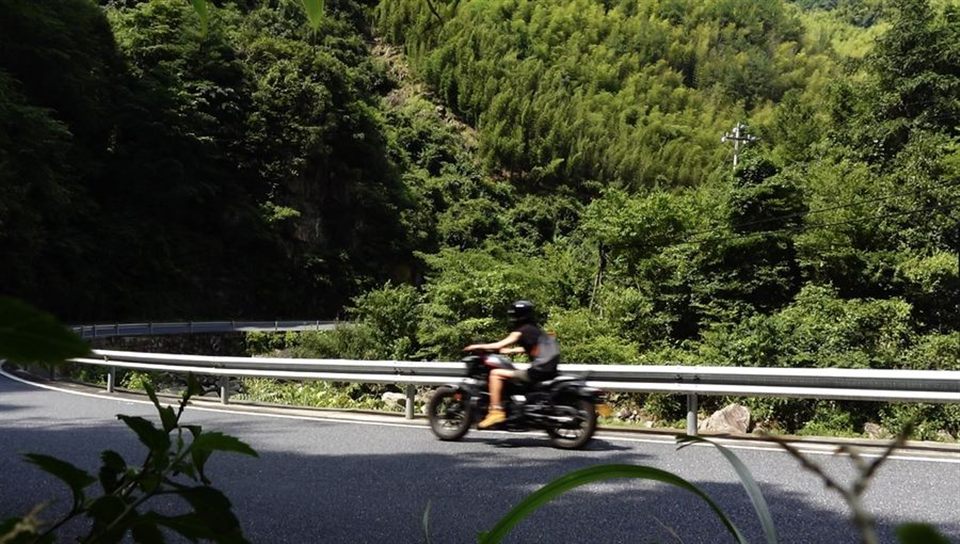
A few real examples:
- Coming in at Mohan, G85 expressway to Kunming - service areas are dense, refueling pressure-free all the way.
- The western Sichuan mini-loop: Kangding, Xinduqiao and other towns all have stations; fill before entering the mountains.
- Xinjiang: on the Duku Highway, Qiaoerma, Bayanbulak and Kuqa have stations, the middle stretch does not - fill before departure.
- Tibet: east of Lhasa stations are fairly dense; west of Lhasa plan by several-hundred-kilometre gaps.
One more: on the plateau, consumption runs a bit higher than on the plains, so range shortens over the same distance - put that into your fuel planning. Long-distance riders can keep a log - note the odometer and fill amount each time; after a few days you will know your bike's real plateau range, better than the manual's number.
My rhythm for long rides: fill every morning before departure; every 150-200 km glance at the gauge and watch for stations once past half; top up at big-brand stations when you pass, not when the light comes on. The rhythm looks conservative but actually saves the most time - waiting for the light can mean a dozen extra kilometres, or a station that is closed or has a queue. On big-gap stretches in Tibet and Xinjiang, mark the next day's fuel stops into navigation the night before and follow the list the next day.
Two more remote-area examples. A rider on the western Tibet line, from Shigatse west toward Shiquanhe, had long station gaps; he calculated distance and range for each leg before departure and topped up at every big town - never ran dry. Another ran the Taklamakan desert highway in Xinjiang: limited service areas in the middle, so he filled before entering the desert and again before coming out, with the two mid-point supply points marked in navigation - a clean run. These two examples come down to one line: in remote areas, fuel planning is calculation, not gambling.
Common questions
Q: Do I need documents to refuel a motorcycle?
A: Most stations do not ask. A few remote ones register documents - bring your passport and temporary plate and cooperate.
Q: Is there a difference between scooters and bikes at the pump?
A: No - get the grade right and you are done. Scooters have small tanks and short range, so plan ahead more.
Q: Is there self-service fueling in China?
A: Most stations have staff do the filling - push the bike in, switch off, fill, leave. A few have self-service machines; follow the prompts, and ask a staff member to show you the first time.
Q: EV charging points are everywhere - what about electric motorcycles?
A: Motorcycle touring in China is still fuel-led; cross-province electric bikes are rare, and charging points are mainly for cars. For long tours plan on a fuel bike; do not attempt long cross-province runs on electric for now.
Q: Until what time are stations open?
A: Big-city stations mostly run all day, and many along national highways are 24-hour; remote town stations may close at night, so fill before riding at night and do not gamble on a town station being open.
Q: Is fuel expensive in China?
A: China's 92-octane price follows international markets - a bit dearer than Southeast Asia and much cheaper than Europe. A bike tank holds a dozen-odd litres and costs a few dozen RMB to fill; fuel is a small line in a tour budget, with food, lodging and tolls the bigger ones.
Q: Are there speed limits inside stations?
A: Stations generally ask for slow riding in; some limit to 5 km/h, and pushing the bike in is the norm. Do not ride into the fueling area - the attendant will stop you; just cooperate.
Q: Do motorcycles pay tolls?
A: On expressways, motorcycles are charged by category - modest amounts; national and provincial roads are generally free. Expressways make service-area refueling easy; national roads are scenic but slower - depends on your itinerary.
Q: Can I enter the station convenience store?
A: Generally yes - park the bike and go in. Some stations ask motorcycles not to park at the store door; park in the designated area and follow the staff.
Q: What if a remote area has no 92?
A: Unlikely - 92 is the most common grade in China and remote small stations have it. A very few far-flung places have only 92 and diesel - the grade is fine; prefer big-brand stations, and if only a small station exists, use it up and refill soon after.
Q: What if the tank is almost empty?
A: Do not push it. When the light comes on, find a station nearby; if you genuinely cannot make one, pull over safely and call for help or ask someone to fetch fuel. China does not allow carrying loose fuel, and do not stop cars on the road to borrow fuel - safety first.
Q: Can I fill 95 on a motorcycle?
A: Yes. 95 responds a little more smoothly but costs more. Follow the manual - 92 if it says 92, 95 if it says 95 - and do not switch grades back and forth.
Q: Are service-area queues long?
A: At peak hours in big service areas there are queues; motorcycles can use the motorcycle lane or get priority and are generally faster than cars. Avoid the midday and evening peaks and you will barely wait.
Q: Are the station meters accurate?
A: Regular stations are metered under supervision - generally no problem. Do not force extra after the auto-stop click; overfilling spills and is dangerous instead. Record the fill amount at the click - the error is small.
Q: Do I have to switch off to refuel?
A: Yes. Chinese stations generally require switching off, and pushing the bike in is standard - a safety rule and a hard local requirement. You get used to it; do not find it annoying.
Q: Will station staff check my documents?
A: Generally not; a few remote stations look at documents when registering - show your passport and temporary plate. With paperwork complete, none of this is a problem.
Q: Anything special for temporarily entered bikes?
A: No special requirement. With the temporary plate and licence in place (valid 3 months), refuel like any domestic motorcycle. The vehicle is declared by a licensed travel agency, and right-hand-drive bikes are accepted like left-hand-drive with no surcharge. For Xinjiang and Tibet, remember: the G219 at Dahongliutan is closed to foreigners, and Xinjiang-to-Tibet must detour via Golmud on G109.
The station experience of motorcycle touring in China, in one word: stable. Plan properly and you will never worry about fuel the whole way.
Honestly, refueling in China is reassuring: dense, regulated and reasonably priced. Plan the fuel on the remote stretches and this road gives you nothing to worry about. On the routes I have ridden with customers, city and national-highway station density matches the inland norm; the stretches that need real attention are the big-gap sections in Tibet, Xinjiang and Inner Mongolia. Remember the three rules - "fill in the morning, top up past half, big brands first" - and that is enough.
Small tips on saving fuel money
Fuel in China is sold by the litre; 92-octane is relatively stable and prices at state-run stations are transparent. A bike tank holds a dozen-odd litres, so a full tank costs a few dozen RMB - against long domestic car trips, motorcycle fuel is nearly negligible. If you want to save a little, skip the dearer service-area stations - filling at town stations along national highways is cheaper, though the difference is small; do it when convenient, no need to detour.
Fuel, summed up in one sentence: in big cities fill anywhere, in remote areas plan ahead, no spare cans, big brands first. Ride by that and you will never worry about fuel the whole way. Riders with questions about fuel and routes - add WeChat qxzj7557 and I will mark the fuel stops on your planned route for you. WhatsApp, same number: +86 13759155671. Email: [email protected]. Yunnan Province International Travel Service (Group) Co., Ltd. - full outbound qualifications, with the 1.6 million RMB quality guarantee deposit lodged with the tourism authority.
Ready to plan your ride into China?
Customs declaration, temporary plate, temporary licence and guarantee - handled for you end to end. Ride across the border on arrival day and keep your energy for the road.
WeChat / WhatsApp: +86 13759155671 · Email: [email protected]
Contact Us Now