Last updated: November 1, 2026
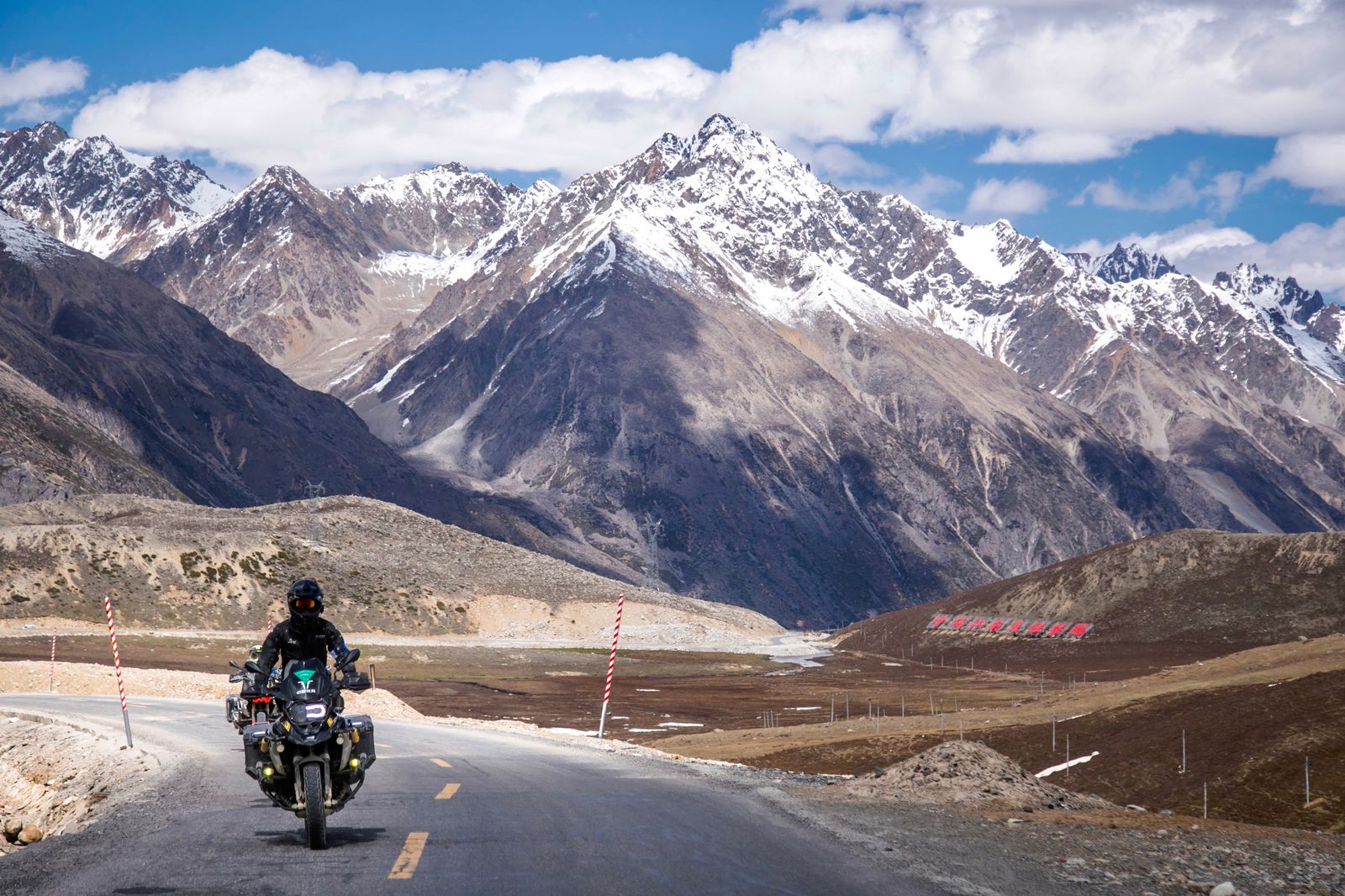
China has many roads worth riding, but for foreign riders the route choice, the season and the restricted areas decide how smoothly the whole trip goes. This guide covers the classic routes, the best seasons, and the points foreign riders must know before they go.
1. Route Overview for Foreign Riders
China's motorcycle routes split into clear geographical lines:
- Yunnan–Tibet line (Yunnan into Tibet): from Kunming through Dali, Lijiang and Shangri-La into Tibet — concentrated scenery, gentler elevation gain, the most forgiving of the Tibet routes;
- Sichuan–Tibet line (Sichuan into Tibet): Chengdu to Lhasa on G318 — the classic; mature roads and services;
- Qinghai–Tibet line (Qinghai into Tibet): Xining, Golmud on G109 — high altitude but good roads and the easiest supply;
- Silk Road (Gansu, Xinjiang): the Hexi Corridor west to Dunhuang, Hami and Urumqi — the densest history and culture;
- Hainan loop: short and easy, the winter escape;
- Inner Mongolia grassland line (Erenhot direction): prairie riding, the natural first segment after entering at Erenhot;
- Southeast coastal line (after sea freight entry): from Guangzhou or Shenzhen along the coast — towns and supply everywhere.
2. Route Details and Best Seasons
Yunnan–Tibet (Kunming–Dali–Lijiang–Shangri-La–Mangkam)
Altitude 2,000–4,000 m, rising gradually. Best: April–May and September–October (avoid the rainy season and winter snow). Rich scenery from subtropical to plateau, with a long adaptation period — the right first choice for a first Tibet ride.
Sichuan–Tibet G318 (Chengdu–Kangding–Litang–Lhasa)
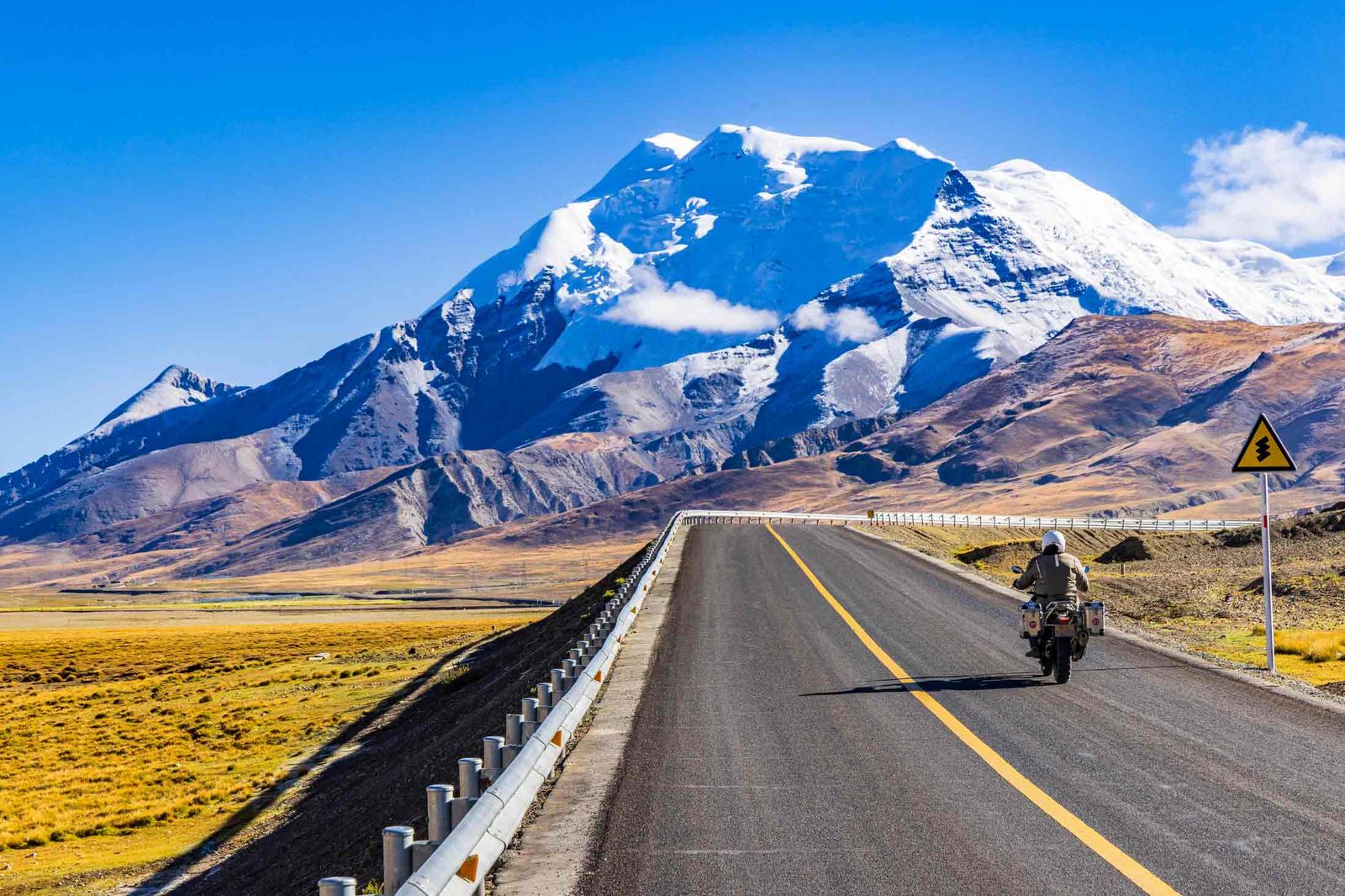
Altitude 2,600–5,000 m, many passes. Best: May–June and September–October. The classic Tibet road with the most mature accommodation, but heavy traffic — mind altitude sickness.
Qinghai–Tibet G109 (Xining–Golmud–Nagqu–Lhasa)
Altitude 3,000–4,700 m, high all the way. Best: June–September. Good roads, dense supply, but high and windy — for riders with plateau experience. Note for foreign riders: travelling from Xinjiang to Tibet, you must detour back to Golmud on G109.
Silk Road (Lanzhou–Dunhuang–Hami–Urumqi)
Altitude 1,000–2,000 m, comparatively gentle. Best: May–October (avoid winter). Historical route with long gaps between towns — plan fuel and lodging ahead. Note: some border restricted zones in Xinjiang are off-limits to foreigners; confirm the specific route before departure.
Hainan loop
Low altitude. Best: November–March (winter escape). Short and relaxed, ideal after a long tour.
Inner Mongolia grassland (Erenhot–Xilinhot–Hulunbuir)
Altitude 1,000–1,500 m. Best: June–September. Prairie scenery, straight roads, the natural choice after entering at Erenhot.
Approximate distances: Kunming to Lhasa on the Yunnan–Tibet line is about 2,200 km (10–14 days at a normal pace); Chengdu to Lhasa on G318 about 2,100 km (10–14 days); Xining to Lhasa on G109 about 1,900 km (8–12 days); Lanzhou to Urumqi about 1,900 km (7–10 days); the Hainan loop about 600 km (3–5 days). These assume 150–250 km per day, adjusted to your pace and stops.
3. Points Foreign Riders Must Know (Important)
Most of China is open to foreign riders, but these points must be settled before you go — discovering them on the road ruins the itinerary:
- Tibet: a guide throughout, a declared itinerary and a Tibet travel permit are required. Documents one month ahead (20 days for other ports). Not optional — mandatory;
- Beijing: foreign vehicles entering Beijing need an entry permit;
- Border restricted zones in Xinjiang and Gansu: closed. Specifically: the Dahongliutan section of G219 and the Kashi–Yecheng to Rutog (Pangong Lake) section are closed to foreigners; the new no-man's-land national road in the Minfeng direction is also closed;
- Xinjiang to Tibet direction: foreign riders must detour back to Golmud and take G109 — no direct crossing;
- Ports are not 24-hour: opening times vary daily; check the day's hours before entry and do not ride to the border at night.
4. Gear and Altitude Preparation
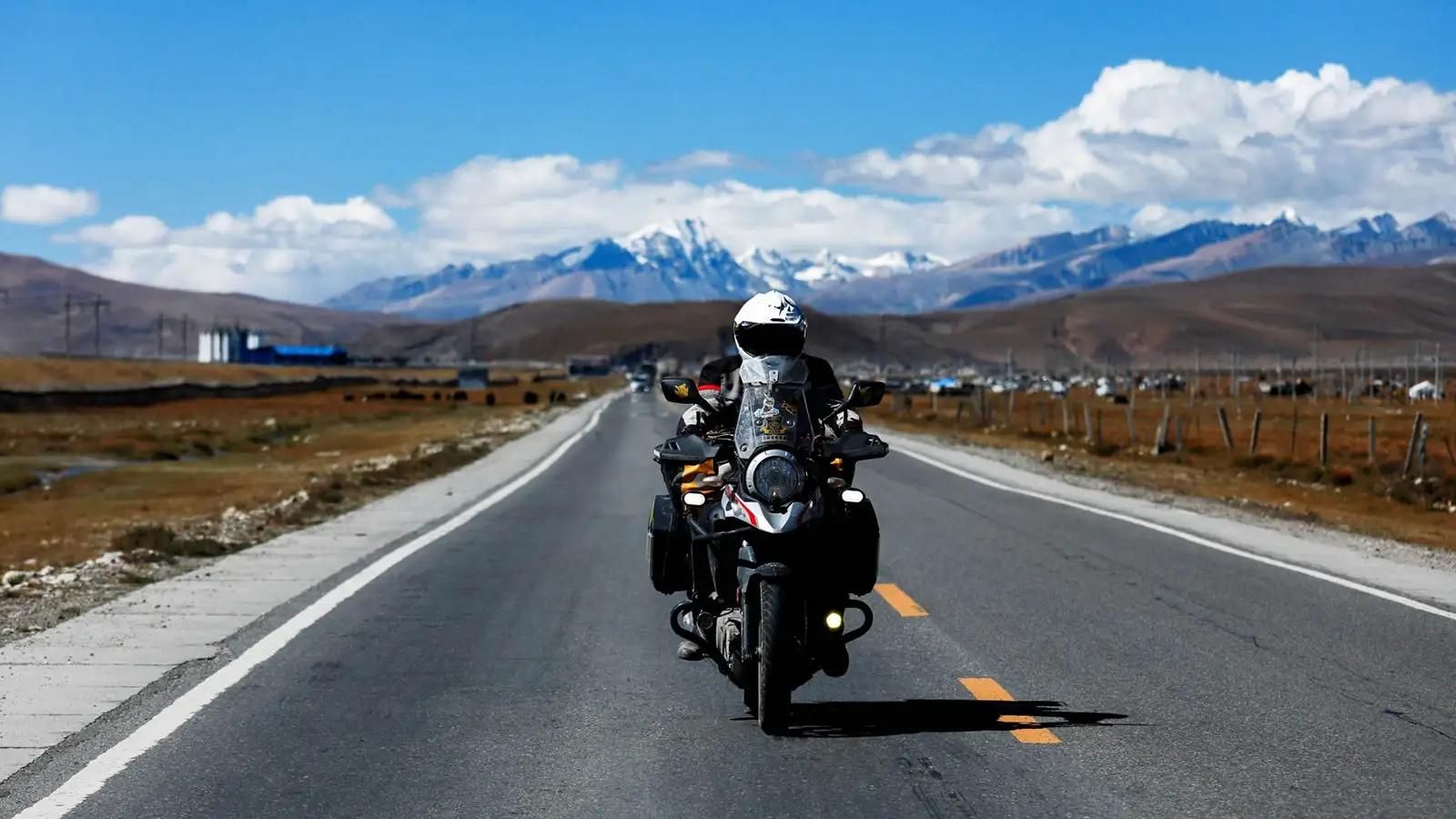
Gear: helmet, riding gloves and a rain suit are the basic three. For Tibet routes, add a riding suit with a liner — big temperature swings, hot days and cold nights at altitude. Keep your documents (passport, plate, permit) on your body, not buried in luggage — checkpoints on the road. With a 15-litre-plus tank, range is fine; small tanks, consider a 2–3 litre spare can — note China strictly regulates loose fuel (individuals need a police certificate for can fuel), so the spare can is for emergencies; plan stations normally.
Altitude sickness: Tibet routes sit above 3,000 m routinely, with passes above 4,000 m. Reactions vary; practical habits help: keep daily altitude gain under 500–1,000 m (the Yunnan–Tibet line naturally fits), drink water, skip alcohol, and do not push night rides early on. Dizziness or fatigue while riding — stop, rest, warm drink; if symptoms persist, descend to lower altitude overnight. Kunming and Lhasa have hospitals; get help promptly if needed.
5. Choosing a Route by Entry Port
The entry port shapes your first riding segment:
- Mohan (Yunnan, China–Laos): naturally connects to the Yunnan–Tibet line or a deep Yunnan tour. The main entry for Lao, Thai and Malaysian riders. See the Mohan checklist;
- Khorgos (Xinjiang, China–Kazakhstan): east takes you onto the Silk Road, south into Xinjiang. The main overland channel for Central Asia and Europe. See the Khorgos guide;
- Gyirong (Tibet direction, China–Nepal): you are in Tibet right after entry — ideal for riders from Nepal; mind the permit and guide requirements. See the Gyirong guide;
- Erenhot (Inner Mongolia, China–Mongolia): north and east take you onto the grassland line. See the Erenhot guide;
- Sea ports (Guangzhou / Dalian): start riding on the southeast coast or in the northeast. See the shipping guide.
6. Season Summary Table
| Route | Best months | Avoid | Notes |
|---|---|---|---|
| Yunnan–Tibet | Apr–May, Sep–Oct | Jun–Aug rains, Nov–Mar snow | First Tibet ride choice |
| Sichuan–Tibet G318 | May–Jun, Sep–Oct | Rainy season, winter | Most mature roads |
| Qinghai–Tibet G109 | Jun–Sep | Winter cold | Mandatory detour for Xinjiang riders |
| Silk Road | May–Oct | Winter | Long gaps between towns |
| Hainan loop | Nov–Mar | Typhoon season | Winter escape |
| Grassland line | Jun–Sep | Winter | Connects from Erenhot |
A general rule: Tibet routes concentrate in May–October, and the further west, the more you avoid winter. Plateau winter means snow-closed passes, fewer stations and fewer lodgings — and for foreign riders, the permit window must fit the season choice too. Settle season and itinerary together.
7. Route Planning Advice
- First Tibet ride: choose the Yunnan–Tibet line — gentler altitude, longer adaptation;
- With time: enter at Mohan, ride the Yunnan–Tibet line, exit via Qinghai–Tibet after Lhasa — or the reverse from Golmud;
- East–west crossing: in at Khorgos, out at Mohan (or reverse) — RMB 8,000 all-in cross-port package, one line covering the whole breadth of China;
- Winter riding: the Hainan loop is the escape; northern routes are not for long motorcycle trips in winter.
One more reminder: whatever route you choose, fit the port hours (ports are not 24-hour) and the 3-month plate validity into your schedule. Routes can flex; the paperwork deadlines are fixed — protect the paperwork first, then enjoy the scenery. Once the route is set, roughly plan overnight stops too; on Tibet and western lines the gaps between towns are long — do not ride into the dark hunting for a bed.
8. Final Reminder
China's riding resources are rich, the route choice wide, and the restrictions on foreign riders clearly defined. Plan with three things in mind: choose the right port (see the port selection guide), choose the right season, and respect the restricted areas. Submit documents 20 days ahead (one month for Tibet) and the entry is smooth.
For a route plan for your trip, or the details for a confirmed port, contact us — we will work out the plan and the fee breakdown around your itinerary.
Planning to ride your motorcycle into China?
We handle the entire entry process — customs, plate, permit, guarantee. You ride across on entry day and focus on the road.
WhatsApp / WeChat: +86 13759155671 · Email: [email protected]
Contact Us Now →