Last updated: October 30, 2026
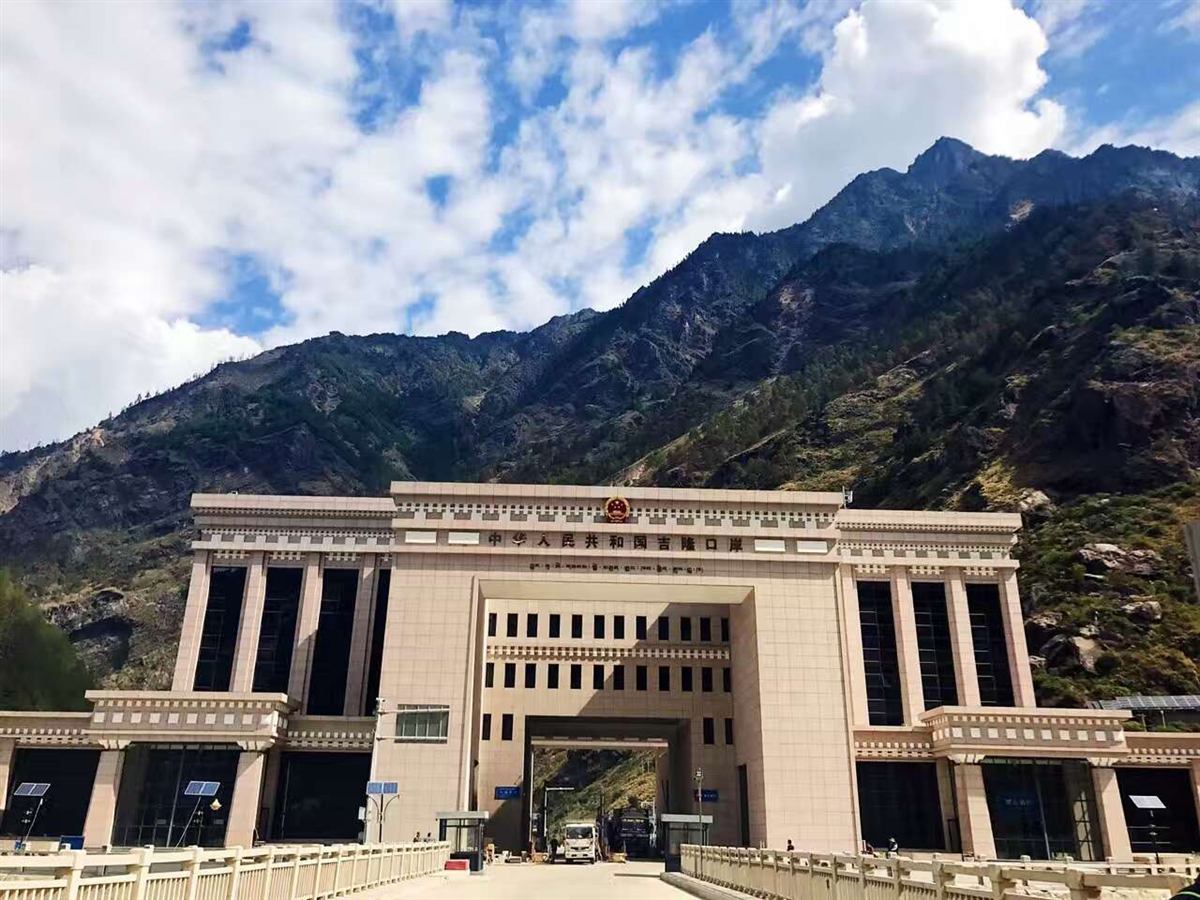
If you are riding into China from the Nepal side, Gyirong is the entry port to understand. Gyirong sits in Gyirong County, Shigatse (Rikaze) City, Tibet, facing Rasuwa Fort on the Nepalese side. It is the main land port for trade between China and Nepal. This guide covers the port situation, Tibet's special requirements, documents, fees and deposit, route restrictions, and high-altitude riding so you can plan a smooth Tibet ride.
1. Gyirong Port Basics
1.1 Where it is
Gyirong Port lies in Gyirong Town, Gyirong County, Shigatse, Tibet. The port is located in the Gyirong Valley on the southern slope of the Himalayas, at a relatively low altitude compared with the plateau behind it — a naturally passable cross-border route year-round. About 120 km south of the port is Kathmandu, the capital of Nepal. Gyirong is one of China's main overland ports for trade with Nepal, handling most of the two countries' land freight, and was upgraded to an international year-round open passenger-and-freight port in 2017.
1.2 Port status — important note
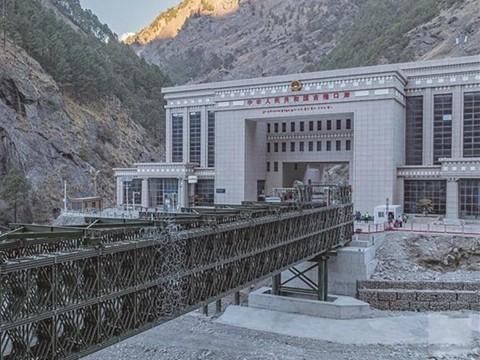
There is an important timeline to be aware of. In July 2025, the road bridge on the Gyirong–Rasuwa section was washed out by floods and the port suspended crossings. After repairs, the port resumed cargo and passenger passage on January 1, 2026. Since resuming, cross-border vehicles have operated on a one-way alternating schedule: 09:00–13:00 Beijing time, vehicles enter China from Nepal; 14:00–19:00, vehicles enter Nepal from China.
Please note: the port's open status and crossing hours can change with bilateral arrangements, weather, seasonal conditions and repairs. Do not ride in on a fixed schedule. Confirm with the port or with us that the port is actually open, and check the direction and hours for your crossing day. We confirm the port status with you as part of the filing process.
2. Tibet's Special Requirements: Permit and Guide
Entering through Gyirong means entering Tibet, and Tibet has clear special requirements for foreign visitors and vehicles — this is the core of any Tibet route:
- Tibet Travel Permit. Foreign nationals entering Tibet need a Tibet Travel Permit (入藏函). This is not optional — without it, foreign visitors cannot enter Tibet.
- A guide for the whole trip. A vehicle entering Tibet must be accompanied by a licensed guide for the entire journey, including the itinerary arrangements. This is not a piece of paper — the whole trip must have a guide along, and the itinerary must be declared in advance.
- Advance itinerary filing. The Tibet itinerary must be filed with the relevant authorities in advance, and you ride the approved route.
So if you plan to enter Tibet through Gyirong, build "Tibet Travel Permit + full-time guide + itinerary filing" into your plan from the start, not at the border as an afterthought. We arrange the full Tibet package — permit, guide and itinerary filing — with fees confirmed according to the length of your trip and route.
3. Documents (prepare 1 month in advance for Tibet)
Tibet routes need longer preparation than ordinary ports: for a standard port, prepare at least 20 days in advance; for Tibet, prepare 1 month in advance. The reason is simple — the permit, itinerary filing and guide arrangements all take time.
The document list is the same as for any port:
- Passport;
- China visa;
- Driving licence;
- Driver's white-background ID photo;
- Vehicle registration document (行驶证);
- Vehicle title certificate (登记证);
- Engine number (if not printed on the title certificate, photograph the engine bay);
- Vehicle photos: front, rear and side, one each;
- If the bike is older than 6 years, add the inspection certificate.
All documents except a Chinese driving licence need Chinese translations, which we can arrange. Bikes over 6 years old must also pass a vehicle inspection at the vehicle administration office after entry before the temporary plate is issued. Tibet itineraries are long, so arrange this early.
4. Fee and Deposit
The agency service fee for entry through Gyirong is set according to your vehicle. Gyirong's Tibet-bound service includes coordination of the permit and guide arrangements, so the exact figure is confirmed when you consult us with your itinerary and vehicle details.
Customs deposit: customs sets the guarantee at 50–65% of the vehicle value. Through an agency guarantee, you only pay a RMB 10,000 deposit, paid to the agency's corporate account. It must arrive 3 days before the crossing; if it is late, the filing is cancelled and the service fee is not refunded. After you leave China, customs returns it to the agency within 3–5 working days, and the agency returns it to you by the same route.
Refund conditions (all three must hold): you leave China on time within the customs filing period and the temporary plate validity; no unresolved traffic violations in China; no unpaid fees or unsettled customs matters.
5. Temporary Plate, Temporary Driving Licence and Insurance
Temporary plate: valid for 3 months, arranged by us — you do not go to the vehicle office yourself.
Temporary driving licence: China does not recognise international driving permits (China is not party to the UN Convention on Road Traffic). Foreign riders must obtain a Chinese temporary driving licence, which we arrange.
Insurance: compulsory traffic accident liability insurance (交强险) is mandatory — without it you cannot get the temporary plate. Optional commercial third-party liability insurance from RMB 500,000 starts is available. We buy it for you before the vehicle enters China; you pay the actual cost.
6. Why Entry Must Go Through a Licensed Travel Agency
As at every port, a foreign vehicle entering China temporarily through Gyirong must be declared to customs and guaranteed by a licensed travel agency. There is no individual filing channel. This is a requirement of the process, not an agency rule.
A licensed outbound travel agency must have paid a RMB 1.6 million quality guarantee deposit to the tourism authority and been operating for at least 3 years. Unlike Khorgos, Gyirong does not allow a customs broker to file alone — brokers do not pay the quality guarantee deposit and customs does not accept their guarantee, so the "cheaper through a broker" route does not exist at Gyirong. The proper path is a licensed travel agency.
7. Right-Hand-Drive Bikes
Riders from Nepal-side countries often ask about right-hand-drive bikes. China's policy: right-hand-drive vehicles are allowed temporary entry, all ports accept them, and the paperwork and fees are the same as for left-hand-drive vehicles — no extra charge.
One reminder: China drives on the right. In the first days after entry, take it easy and get used to right-side traffic, especially on winding mountain roads with frequent oncoming traffic.
8. Routes and Restricted Areas in Tibet
After entering via Gyirong, a few route points matter for your Tibet ride:
- Gyirong to Shigatse: the route via Nyalam/Dingri or Gyirong–Saga is ridden strictly along your approved filed itinerary;
- Lhasa direction: Shigatse–Lhasa is a well-developed route with sights such as Yamdrok Lake along the way;
- If you plan to continue to Xinjiang: the Xinjiang–Tibet line G219's Daliangliutan section and the Kashgar–Yecheng to Rutog (Pangong Lake) section are closed to foreigners. Foreigners travelling from Tibet to Xinjiang must detour back to Golmud and take the Qinghai–Tibet highway G109;
- The new uninhabited-area national road in the Minfeng direction is closed to foreigners;
- Tibet as a whole requires the permit and a guide for foreign visitors on every route.
Parts of Xinjiang and Gansu border-restricted areas are also off-limits, and Beijing requires a separate entry permit (入京证) for foreign vehicles.
9. On the Crossing Day
- Confirm the port's opening hours and crossing direction for your day (Gyirong currently runs alternating one-way crossings — confirm your direction's window);
- Keep documents together: temporary plate, temporary licence and passport within reach, not buried in luggage;
- Check the bike, fuel up;
- Our on-site staff guides you through the process;
- In Tibet, ride strictly on the filed itinerary, with your guide accompanying.
10. Stay Time and Visas
China has visa-free entry for many countries, generally allowing a 30-day stay. If 30 days are not enough, we can issue an invitation letter to help you apply for a longer tourist visa. Tibet itineraries are long in themselves (entry, riding, exit), so plan the visa stay and the temporary plate validity together: the plate is valid for 3 months; the visa stay follows what the visa states. The two run on their own rules.
11. The Nepal-Side Approach
Riding from the Kathmandu direction, you reach the Nepalese side of Gyirong (Rasuwa Fort) after a stretch of mountain roads. Kathmandu to Rasuwa is mostly hilly two-lane roads — many bends, steep sections and mixed surface quality. Allow more than a day and do not ride at night. Fuel up before leaving: fuel stations on the Nepali side are sparse once you are in the hills.
The road and weather are strongly seasonal. In the monsoon months (June–September) sections suffer from rain; in deep winter high passes may have ice and snow. For a Tibet ride window, avoid the monsoon and deep winter; spring and autumn are relatively stable.
Before entering Tibet, check tyres, brakes, chain and lights thoroughly. Repair shops are few in Tibet and motorcycle parts are hard to find — solve small problems before the border, not after.
12. The Gyirong Valley and High-Altitude Riding
Gyirong Port sits in the Gyirong Valley, a deep gorge on the southern slope of the Himalayas. Altitude climbs fast from the low valley to the plateau — a challenge for both rider and bike.
For the rider: high-altitude riding brings altitude sickness risk in the first days. The route from Gyirong to Shigatse and Lhasa climbs steadily, so keep the pace slow, do not pack every day full, and leave time to acclimatise. Warm layers, sun protection and common medicines go into the panniers early.
For the bike: at altitude the air is thin. Carburetted bikes may lose power and idle unevenly; fuel-injected bikes cope better. Fuel consumption rises and fuel stations are far apart on the plateau — refuel at one-third of a tank. Check oil and coolant for high-altitude use.
Weather: Tibet has big day–night temperature swings and fast-changing mountain weather — sun, rain and snow in one day are normal. Pack riding gear for four seasons: rain gear, insulation and wind layers.
13. Build in Buffer Time
Gyirong itineraries have one characteristic: many process steps (permit, itinerary filing, guide arrangements), a port whose status can change, and a slower high-altitude riding pace. Together these mean planning 30–50% more buffer time than a lowland route.
For example, if your plan is Gyirong in, Lhasa out, about two weeks of riding, plan for three weeks — the extra time absorbs altitude acclimatisation and any port or road changes. Better to have a loose plan than to fill every day.
14. Summary: Full Timeline for Gyirong Entry
- 1 month before entry: confirm the port is open; start documents (including permit, itinerary filing, guide arrangements);
- About 20 days before entry: send documents for review; finish translations and filing material;
- 3 days before entry: pay the RMB 10,000 deposit to the corporate account;
- Entry day: arrive at the port for your confirmed window; complete customs filing, immigration procedures, temporary plate and temporary licence;
- In Tibet: guide accompanies throughout; ride the filed itinerary; respect restricted areas;
- Exit on time: deposit returns by the same route within 3–5 working days after departure.
Entering Tibet through Gyirong is a genuine high-plateau journey, and the planning is more demanding than other directions: documents one month early, Tibet Travel Permit, full-time guide, itinerary filing — none can be skipped. Arrange them early and keep the energy for the scenery along the Himalayas. To arrange Gyirong entry filing, contact us on WeChat qxzj7557 (WhatsApp: +86 13759155671) and we will put together a plan for your trip.
Port status is subject to change; always confirm with the latest official announcements. Business details follow the agency's actual handling.
Planning to ride into Tibet through Gyirong?
Tibet Travel Permit, full-time guide, itinerary filing and vehicle paperwork — one-stop arrangement. You keep the plateau scenery; we handle the process.
WeChat / WhatsApp: +86 13759155671 · Email: [email protected]
Ask Us Now →