Last updated: October 30, 2026
Many foreign riders who search "ride a motorcycle across China" land on pages full of port-paperwork adverts and still have no idea how to refuel on the road or handle high-altitude fuel consumption. This guide is about what happens after you cross the border — fuel, engine size and bike age, the three things riders ask about most once they are actually riding in China.
Beyond the port procedures, temporary plate and temporary driving permit, riders ask three questions once on the road: where to refuel a motorcycle in China, whether gas stations require registration, and whether their bike's engine size or age will be a problem. This guide answers all three in one place, with a pre-departure checklist, so you can keep your attention on the road.
1. Where to Refuel a Motorcycle in China
1.1 Station coverage
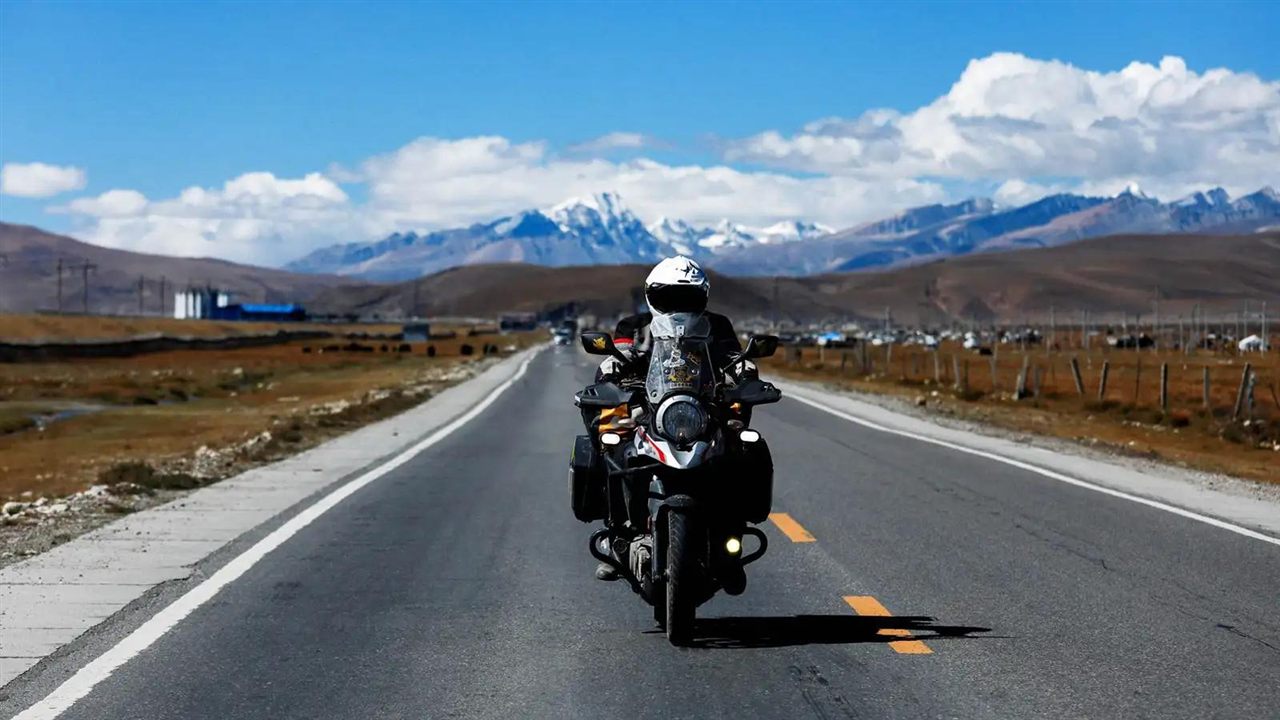
China's filling stations are dominated by the two national giants, CNPC (PetroChina) and Sinopec, plus regional refiners and independent stations. Coverage is broad: counties, towns and national-highway corridors all have stations, and almost every expressway service area includes a fuel stop. On popular riding routes such as the Yunnan–Tibet line, the Sichuan–Tibet line (G318) and G219, town-level stations are not hard to find. Mark stations along your route on the map in advance and you can ride with confidence.
1.2 Remote areas: watch the gaps
In Tibet, Xinjiang, Qinghai and northwest Yunnan the picture changes: station gaps can exceed 100 km, and on some sections — parts of the Xinjiang–Tibet line and certain no-man's-land national roads — stations are even sparser. The reliable practice for long-distance riding is to keep a reserve above your normal range and top up at every station you pass, rather than waiting for the warning light. This matters most at altitude. On the Yunnan–Tibet line, with its long climbs and big elevation changes, start looking for a station when a third of the tank is left — stopping early beats hunting for one at the last moment.
1.3 Fuel grades
Regular petrol in China is 92 and 95 octane; most large stations also sell 98, and diesel is widely available. The vast majority of motorcycles run perfectly well on 92 or 95 — confirm what your bike needs before you go. A few remote small stations may only carry 92, which is worth factoring into your route plan. If your bike needs high-octane fuel, prefer larger stations, and watch availability at altitude — some small stations carry a thinner range of grades in the off-season.
1.4 Can motorcycles enter a station?
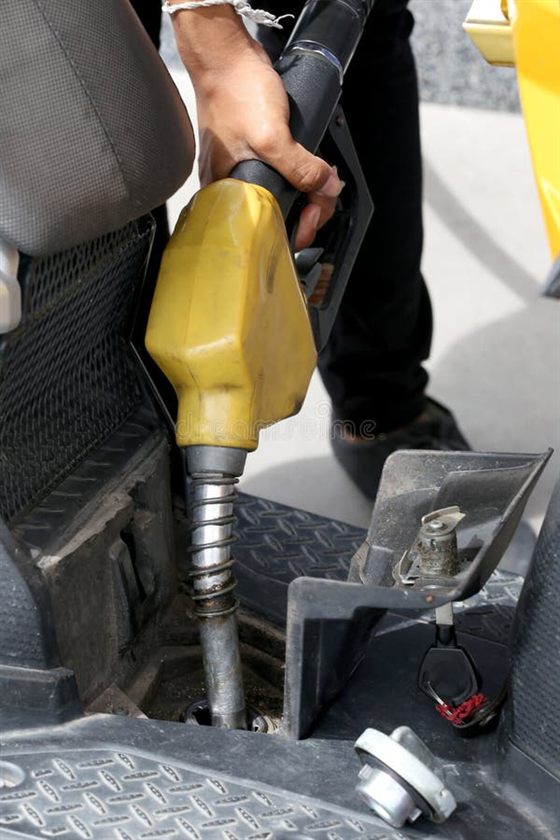
Ordinary Chinese filling stations serve motorcycles; you ride up to the pump and fill directly — there is no "no motorcycles" rule. Some stations ask you to switch off and push the bike in during busy periods or under site safety rules, and a few arrange specific filling windows for bikes; just follow the site's instructions. Nationwide, no phones and no smoking inside the station, and switch the engine off before filling. It is also worth carrying some cash: at a few remote stations mobile payment can fail when the network is patchy.
1.5 A practical long-distance routine
On any ride longer than a day, fill up every morning before departure and plan intermediate stops by the station gaps. In county towns and prefecture cities you have more choices and prices are transparent; expressway service-area fuel is reliable, but some service areas are far apart, so watch the signs. When a board warns "next station far ahead", stop and fill — do not gamble on range. Station density on the western Tibet routes shifts with season and tourist flow; mark the whole route's stations on your navigation map before you leave, and you will know where you stand at every point.
Riders who have run these lines know the rule from experience: at altitude, look for fuel at one-third of a tank, not at the warning light. Riding a motorcycle across China on the Yunnan–Tibet or Sichuan–Tibet line, fuel consumption rises roughly 10–15% per 1,000 m of altitude gain; a large ADV can lose 50–80 km of range at 4,000 m. Build that margin into every leg.
2. Gas Station Registration
2.1 Real-name registration is common
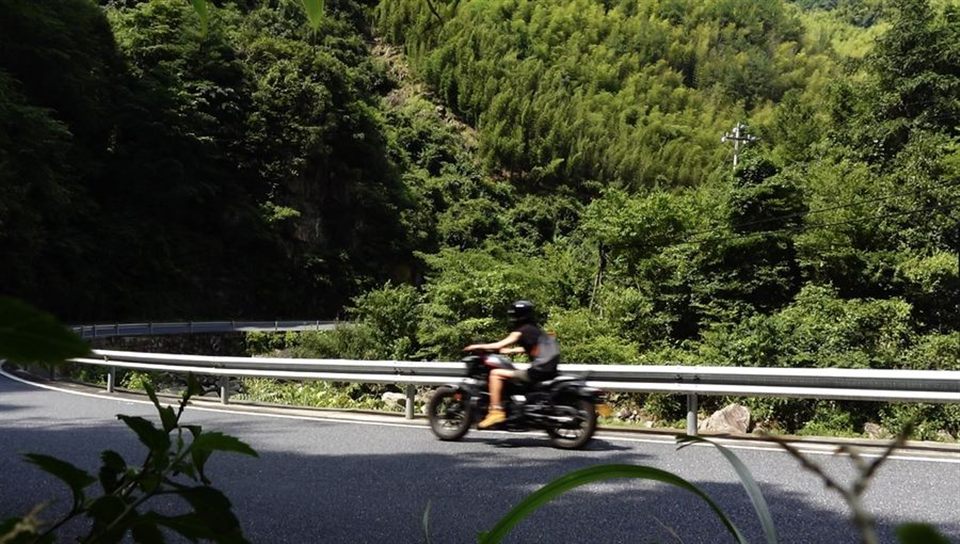
In recent years, stations across many parts of China run real-name registration at the pump: cars register by plate number, and motorcycles usually register the vehicle's details. With a temporary plate, showing your temporary plate, temporary driving permit and passport is normally enough. The process takes a minute or two and is not aimed at foreign vehicles — local riders register as well.
2.2 What to do if you are questioned
Station registration is mainly a safety-management requirement. Occasionally an attendant is unfamiliar with foreign documents and asks a couple of extra questions; a patient explanation, or asking for the site manager, usually sorts it out quickly. If your plate and permits are valid, this is all normal procedure. If communication genuinely stalls, call our service line and we assist remotely. One rule to keep in mind: having your documents on you is the precondition for a smooth fill-up — carry your temporary plate and permit on the bike at all times, not buried in your luggage.
2.3 No jerry cans
China regulates loose petrol strictly: stations will not sell bucket or can fuel to individuals without a police-issued certificate, so do not plan on carrying a spare can. Work the station gaps into your range planning instead — more practical than hauling a can. On remote stretches, mark the gaps on your map in advance. This differs from habits in Southeast Asia and Europe; adapting to it early makes the ride smoother.
2.4 Station hours
Most stations open from around 6:00 to 22:00; many expressway service-area stations run 24 hours; stations on Tibet-bound routes and in remote county towns close early. Avoid running low at night — stop once more in daylight instead. If you plan an early start, fill up the evening before rather than waiting for the station to open in the morning.
3. Is There an Engine Size Limit?
3.1 The short answer: no hard limit
This is the question riders worry about most, and the answer is relaxed: large-capacity tourers, mid-size nakeds and small scooters all go through the entry process normally. Engine displacement is not an entry barrier. Customs and the vehicle administration office look at documents, the VIN and insurance compliance — not engine size. So if you ride a 1200cc or larger machine, there is nothing special to worry about; apply through the normal process.
3.2 Do common models all work?
Yes. ADVs, tourers, nakeds, scooters and retro bikes all qualify, as long as the documents are complete, the bike is in normal condition and the VIN matches the registration. The procedure itself does not look at brand or displacement — materials and compliance are what matter. Send us your bike's details before applying and we will check the document list against your model, so nothing is missing at the port.
3.3 What bigger bikes mean on the road
Larger displacement means higher fuel use, and consumption climbs further in the western highlands (Yunnan–Tibet, Sichuan–Tibet and Qinghai–Tibet lines) as altitude rises, so plan range with extra margin over the station gaps. On the Yunnan–Tibet line, with its many mountain sections and sparse stations, leaving with a full tank and filling at every stop is the proven habit. At altitude, power also drops: overtake with extra margin and control downhill speed. Safe riding matters more than speed.
3.4 A note on right-hand-drive bikes
Many riders ask whether right-hand-drive motorcycles can enter China. The answer is yes: all our ports accept them, and the procedure, fees and deposit are identical to left-hand-drive bikes with no surcharge. You simply need a little time to adapt to driving on the right. Riders from Malaysia, Thailand and Australia have already brought RHD bikes in without any extra requirements.
3.5 Engine size and riding experience
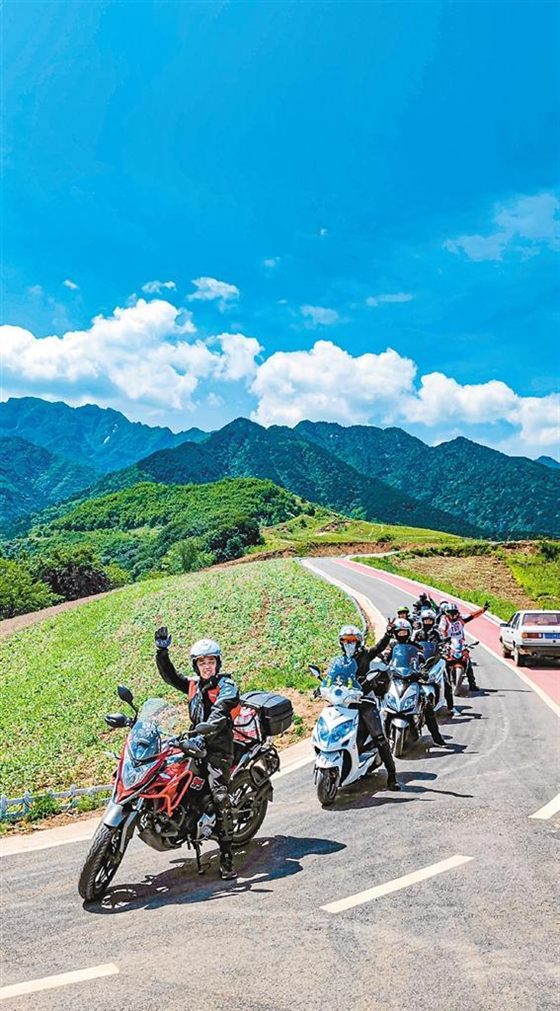
What size suits riding a motorcycle across China? From our experience: if you are only touring northwest Yunnan (Kunming–Dali–Lijiang–Shangri-La), 600cc and above is enough; for the Sichuan–Tibet or Yunnan–Tibet line into Tibet, 800cc and above is worth it — power falls noticeably at altitude and small bikes struggle on the climbs; for short city hops, a 250cc scooter does the job. Engine size is not an entry barrier, but it directly shapes your riding experience, so match the bike to route length and elevation before you go.
4. Bikes Over 6 Years Old
4.1 One extra document: the inspection certificate
If your motorcycle is more than 6 years old, the entry application needs one more item beyond the usual passport, visa, driving licence, vehicle licence and registration: a vehicle inspection certificate. Prepare it before you leave — do not discover the gap at the port. Ask the testing body in your home country early about how the certificate is issued.
4.2 A DMV inspection after entry
Bikes over 6 years old are also tested at the local vehicle administration office (DMV) after entry; the temporary plate is only issued once the inspection passes. Allow time for this — do not rush off on the first day. DMV testing generally requires an appointment; we coordinate the schedule as part of the port assistance, and you simply go at the arranged time.
4.3 Before you leave
Have the bike inspected at home before departure so the condition and documents match. That lowers the chance of problems in the post-entry test and gives you peace of mind. The checks cover basics such as brakes, lights and emissions; a well-maintained bike normally passes without trouble.
4.4 The VIN is a red line
Check one thing carefully: the VIN must match the registration certificate. A VIN with signs of alteration, grinding, welding or restamping, or an engine swap not registered in the home country, will be refused at the port. Clean and check the VIN before you go — it saves a lot of hassle. Also, do not put stickers, prints, flags or slogans involving China's sovereignty or territorial integrity on the vehicle or your belongings; the port treats those with zero tolerance.
4.5 Maintenance advice for older bikes
If you plan to ride a motorcycle across China on a machine older than ten years, give it a full service before departure: oil change, brake pads, chain tension and tyre tread. Workshop density is lower on the western routes than in Europe, so fix small problems at home rather than on the road. We have seen riders bring a 1990s BMW GS from Europe all the way across China — they did a complete overhaul before leaving and covered 20,000 km without issues.
5. Before You Set Off — Fuel-Related Preparation
5.1 Navigation
For riding in China, use AMap (Gaode) or Baidu Maps: search fuel stations along the route and check the gaps at a glance. For SIM cards, mobile data and payments, see our riding survival guide. Offline, national-road signs show the distance to the next service area or town — keep an eye on them.
5.2 Payment
WeChat Pay and Alipay are almost universal at Chinese filling stations; cash is still accepted. Link a card to WeChat or Alipay and it covers fuel, hotels and food without currency exchange or loose change. Keep a few hundred yuan in cash as backup — a few remote stations accept cash only.
5.3 Fuel budget
Estimate fuel cost from local pump prices and your consumption; Chinese fuel prices are mid-range in Asia. Budget by your daily mileage and you will have a clear figure. Keeping a simple daily record of fuel, lodging and food also stops the trip drifting over budget.
5.4 Insurance
Compulsory traffic insurance is mandatory — without it, no temporary plate; third-party liability from RMB 500,000 is optional. We arrange the insurance before your bike enters China; you simply pay the actual premium, with no need to shop for an insurer yourself. The premium is set according to your vehicle's details, confirmed at application time.
6. And Remember: Entry Goes Through a Licensed Travel Agency
One point to be clear about: a foreign motorcycle entering China on a temporary basis must, by the way the process works, be declared to customs and guaranteed by a licensed travel agency — individual riders cannot clear their own bikes at the port. This is not a choice between "finding an agent or not"; it is a requirement of the procedure itself. Customs declaration, temporary plate, temporary driving permit, exit clearance and route filing are all handled by the agency. Nationwide, only Khorgos theoretically allows a customs broker to file alone; every other port requires a travel agency, and even at Khorgos the DMV still needs agency documents for the temporary plate. So the idea of "cheaper via a broker" does not work in practice.
We have handled foreign vehicle entry procedures for many years, from four land ports — Mohan, Khorgos, Gyirong and Erenhot — and three sea ports: Dalian, Guangzhou and Shenzhen. Our service includes customs declaration, immigration/border procedures, temporary driving permit, temporary plate (valid 3 months), exit clearance, route filing and on-site assistance at the port. To apply, contact us on WeChat qxzj7557. Submit your documents at least 20 days before entry (one month ahead for a Tibet itinerary), and your riding plan is on solid ground. The document list: passport, China visa, driving licence, white-background ID photo, vehicle licence, registration certificate, engine number (photograph the engine bay if it is not printed on the certificate), and front, side and rear photos of the vehicle; add the inspection certificate if the bike is over 6 years old. Every document except a Chinese driving licence needs a Chinese translation — we can arrange the translations too.
On a related note, I have also written about off-road here.
Planning to ride your motorcycle into China?
We handle the entire entry process — customs, plate, permit, guarantee. You ride across on entry day and focus on the road.
WhatsApp / WeChat: +86 13759155671 · Email: [email protected]
Contact Us Now →