Last updated: November 7, 2026
Riding solo has its pleasures, but some of my best days in China have been in a small group, half a dozen bikes rolling together through country I would never have found on my own. The thing that makes a group ride work, more than the bikes or the gear, is simply how well you communicate. When I first started riding with others I assumed we would just follow each other and hope for the best, and the first couple of days were a shambles - missed turns, split-up riders and a lot of waving at mirrors. Over the years I have learned how a small group actually stays in touch and stays together, and most of it is plain habit rather than expensive equipment. This is the story of how that came together.
We started with the hand signals
Before anyone bought a headset, the group agreed a simple set of hand signals, and they remain the backbone of everything. A raised finger for a hazard, a slow downward wave to ease off, a pointed finger for the direction of a turn, a fist in the air for a stop. The beauty of hand signals is that they need no power and no signal, and they work even when the electronics give up. The rule we drilled in was that every rider passes the signal back down the line, so the person at the back gets the same warning as the one at the front. On my first group ride I forgot to relay a signal and the rider behind me nearly hit the pothole I had just dodged; I have not made that mistake since.
The intercom changed the feel of the ride
Once we added helmet intercom, the whole rhythm loosened up. A paired Bluetooth headset lets the riders nearby talk naturally, calling out a junction, a fuel stop or simply checking that everyone is comfortable, without taking hands off the bars or eyes off the road. For a tight group on the same system it feels almost like riding in the same car, and it makes the long scenic legs far more enjoyable. The catch is range: Bluetooth intercom works best when the bikes are close and the units are paired in advance, and it does not stretch very far down a long line, so we never treated it as the only way to talk.
Where the walkie-talkie earns its place
For a bigger group, or days when we knew the bikes would spread out, the handheld walkie-talkie was the more practical tool, because it reaches further and does not rely on every helmet being paired to the same network. One rider would call a turn or a stop and everyone heard it at once, which kept the group together over longer distances. I had read up before the trip and knew the use of radio equipment is managed in China, so we kept to small, ordinary public units rather than powerful or modified gear, and we treated it as a practical aid rather than something to tinker with. That kept us on the right side of the rules without any fuss.
Tunnels and the dead-signal stretches
The trip gave us a proper lesson in where communication falls apart. Long tunnels cut the intercom and radio to nothing, and the mountain roads in the west had stretches where every device went quiet at once. We learned not to rely on a voice call in those moments. Before a tunnel we would close the formation up and agree on the exit point, and through the dead zones we fell back on the hand signals and a fixed plan - if we got separated, everyone knew the next meeting point rather than panicking and making sudden moves. A group that has agreed what to do when the signal dies stays calm; the ones that have not are the ones you see scattered at the next junction.
The day it all actually worked
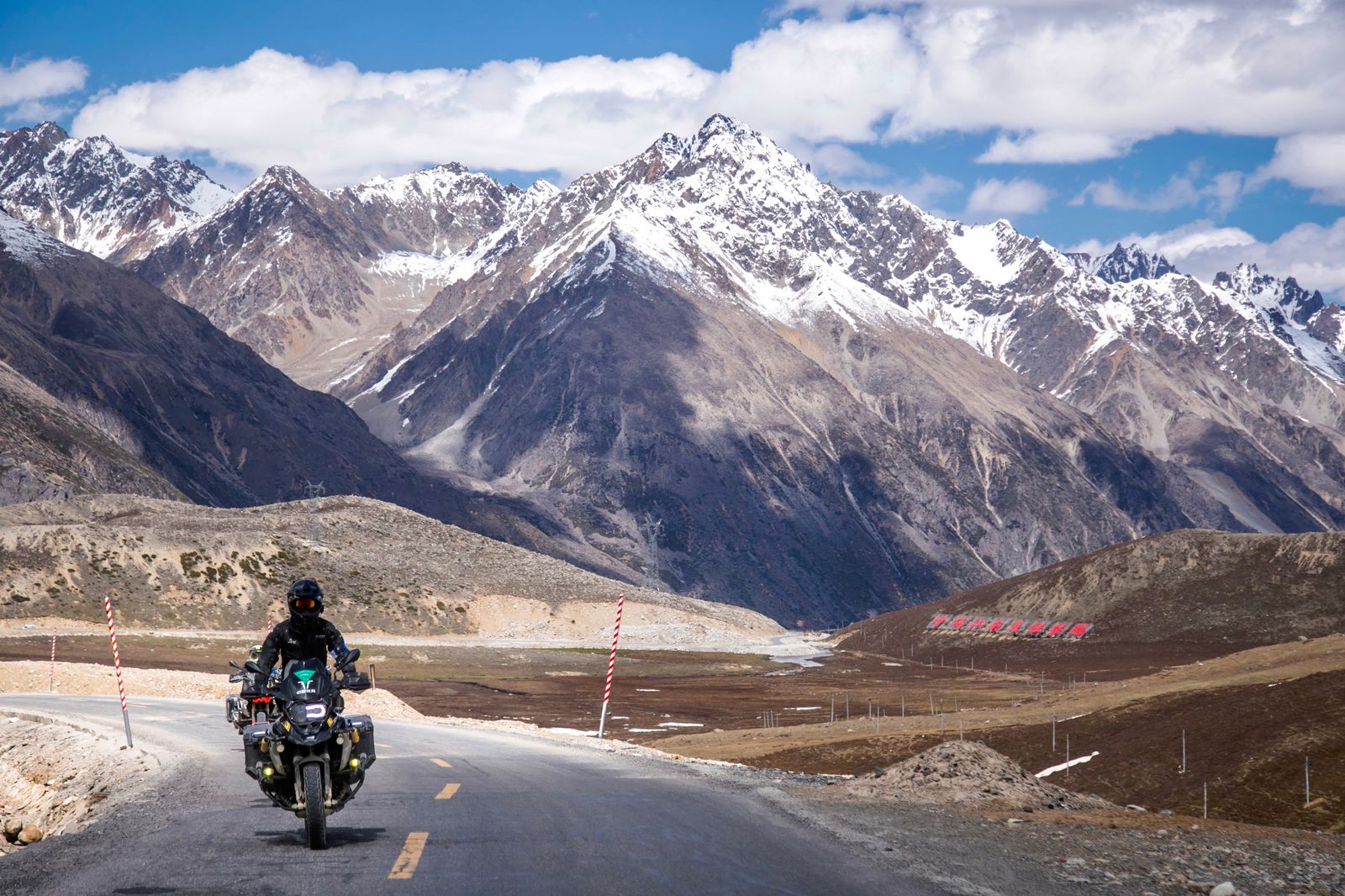
The moment I remember best was a long afternoon in the hills, six bikes moving as one. The lead rider called a tightening bend over the intercom, it was passed down the line, and everyone eased off in good time; when a rider at the back noticed a slow puncture and radioed forward, the whole group pulled over smoothly at the next safe spot rather than scattering. Nobody braked hard, nobody got lost, and we fixed the tyre together. That is the feeling a good group ride gives you - not a collection of individuals on the same road, but a unit looking out for itself - and it is entirely built on the simple communication habits we had practised.
What I would tell a new group
If you are riding with others in China, keep it simple. Agree the hand signals first and make every rider pass them back, pair the intercom before you leave rather than at the roadside, and use ordinary walkie-talkies for the bigger days while staying within the rules. Plan the meeting points and the fuel stops in advance, and always have a fallback for the tunnels and dead zones, because no device works everywhere. The equipment helps, but the real secret is a group that has agreed, ahead of time, how it will talk - get that right and the rest looks after itself.
The paperwork behind the riding
As always, the formal side sits behind the riding. A foreign motorcycle is brought in through a licensed travel agency; individuals cannot clear customs on their own. The temporary plate is valid for 3 months, and the insurance is arranged before entry at the actual cost. For the customs guarantee, with our surety in place the rider only pays 10,000 RMB into the corporate account, arriving 3 days before entry and refunded in full within 3-5 working days after the bike leaves. The vehicle inspection fee is around 200 RMB for every bike. Right-hand-drive machines are accepted at every port on the same terms as left-hand-drive with no surcharge.
If you are putting a group trip together and want help working out the communication plan, the meeting points or how the equipment fits the rules, send over your route and I will share what has worked for my own rides.
Ready to plan your ride into China?
Customs declaration, temporary plate, temporary licence and guarantee - handled for you end to end. Ride across the border on arrival day and keep your energy for the road.
WeChat / WhatsApp: +86 13759155671 · Email: [email protected]
Contact Us Now