Last updated: November 5, 2026
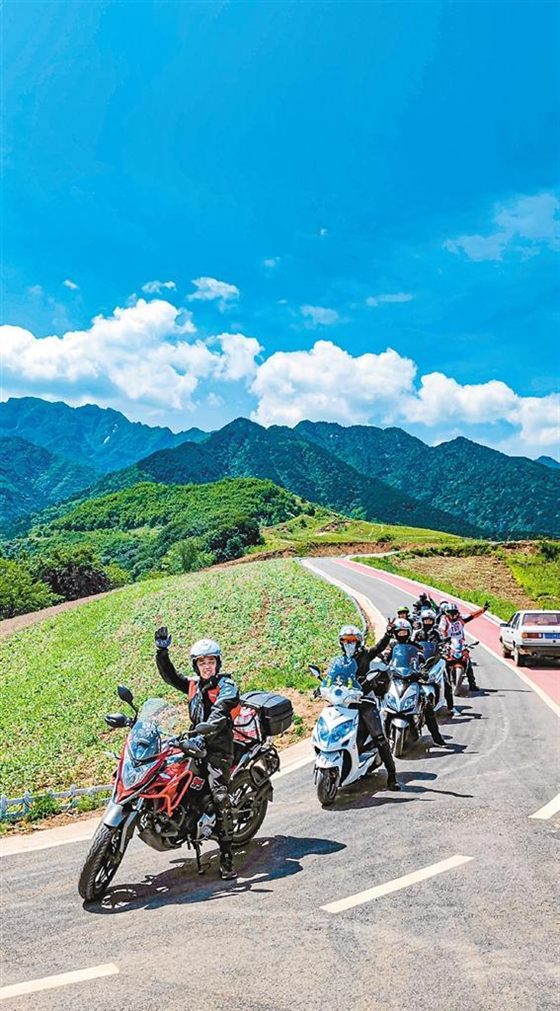
Foreign friends riding motorcycles in China usually have two ways to do it: one person, one bike, riding solo, or gathering a few friends or even a dozen bikes into a group that moves together. Many assume the paperwork is similar, but in material preparation, declaration organization, itinerary, and on-site coordination the differences are substantial. I've done long solo rides and taken part in organizing motorcycle groups entering China, so let me explain the procedure differences from real experience.
Start with my own feelings. Solo, the pace is entirely yours, stopping or changing the route whenever you like, with high freedom, but every problem is yours to face and the loneliness and uncertainty are yours alone. With a group, more people mean backup, someone to talk things through, and logistics handled together, which feels reassuring, but you follow the group pace and can't be too casual. On paperwork, solo is one set of materials for one bike, while a group pools many bikes and people into one declaration, with noticeably more complex organization.
The common ground: both use unified agency declaration
Group or solo, one fundamental rule is the same: a foreign motorcycle entering China must be declared to customs under the guarantee of a qualified outbound agency, and an individual can't clear customs alone.
Don't assume solo lets you handle the port yourself, or that a big group can simply ride in together. Both rely on the guarantee and declaration of a qualified agency. The agency ties the vehicles, people, itinerary, insurance, and deposits together as required, and what you do is provide materials honestly and cooperate with the arrangements.
After approval, every bike gets its corresponding temporary plate, valid for 3 months. Insurance is arranged before entry and paid at actual cost. On the deposit, the owner only pays RMB 10,000 into the corporate account, arriving 3 days before entry and refunded in full within 3 to 5 working days after the vehicle leaves. The inspection fee is around RMB 200 and applies to every vehicle. These baseline rules are the same for group and solo; the difference is how they're organized and carried out.
Characteristics of solo paperwork
Solo centers on "one person, one bike, one set of materials," with a simple relationship.
For materials, you need your passport, vehicle registration and ownership proof, riding qualification documents, and itinerary, which the agency helps check, translate, and declare. With only one bike, information is checked quickly and the communication chain is short, so problems go directly between you and the agency and adjustments stay flexible.
On timing, solo preparation is relatively flexible, though documents still go in ahead of the port's requirements rather than at the last minute. The itinerary can be more personalized, with the agency designing routes around your time and places, and the cost of adding or dropping a day on the road is low.
On fees, solo applies the service fee standard for the relevant port on one bike, with no sharing across other vehicles.
Solo suits experienced, independent riders who like a free pace or have a personalized itinerary. Note that safety, rescue, and breakdown handling in remote areas lean more on yourself and the agency's remote support, so choosing a handler who offers on-road help is key.
Characteristics of group paperwork
A group centers on "many bikes and people, one unified list, concentrated declaration," with organizational difficulty rising as the number of vehicles grows.
First, material consolidation. Every bike and every person's documents and vehicle papers must be complete, gathered, checked, and registered by the agency. A dozen bikes mean a dozen sets of information, and any one person's missing or wrong material can affect the whole group's declaration progress, so groups usually have a leader or contact who communicates with the agency and chases materials.
Second, declaration and vehicle correspondence. Each bike in the group gets its own temporary plate, and plates and bikes correspond one to one with no mixing, checked bike by bike against the list on entry. The person-bike-document-plate relationships are more complex than solo and need careful organization.
Third, a larger lead time. Because groups have more materials and coordination steps, they usually start preparing earlier than solo, with enough time for checking and declaration. Only gathering everything near departure is high risk.
Fourth, a unified itinerary. Groups generally follow a shared route, common schedule, and collective movement, and the agency arranges the group's accommodation and parking, fueling, guidance, logistics, and possible rescue. The itinerary design has to consider the whole group, especially how a large team parks in cities, moves on mountain roads, and paces fuel stops.
Fifth, on-site organization. For entry, customs, and road riding, the group needs formation, subgroups, a designated lead and sweep bike, agreed communication and formation rules, and ongoing contact to prevent losing a bike. All of that needs the agency and leader working together.
Sixth, more detailed lists and time points. From my group experience, a full people-and-bike list is usually settled early, including each rider's passport information and contact, and each motorcycle's brand and model, frame number, engine number, plate, color, and displacement, plus the shared route, entry and exit ports, and expected dates. The agency checks each item and sends anything mismatched back for correction, so the leader sets an internal deadline a few days before formal submission to leave room for changes.
Seventh, higher change costs. A solo rider adjusting people or bikes late has a small impact, while a group where someone swaps a bike or person near departure means the list, plate, and insurance all change, and one move affects everything. So when forming a group I stress repeatedly that settled information shouldn't change lightly, and if a change is truly needed it goes through the leader to the agency at once and follows proper channels, not announced at the port.
How fees differ between group and solo
Fees are calculated per vehicle, and being a group doesn't change the per-bike service standard. At different ports, Mohan is 5,000 to 6,000, or 4,000 for Laos-registered vehicles; Khorgos is 6,000 to 9,000; a cross-country route is 8,000; Erenhot is 8,500; by sea, Guangzhou is 22,000 and Dalian is 18,000, excluding ocean freight.
In a group each bike applies the relevant port standard on its own, the inspection fee of around 200 is paid per bike, and the 10,000 deposit is handled separately by each owner. The agency usually gives the group one clear overall fee list, laying out each bike's items for unified checking.
Group riding organization and safety differences
Beyond paperwork, the way a group runs on the road differs from solo, and it affects the itinerary at declaration.
Groups ride in formation with safe spacing, agreed hand signals, lights, and walkie-talkie contact, with the lead scouting and the sweep covering the rear to stop anyone dropping off. At bends, tunnels, and city junctions, agree gathering points ahead so traffic lights don't split the group and lose people.
A group can't change lanes or overtake as casually as solo; movements need coordination, and newer and experienced riders are mixed together to look out for each other. Stops, fuel, and accommodation all need places that fit the whole group, which the agency confirms early when planning.
Solo has none of these constraints and keeps its route and pace free, but needs stronger self-discipline and independent judgment.
How to choose: my advice
If it's your first time in China, you're unfamiliar with roads and rules, or there are several bikes and you want less hassle, I'd lean toward a group or an agency-organized trip, with paperwork and logistics handled together, backup on the road, and a collective response to problems.
If you're an experienced rider chasing freedom with a personalized itinerary, solo is more rewarding, but be sure to choose an agency that offers reliable on-road support and get rescue, insurance, communications, and trip reporting solid.
Either way, decide around your actual level and the route difficulty, and don't force an unsuitable way for the sake of face.
Restricted zones and right-hand drive apply to both
On route restrictions, the G219 Dahongliutan stretch, the Kashgar Yecheng to Ritu Bangong Lake section, and the uninhabited national highway toward Minfeng are not open to foreigners. From Xinjiang to Tibet you must loop back to Golmud and take the Qinghai-Tibet G109. These rules apply equally to solo and group, and a group planning should follow them together rather than assuming numbers change anything.
Right-hand-drive riders can relax: every port accepts them at the same fees with no surcharge, just remember China drives on the right and give yourself time to adapt. If a group includes right-hand-drive bikes, take extra care in formation and lane changes.
If the itinerary includes non-riding arrangements
Solo or group, if part of the route doesn't suit riding, local car rental is worth knowing: a Lavida or Jetta around 260 a day with a 3,000 deposit and no mileage limit, or a Tank 300 around 400 a day with a 5,000 deposit and a 300 km daily cap. The agency can combine motorcycles and rental cars.
Final thoughts
Group and solo share the same compliance base: both use a qualified agency's unified guarantee declaration, obtain temporary plates, arrange insurance, and handle deposits and inspection. The real differences lie in the complexity of material organization, preparation time, itinerary coordination, and how things run on the road.
Solo wins on freedom, groups on backup. Get the paperwork characteristics of both clear, then choose around your experience and preference, and your China ride starts on solid footing.
If you're weighing solo against a group and have questions about declaration materials or process, feel free to reach out and I'll share what I've learned in practice.
On a related note, I have also written about overseas Chinese here.
On a related note, I have also written about fleet here.
Ready to plan your ride into China?
Customs declaration, temporary plate, temporary licence and guarantee - handled for you end to end.
WeChat / WhatsApp: +86 13759155671 · Email: [email protected]
Contact Us Now