Last updated: November 17, 2026
Why I Nearly Fumbled My Mohan Border Motorcycle Customs Clearance Over Riding Gloves
It was 34 degrees at the 磨憨 crossing last April, sweat sticking my Thai-registered right-hand-drive bike’s seat cover to my jeans, when the customs officer tapped my pannier and asked for a full list of personal items. I’d spent weeks sorting paperwork for motorcycle entry into China, but I’d completely forgotten to itemise my spare riding gear. That 20-minute delay taught me more about motorcycle customs declaration China than any forum thread ever did.
First, let’s get the non-negotiable ground rule out the way. Foreign motorcycle temporary entry China can only be processed through a qualified travel agency acting as your guarantor — individuals have no standing to declare and can’t clear customs on their own. I learned that the hard way too, back when I first started researching trips, before I knew the agency needs a 1.6 million RMB tourism quality deposit and 3 years of operation to qualify. Don’t waste time trying to go it alone.
What Counts as “Personal Riding Gear” vs “Touring Accessories”?
I used to lump all my bike kit into one pile, but border inspection draws a soft line between stuff you wear and stuff bolted (or strapped) to the bike. Let me break it down based on what I showed the officer that day at Mohan.
Personal riding gear is the stuff you’d carry even if you flew in and rented a bike. For me that was two pairs of riding gloves, a waterproof jacket, knee armour, a full-face helmet, and a pair of reinforced boots. The officer flipped through my printed list, nodded, and didn’t even ask to open my backpack. As long as the quantity makes sense for one person on a multi-week trip, you won’t hit snags.
Touring accessories are the bits attached to your motorcycle, or stored in bike-mounted luggage for the ride itself. My list included pannier bags, a spare fuel can, a tyre repair kit, a portable air pump, and a set of LED auxiliary lights I’d fitted for mountain roads. I’d recommend listing every add-on you’ve fitted to the bike, even small ones. I almost left off my phone mount, and the officer spotted it straight away when he walked around the bike. No harm done, but it would’ve saved a minute of awkward pointing if I’d written it down.
The Paperwork Stack: What You Actually Need 20 Days Before Entry
I’m the kind of traveller who shoves papers in a folder and hopes for the best, but foreign motorcycle temporary entry China demands organisation. The agency sent me a checklist 25 days out, and I’m glad I didn’t leave it to the last minute.
- Passport, Chinese visa, and your home country driving licence (China doesn’t recognise International Driving Permits, so don’t bother bringing one — the agency arranges your Temporary China Licence)
- White-background ID photo, vehicle licence, and registration certificate
- Engine number, plus one photo each of the front, rear, and side of your bike
- A written list of all personal riding gear and touring accessories you’re bringing in
If your bike is over 6 years old, you’ll need an inspection certificate too, and all documents other than a Chinese licence need Chinese translation — the agency arranges that, so don’t waste money on a local translator back home. For Tibet itineraries, you’ll need to submit everything a month ahead, not 20 days.
My Mistake With the Customs Deposit (Don’t Repeat It)
I almost messed up my entire trip because I transferred the customs deposit late. The amount is 10,000 RMB, paid into the agency’s corporate account — never a personal account, and it has to arrive 3 days before entry. I transferred it 2 days before, panicking when I saw the bank’s processing time, and the agency told me if it didn’t clear in time, my declaration would be cancelled and the service fee wouldn’t be refunded.
Luckily it went through the next morning. When I exited via 磨憨 three months later, the full deposit was back in my account within 3 working days. The refund conditions are straightforward: exit on time without overstaying, no outstanding traffic fines, and no unpaid fees or unfinished customs matters.
Mohan vs Other Ports: What I’ve Learned From Three Trips
I’ve done Mohan border motorcycle customs clearance twice, and crossed via 霍尔果斯 once on a separate trip with a friend’s Kazakhstan-registered bike. Service fees vary by port, and they’re the same for cars, motorhomes, and motorcycles — no bike discount, sorry.
- Mohan entry: 5,000-6,000 RMB (Laos-registered vehicles pay 4,000)
- Khorgos entry: 6,000-9,000 RMB
- Cross-through (Khorgos in / Mohan out or reverse): 8,000 RMB full package
- Erenhot entry: 8,500 RMB
- Sea Guangzhou entry: 22,000 RMB (ocean freight not included); sea Dalian entry: 18,000 RMB (ocean freight not included)
The fee covers customs declaration, immigration formalities, temporary driving licence, motorcycle temporary plate China, exit clearance, route filing, and on-site port assistance. It doesn’t cover customs deposit, vehicle insurance, document translation, vehicle inspection (about 200 RMB), or fuel, tolls, food, accommodation, or a guide. The fee is the same whether you stay one month or three months — no daily charge.
All ports accept both left- and right-hand-drive vehicles, with the same fees and no surcharge. I’ve ridden right-hand-drive bikes in China for years, and you do get used to driving on the right after a day or two — just take it slow on the first stretch of highway out of the port.
Insurance and Plates: What You Can’t Skip
Compulsory traffic insurance is mandatory — without it, you can’t get a motorcycle temporary plate China. The agency purchases it before entry, and you pay the actual cost. Commercial third-party cover from 500,000 RMB is optional, but I always take it; China’s roads are busy, and it’s not worth the risk.
The temporary plate is valid for 3 months, and that’s the only validity period you get. The Temporary China Licence is valid nationwide, by the way — there’s no separate Tibet driving licence, just extra requirements for Tibet itself.
Where You Can Actually Ride on Your China Motorcycle Road Trip
One of the best parts of a China motorcycle road trip is how much of the country is open to you, but there are restricted areas you need to know about. I tried to plan a G219 ride from Kashgar to Ritu last year, and the agency told me that section (and the Dahongliutan stretch of G219) is closed to foreigners. The new Minfeng no-man’s-land highway is also off limits.
If you want to go to Tibet, you’ll need a full-time guide and a Tibet permit — no exceptions to that rule, and the guide is the only escort you’ll need anywhere in the country. For Beijing, you’ll need a capital entry permit. Some border-restricted areas in Xinjiang and Gansu are off limits too, so your agency will flag those when they file your route.
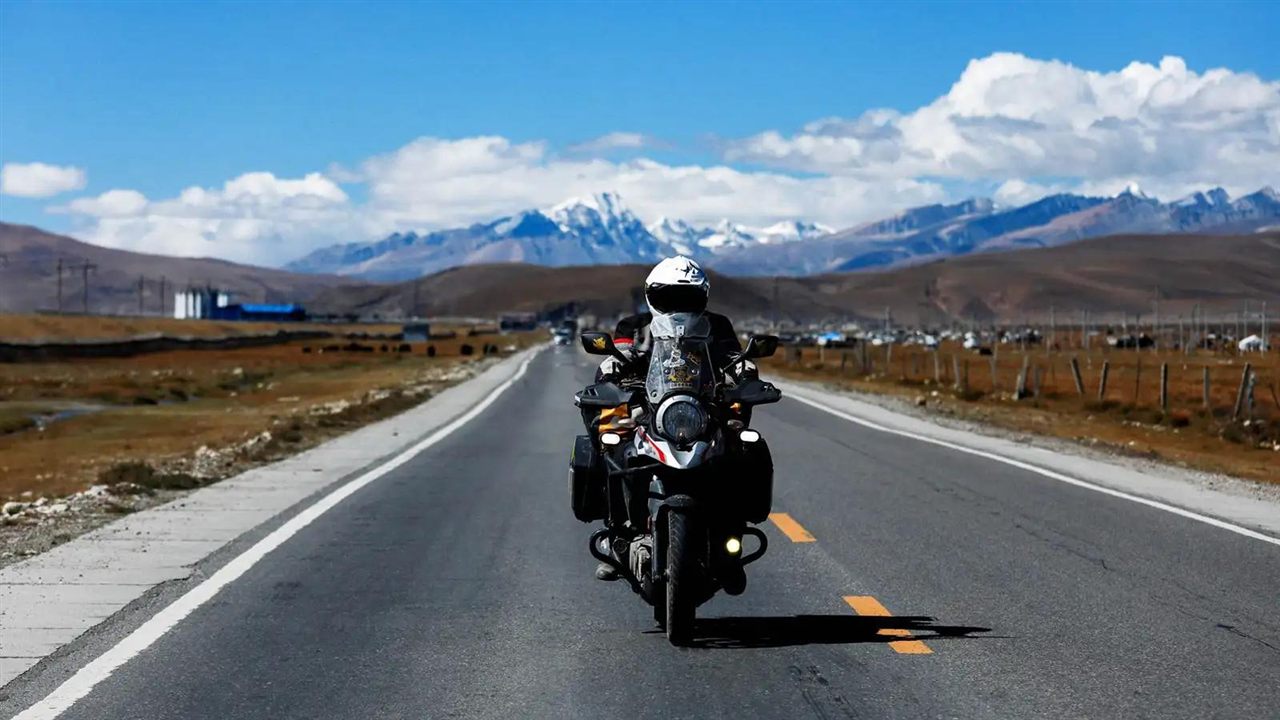
Legal highways into Tibet are G109, G318, and G214. If you’re travelling from Xinjiang to Tibet, you have to detour via Golmud on G109. I did that route last autumn, and the detour adds a couple of days, but the scenery on G109 is worth every extra hour in the saddle.
Final Tip for Your Gear List
When you’re writing up your riding gear and accessory list for border inspection, be specific but don’t overcomplicate it. I write “1 pair full-grain leather riding gloves, 1 pair waterproof textile gloves” instead of just “2 pairs of gloves”, and I note the make of my auxiliary lights and panniers. It takes 10 extra minutes, and it makes the inspection go faster.
Ports aren’t open 24 hours, so arrive early — I aim for 9am, after the initial morning rush but before the midday heat. If you get stopped at checkpoints or police stops on the road, the agency provides supporting documents remotely, so you don’t have to carry a stack of extra paper with you.
And if you’re only staying 30 days, China offers 30-day visa-free entry. If you want to stay longer, the agency can issue an invitation letter to help you get a longer tourist visa. Just remember the plate validity stays the same.