Last updated: November 2, 2026
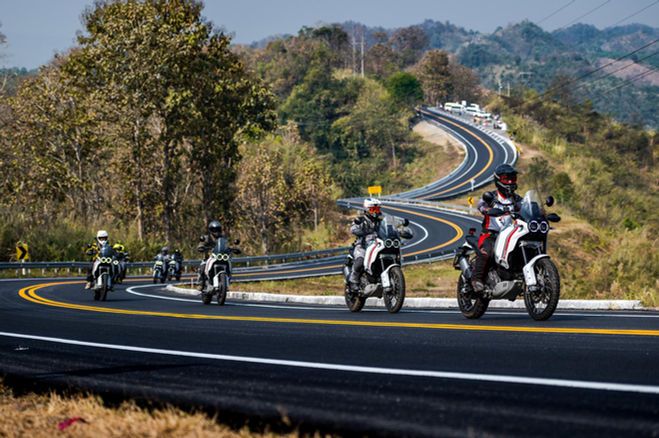
Thailand has a deep motorcycle culture, and every year riders from Chiang Mai and Bangkok plan the trip into China. Is the route open? Yes — and it is a mature one. Out of northern Thailand, north through Laos, and into China's Yunnan at Mohan port, the whole route has established roads and services; many Thai riders have done it. This guide lays out the complete route: how to go, where you cross, what documents you need, what it costs, and what to watch on the road.
1. Why most Thai riders choose the overland route
First, the common question: ride or ship?
The great majority of Thai riders choose overland. The reasons are practical. First, the distance from Thailand to the China border is manageable for a motorcycle — from Chiang Mai to Mohan is roughly 700+ km, two to three days of riding, and the riding itself is part of the adventure. Second, overland costs far less than shipping — the Mohan service fee is the band most used by riders from Laos, Thailand and Malaysia. Third, no shipping schedule, no crating — leave when you are ready.
Who is shipping for? Riders short on time, or who want to start riding from China's coastal cities. Shipping a motorcycle from Thailand to Guangzhou or Dalian costs 22,000 RMB and 18,000 RMB in service fees respectively (sea freight not included) — clearly higher than overland. So unless there is a special need, Mohan overland is the right choice for Thai riders.
2. The route, leg by leg
The route has three legs: Thailand, Laos, China.
Thailand leg: From Bangkok, ride north on Route 1 via Nakhon Sawan and Phitsanulok to Chiang Mai, then on to Chiang Rai. Northern Thailand's roads are excellent, with fuel stations everywhere — a quality ride by Southeast Asian standards. North of Chiang Rai is the Thai–Lao border.
Crossing into Laos: Chiang Khong (Thailand) and Huay Xai (Laos) face each other across the Mekong; since the Huay Xai bridge opened, crossing by motorcycle is easy. Clear Thai exit at Chiang Khong, cross the bridge, and complete Lao entry at Huay Xai. Lao formalities for motorcycles are simple and relaxed for neighbouring countries — handled on site at the border. Bring the bike's papers (vehicle certificate, registration) and your licence.
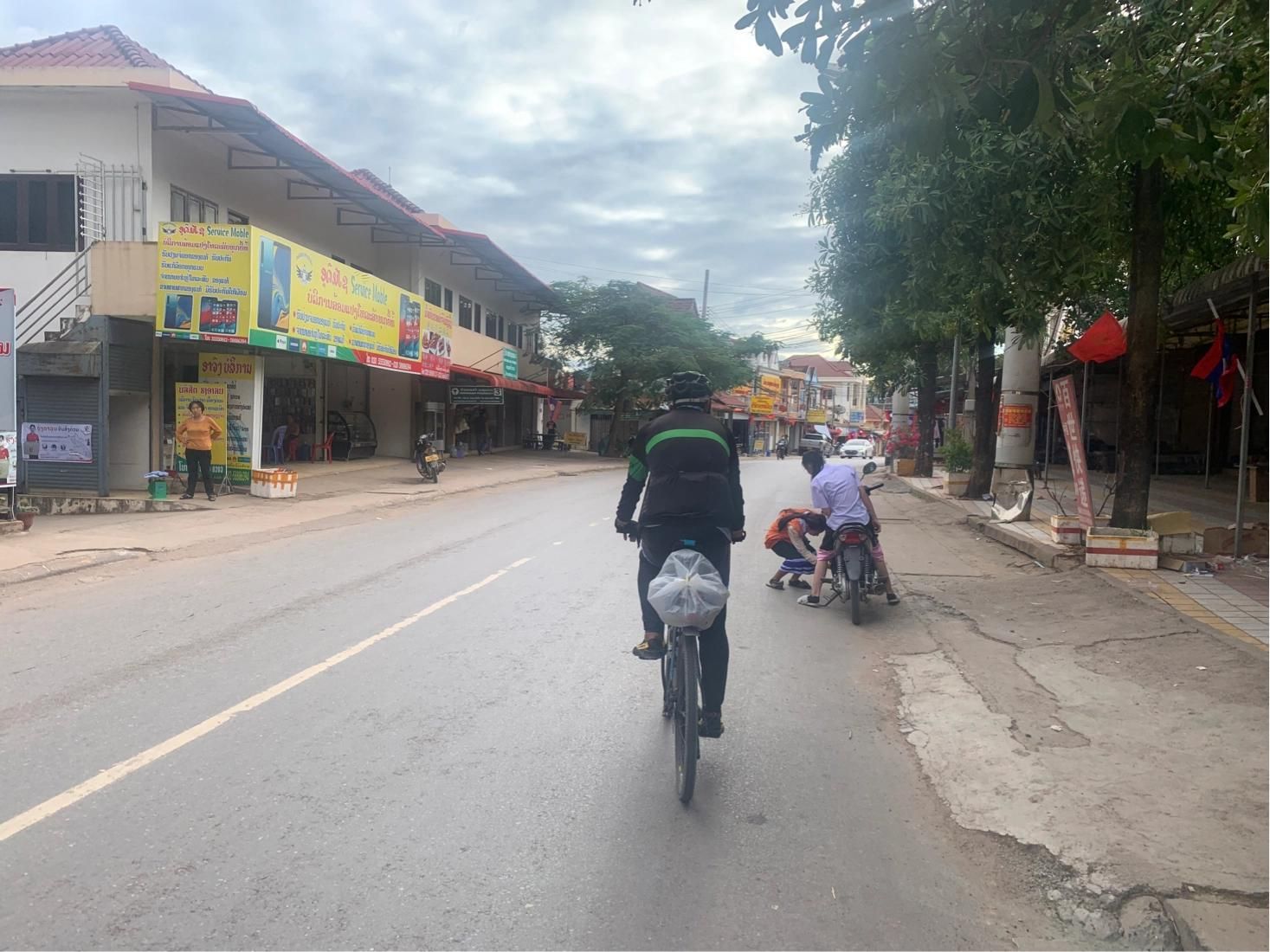
Laos leg: Once in Laos, follow Route 13 north. Route 13 is the north–south backbone of Laos; from Huay Xai via Luang Namtha to Boten is about 300+ km. The road is generally fine with fuel stops and towns, but there are many mountain sections with tight corners — keep the speed down and watch for large trucks. Luang Namtha is a good overnight stop with accommodation and repair shops; check the bike before continuing.
China leg: Opposite Boten is China's Mohan port. Clear Lao exit at Boten, cross, and complete Chinese entry formalities at Mohan. Mohan is the China–Laos border port in Xishuangbanna, Yunnan, and its process for foreign motorcycles from Laos, Thailand and Malaysia is well established.
Distances: Bangkok to Chiang Rai about 850 km, Chiang Rai to Chiang Khong about 150 km, Chiang Khong via Luang Namtha to Boten about 300 km — roughly 1,300 km from Bangkok to Mohan, ridden in 4–6 days at a normal pace. Starting from Chiang Mai shortens it: about 750 km to Mohan, 3–4 days.
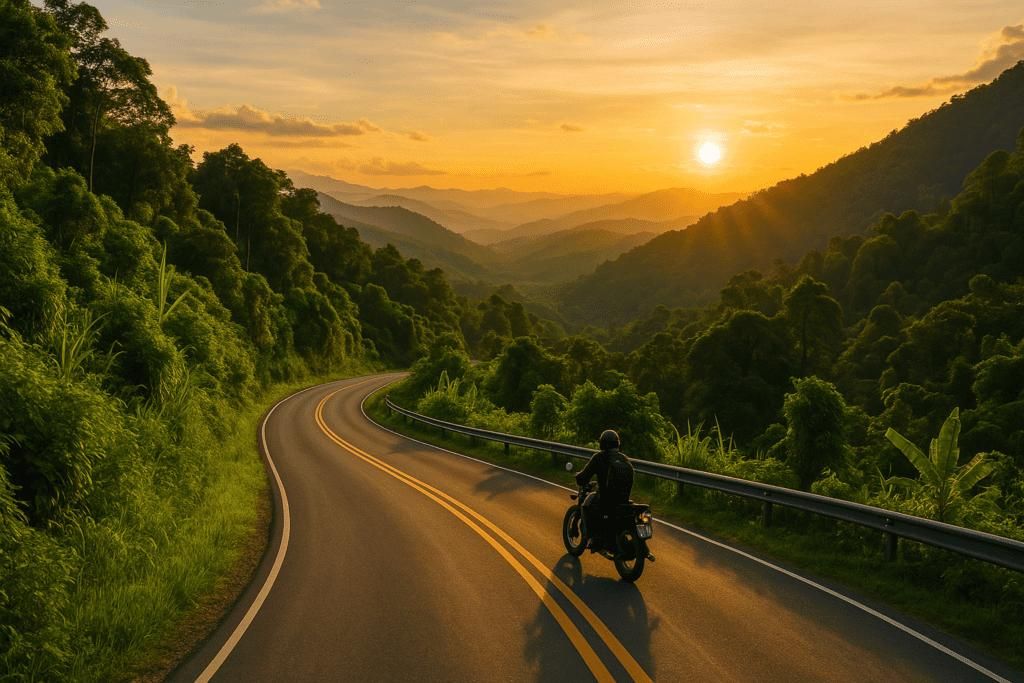
My experience: I have guided many Thai riders on this line. The Chiang Mai–Mohan leg is actually the most enjoyable part of the trip — northern Thailand's mountain roads are twisty but well surfaced, and the Laos leg, though corner-heavy, has little traffic and is great fun. The part that needs real focus is the first two days after entering China: adapting to right-hand traffic and the navigation systems.
3. What happens at the Chinese port
Foreign motorcycles entering China temporarily must be declared to customs through a licensed outbound travel agency as guarantor — individuals have no standing in the customs system; that is how the process works. So before you arrive, the declaration has already been submitted; at the port you verify information and complete formalities, with staff accompanying you throughout.
At Mohan you go through, in order: customs declaration verification, immigration transit, vehicle inspection, Chinese temporary driving licence, Chinese temporary plates, and route filing. A few things worth knowing in advance save a lot of time:
First, China does not recognise international driving permits. China is not a party to the UN Road Traffic Convention; your international permit is not valid here, and you must obtain a Chinese temporary licence. The agency handles this — it is included in the service fee, and you don't visit the vehicle administration office yourself.
Second, the temporary plate is valid for 3 months. Your riding route is filed with customs at declaration, and the plate corresponds to the filed scope. Three months is enough for a full trip.
Third, right-hand-drive motorcycles are allowed. Thailand is a right-hand-drive country; China allows right-hand-drive vehicles to enter temporarily at every port, with the same procedures and fees as left-hand-drive — no extra charge. What needs adapting is that China drives on the right, opposite to Thailand; take extra care, especially turning and overtaking in the first days.
4. Documents: prepare 20 days ahead
Documents for the Chinese formalities must be submitted 20 days before entry (1 month ahead if your trip includes Tibet):
- Passport (valid beyond your trip — generally recommended to have 6+ months after the trip ends);
- China visa (Thai passports: China grants 30-day visa-free entry, enough for a short ride; to stay longer, a longer tourist visa via an invitation letter — approval rests with the embassy);
- Thai driving licence (motorcycle category);
- White-background ID photo of the rider;
- Vehicle registration certificate;
- Vehicle certificate (owner's certificate);
- Engine number (photograph the engine bay if the certificate does not show it);
- Vehicle photos: front, rear and side.
Vehicles older than 6 years also need an inspection certificate, and the vehicle must pass inspection at the vehicle administration office after entry before the plate is issued.
Except for the Chinese licence, all documents need Chinese translations, arranged by the agency.
5. Costs: what this trip takes
Under current Mohan rates, costs fall into a few parts:
Entry service fee: Mohan 5,000–6,000 RMB per vehicle (same for cars, RVs and motorcycles; Lao-registered vehicles 4,000 RMB). The fee covers: customs declaration at entry, immigration transit, temporary licence, temporary plates (3 months), exit customs clearance, route filing, and on-site assistance at the port.
Customs deposit: 10,000 RMB, refundable. Customs assesses the deposit at roughly 50–65% of the vehicle's value; with the agency as guarantor, the rider pays only 10,000 RMB. The deposit goes to the agency's corporate account and must arrive 3 days before crossing — if late, the declaration is cancelled and the service fee is not refunded. After exiting on time, it is returned to the original account within 3–5 working days. Refund conditions: exit on time, no unsettled traffic violations, no outstanding fees.
Insurance: compulsory third-party insurance is required or you cannot get the temporary plate; optional commercial third-party liability from 500,000 RMB. Insurance is arranged by the agency before entry; you pay the actual cost.
Translation fees and the vehicle inspection fee (about 200 RMB) are additional; fuel, tolls and accommodation on the road depend on your riding style.
For the Bangkok–Mohan leg itself: fuel, tolls and lodging in Laos over 4–6 days, plus your China itinerary — within your control. The fixed entry costs are 5,000–6,000 RMB service fee + 10,000 RMB deposit (refundable) + insurance — that is the entire hard spending.
6. Common questions from Thai riders
Q: Can I use my Thai licence in China?
A: Not directly. China does not recognise international driving permits; you need a Chinese temporary licence, handled by the agency and included in the service fee.
Q: Where can I ride in China?
A: All of China is open, with a few restrictions to know: Tibet requires a guide throughout, advance filing of the itinerary and a Tibet entry permit; Beijing requires an entry permit for foreign vehicles; some border-restricted areas of Xinjiang and Gansu are off-limits; the G219 sections at Dahongliutan and the Kashgar–Yecheng to Rutog (Pangong Lake) stretch are not open to foreigners; the new unmanned-area national road towards Minfeng is also closed to foreigners. To travel from Xinjiang to Tibet, foreign riders must detour via Golmud on the Qinghai–Tibet line G109.
Q: What if 30 visa-free days are not enough?
A: Thai passports get 30 days visa-free. To stay longer, the agency can issue an invitation letter to help apply for a longer tourist visa; approval rests with the embassy, so plan ahead.
Q: Is fuel easy to find on the road?
A: China has a dense network of fuel stations, including along ordinary national roads. Loose petrol is strictly controlled — buying canister fuel as an individual requires a police certificate — so planning refuelling stops beats carrying extra fuel.
Q: How do I handle mobile and payments?
A: After entry, get a Chinese SIM card and bind WeChat Pay or Alipay — fuel, lodging and meals all accept them. For navigation, use Amap or Baidu Maps.
7. The first leg after entry
From Mohan, the recommended first leg for Thai riders is: Mohan – Xishuangbanna (Jinghong) – Pu'er – Kunming. This is the highlight stretch of Yunnan riding — tropical rainforest, tea mountains and terraced fields. Kunming is a good place to restock, then decide between Dali/Lijiang and the Yunnan–Tibet line or elsewhere. Yunnan roads are friendly to Southeast Asian riders, and altitude rises gradually from a few hundred metres at Xishuangbanna to around 2,000+ metres at Dali and Lijiang — no abrupt change.
8. Final pre-departure checklist
- Documents submitted 20 days ahead — confirm complete;
- Deposit transferred to the corporate account on notice (arrive 3 days before crossing);
- Insurance confirmed active;
- Bike service: tyres, brakes, chain, oil;
- Helmet, documents and translations carried on you;
- Check Mohan's gate hours for the day of crossing.
The Thailand-to-China motorcycle trip: the route is open, the formalities are clear. Arrange documents and process in advance, and the rest is the part about riding through China. For help or enquiries, contact us — the document list and cost breakdown are sent to you for checking before anything begins.
Planning to ride your motorcycle into China?
We handle the entire entry process — customs, plate, permit, guarantee. You ride across on entry day and focus on the road.
WhatsApp / WeChat: +86 13759155671 · Email: [email protected]
Contact Us Now →