Last updated: November 4, 2026
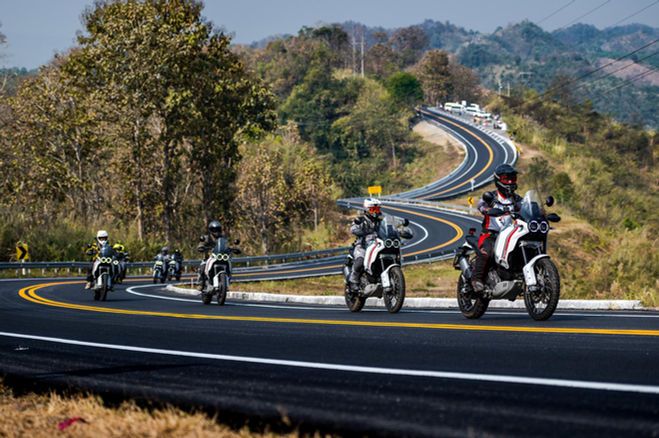
The keywords "thailand motorcycle to China" and "Chiang Mai to China bike" are searched a lot by Thai riders. How do you ride a motorcycle from Thailand to China? What route? How many kilometres in total? How do you cross Laos? How do you enter at Mohan? Will a Thai right-hand-drive bike be hard to handle? This guide follows the actual route I have ridden with Thai riders, from Chiang Mai to Mohan end to end: route, distance, the Laos crossing, the port process, right-hand-drive notes, costs and visa - all in one. Thai riders are an important customer group of ours, and I know this road well; everything worth watching is written below. If you are searching "mohan border crossing", "磨憨口岸入境", "Mohan border China", "Mohan port entry guide" or "China Laos border crossing car", this guide is written for you.
First, the full picture: Chiang Mai to Mohan is about 550-600 km, comfortable in 2-3 days
From Chiang Mai, riding to the Mohan port is roughly 550-600 km in three legs: the Thai leg, the Laos leg and the border leg. If you are not rushing, 2-3 days is comfortable; in a hurry two days will do. My usual advice for Thai riders is to allow 3 days: day one Chiang Mai to Chiang Khong, day two the ferry into Laos and on to Boten, day three cross into China early in the morning.
Do not schedule it too tight - part of Laos Route 13 is mountain switchbacks, and border queues add variables that Thailand does not have. Riders coming from Bangkok should add about 700 km to Chiang Mai, making the full run Bangkok to Mohan roughly 1,200-1,300 km, which needs 5-6 days. Riders with bikes hired locally in Chiang Mai who just want a loop of Yunnan can also fly to Chiang Mai and ride to Mohan - your own bike or a rented one, the paperwork is the same.
Chiang Mai to Chiang Khong: the northern Thai leg, about 300 km
Head north from Chiang Mai on Highway 118 to Chiang Rai, then northeast to Chiang Khong, about 300 km in total. This stretch has good roads by Thai standards - asphalt, plenty of curves but nothing difficult. The scenery is northern Thai hills and rice fields, with cafés and gas stations all along; no need to carry spare fuel.
Chiang Khong is a small border town on the Mekong, facing Huay Xai in Laos across the river. Arrive and find a place to sleep for the night, then cross early the next morning at a relaxed pace. Guesthouses in Chiang Khong range from about 150 to 400 baht; pick one with a courtyard where you can park the bike. Do not just go to bed when you arrive - ask about the next morning's ferry schedule, because in peak season there are fewer crossings and you should queue early.
The ferry across the Mekong from Chiang Khong to Huay Xai
Motorcycles cross the Mekong by ferry boat, not by bridge. Chiang Khong has dedicated vehicle ferries - you and the bike go together, and it takes about ten minutes to reach Huay Xai on the other side.
When loading, you push the bike onto the boat ramp. Scooters and light bikes are no problem; heavier ADV machines need care - slow down on and off the boat and keep it balanced. The fare is modest, charged separately for bike and rider. Across the river you clear Laos immigration at Huay Xai, where both rider and bike are registered.
Huay Xai is a small town in northern Laos. A few dozen kilometres past the border you enter the mountains. If you want to play it safe, stay the night in Huay Xai and ride the Laos leg the next day. There are simple guesthouses and restaurants - noodle soup and fried rice, cheap, around 10 RMB a bowl.
The Laos leg: Huay Xai to Boten, about 230 km of mountain road on Route 13
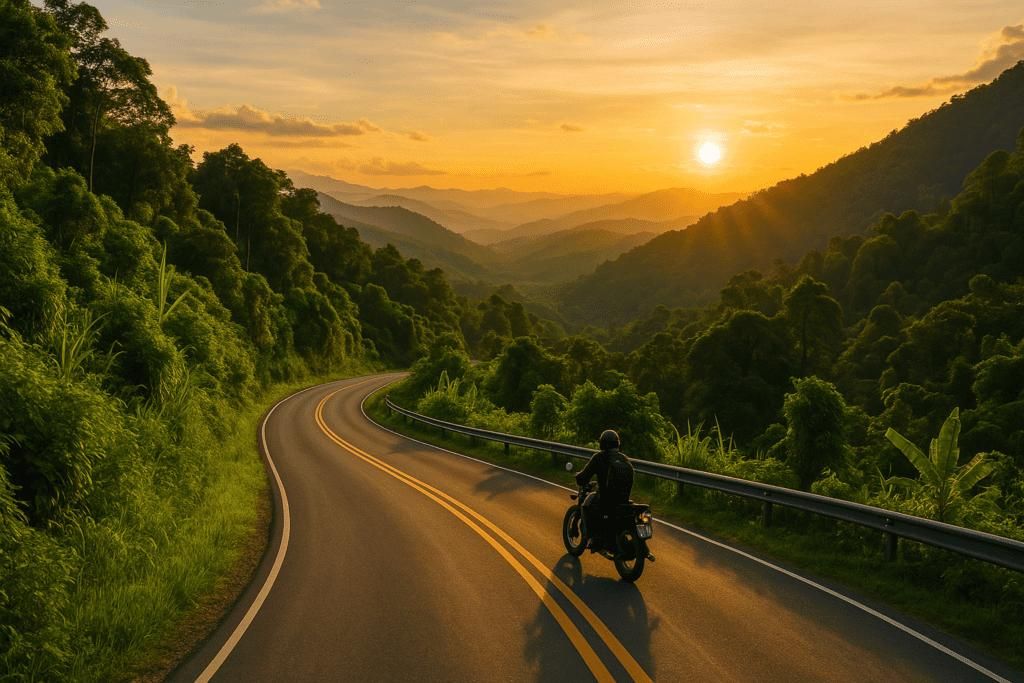
From Huay Xai to Boten (opposite the Mohan port) you take Laos Route 13, about 230 km. This is the heart of the whole route: lots of switchbacks, sharp curves and steep grades, a road that is not wide, with construction and broken patches in places.
Some practical experience for this stretch:
- Control your speed. Sightlines are poor in the switchbacks and big trucks often come the other way around a corner - check the opposite lane before leaning in.
- Watch the surface. After the Laos rainy season some sections have potholes; asphalt and gravel alternate, grip changes quickly, so brake early.
- Gas stations are spaced further apart than in Thailand - fill up before entering the mountains and do not expect a station to appear halfway.
- Construction sections are common. I have sat through temporary one-way traffic with customers - waiting ten or twenty minutes is normal, no need to get frustrated.
One piece of advice I give every Thai rider on this leg: better slow than sorry. I have seen a rider try to overtake in the mountains and nearly meet a coach head-on; he stopped in time. The 230 km does not look far, but in practice it takes 5-6 hours, rest points are scarce, and you should carry water and snacks.
Past Boten is the direction of the Chinese Mohan port. Boten to the Mohan crossing is only a few kilometres, so crossing the same day is entirely feasible. Boten is a border special economic zone with hotels and casinos - if you prefer to cross early the next morning you can stay there, but it is pricier than Huay Xai; most riders simply cross on arrival.
Supplies on the Laos leg: small villages line Route 13 with roadside stalls selling noodle soup, fried rice, water and drinks at low prices, but lodging and repair options are basic. If you want a better night, stay in Huay Xai or Boten; fill up whenever you find a station rather than waiting for the light. Laos petrol comes in regular and premium grades - use what your bike's requirements say, and do not fill the wrong one. Also: helmets are mandatory on the Laos leg and police do check, so keep documents with you.
Entering at Mohan: documents, deposit and the process on the day
Entry at Mohan needs the same documents as a car, declared by a licensed travel agency - individuals cannot clear themselves - submitted 20 days ahead (1 month if the itinerary includes Tibet): passport, Chinese visa, driving licence, white-background photo, registration certificate, title, engine number (photo of the engine bay if not on the title), and front, rear and side photos of the bike. Bikes over 6 years old add the inspection certificate and a post-entry vehicle-office inspection, about 200 RMB.
The deposit: customs sets it at 50%-65% of the vehicle value; with our guarantee you pay only 10,000 RMB, into the corporate account, arriving 3 days before entry. If it is late, the declaration is cancelled with no refund of the service fee. Within 3-5 working days after exit it is refunded the same way.
Process on the day at the port: customs declaration, immigration transit procedures, vehicle inspection, collect the temporary plate and temporary licence, file the riding route - with on-site staff accompanying you. With complete documents half a day is enough, and fast cases take 4 hours. The temporary plate and licence are valid for 3 months. The port is not open 24 hours - check the hours for your day in advance; the gate closes early in general, so do not cut it fine.
Will a Thai right-hand-drive bike be hard to handle?
Thailand drives on the left; China drives on the right. Right-hand-drive bikes can enter at every port with the same paperwork and fees as left-hand-drive - no surcharge - so put that worry aside first.
What really needs attention is adaptation: in the first two days, overtaking and entering ramps are where problems happen. Riding on the left your habits are tuned one way; on the right they flip, and your overtaking checks have to reverse. I usually advise Thai riders to take the Mohan-to-Kunming stretch slowly after entry - the G85 expressway has good surface, and half a day is enough to find the feel of right-hand traffic again before going further. Be especially slow on ramps: Thai habit is to enter from the left, in China from the right, and it is easy to take the wrong line at first.
Costs and visa
Mohan entry service fee: 5,000-6,000 RMB per bike, Thai-registered vehicles at this tier; Laos-registered 4,000 RMB. Deposit 10,000 RMB, insurance bought by us (compulsory traffic insurance mandatory, optional commercial third-party from 500,000 RMB up), inspection about 200 RMB if the bike is over 6 years old. Road expenses you plan yourself: fuel, tolls, food and lodging. Fuel in China is a bit pricier than Thailand; 92-octane is sold by the litre, and a bike tank costs a few dozen RMB to fill - nothing to worry about.
Visa: China grants Thai passports visa-free entry for 30 days, enough for a short tour. To stay longer, we issue an invitation letter to help you apply for a longer tourist visa. Plan the visa backwards: documents go in 20 days ahead, the 30 visa-free days start counting from entry, and do not let the itinerary exceed the stay period - an overstay affects the deposit refund.
First stop after entry: Kunming
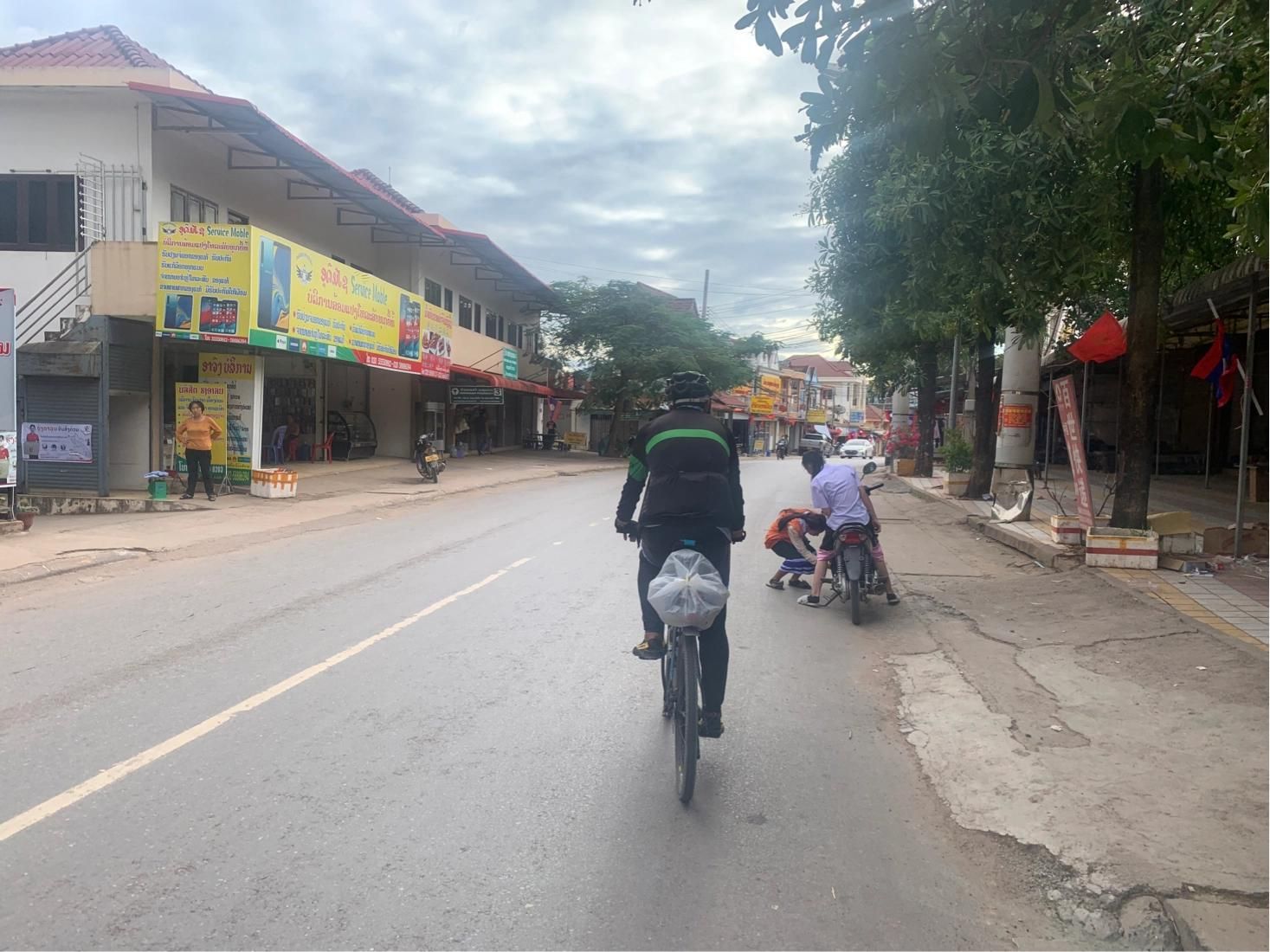
From Mohan the road runs on to Kunming, about 670 km, one day on the G85 expressway. Kunming is convenient for food and lodging, and many Thai riders use it as the first rest stop - check the bike, restock gear, then decide whether to go on to Dali, Lijiang or further inland. Kunming sits at about 1,800 m above sea level; coming up from Thailand's low altitude, this is exactly where to transition, and altitude sickness later on is lighter for it.
Kunming to Dali is about 300 km and Dali to Lijiang about 180 km - the stretch Thai riders ride most after entry: good roads, good scenery, mature food and lodging. Further on you can keep going towards Shangri-La on the Yunnan-Tibet line, but that depends on your body and your time. If you are planning to continue toward Tibet, remember the G219 Xinjiang-Tibet line at Dahongliutan is closed to foreigners, and foreigners going from Xinjiang to Tibet must detour via Golmud on G109 - we write all these restricted areas into the route filing for you.
Season: you can ride this line all year, each season with its own scenery. March-May is spring flowers, and the wind by Erhai Lake at Dali is pleasant; June-August is the rainy season with frequent showers but deep green; September-October is crisp autumn, a very stable window; winter is colder, but Yunnan is still easier riding than the hills of northern Thailand. Thai riders are used to riding year-round; the variable that affects you most in China is not season but temperature difference - nights in the highlands and mountains are far colder than Thailand, so bring enough warm layers.
Vehicle preparation before Thai riders leave
Beyond the paperwork, bike and gear preparation is not optional. Run through these before departure:
- Tyres: check tread and pressure - on Laos mountain roads plus rainy-season surfaces, grip is safety. Carry a puncture kit and pump; between Thailand and Mohan there are not many repair shops.
- Chain and brakes: check chain tension and pad thickness - long downhill mountain stretches make overheated brakes the big risk.
- Fuel: stations are dense in Thailand, so fill before entering Laos; fill again before entering the mountains on Laos Route 13 - do not gamble on a station halfway.
- Protection and rainwear: sudden showers are normal in northern Thailand and Laos in the rainy season; waterproof gloves and a rain suit matter. For temperature: Thailand's low altitude runs past 30 degrees, while Mohan and Kunming sit higher and mornings and evenings are cool - a packable warm layer is genuinely useful.
- Phone and data: buy a Laos SIM or enable international roaming; you will need navigation and border communication on the Laos leg. The network inside China is different, so sort that out in advance too.
Common questions
Q: What time does the Chiang Khong ferry run?
A: The ferry runs during daylight; ask the pier for the exact schedule on the day. In peak season there are fewer crossings, so queue early in the morning.
Q: Do I need a visa to transit Laos?
A: Laos offers visa-on-arrival for visitors from China's neighbouring countries; the details follow your passport nationality and are arranged at Huay Xai. The fee is low - have cash ready when queuing. Both rider and bike are registered.
Q: What do fuel prices look like on the Laos leg?
A: Laos fuel is about the same level as China and a bit dearer than Thailand. Fill before entering the mountains; no need to economise specially.
Q: Can everything be done at Mohan on the same day?
A: With documents in early and the deposit paid, half a day is enough, and fast cases take 4 hours. The port is not open 24 hours, so do not cut it fine.
Q: How long is the visa-free stay for Thai bikes?
A: China grants Thai passports visa-free entry for 30 days, enough for a short tour. To stay longer, we issue an invitation letter for a longer tourist visa.
Q: Where is a good first night after entry?
A: Most Thai riders stay in Kunming - about 670 km from Mohan, one day on the G85. If you prefer to rest near the border, Mohan town has hotels and you can set off the next day.
Let me lay out the timeline for Thai riders again: once your departure date is fixed, send us the documents 20 days ahead for review, get the deposit in 3 days before entry, and finish the bike check 2 days before leaving Chiang Mai. Cross on the day at Mohan, then spend two days in Yunnan finding the rhythm of switching from left- to right-hand traffic before going further. Do not leave the documents to the last minute - we need time to review them too, and the earlier you send them, the calmer everything is.
The Chiang Mai-to-Mohan road is one I have ridden with Thai riders many times - the route is stable and the paperwork mature. If you are a Thai rider planning to enter China by motorcycle, start by adding WeChat qxzj7557 and telling me the model and departure date - I will work out the document list, deposit and costs in one go. WhatsApp, same number: +86 13759155671. Email: [email protected]. Yunnan Province International Travel Service (Group) Co., Ltd. - a familiar face at the Mohan port, with staff on site.
Ready to plan your ride into China?
Customs declaration, temporary plate, temporary licence and guarantee - handled for you end to end. Ride across the border on arrival day and keep your energy for the road.
WeChat / WhatsApp: +86 13759155671 · Email: [email protected]
Contact Us Now