Last updated: November 2, 2026
"Which season is best for riding a motorcycle in China?" and "Which route?" are two questions that always travel together. China is vast — in the same month, Hainan can be rainy, Xinjiang midsummer-hot, Yunnan mild, and Tibet just past its snow season. There is no "good all year" answer, only "which route is best in this season". This guide skips theory and goes straight to month-by-month and rider-by-rider recommendations, so you can plan your trip right away.
1. The logic of a 12-month plan
China motorcycle travel follows a simple seasonal logic: go south in winter, go west in summer, anywhere in spring and autumn, and concentrate high-altitude routes in May to October.
Concretely:
January–February: Hainan island loop, southern Yunnan (Xishuangbanna, Pu'er), southeast coast. Cold-season riding — low altitude, warm weather.
March–April: Yunnan at its best across the province — Kunming, Dali, Lijiang, Shangri-La; the Jiangnan region (southern Anhui, western Zhejiang) is also good, spring blossoms and all.
May–June: the window into Tibet opens. Yunnan–Tibet and Sichuan–Tibet lines are both rideable before the rains fully arrive — good timing; the northwest (Gansu, Qinghai) begins to warm.
July–August: high summer. Tibet routes hit peak season; the grassland lines (Inner Mongolia, Hulunbuir) are the summer escape; the Xinjiang–Gansu northwest loop is at its best too. Note the typhoon and monsoon season across south and east China — not the time for southern coastal riding.
September–October: the golden season of the year. Plateau weather is most stable; Yunnan–Tibet, Sichuan–Tibet, Qinghai–Tibet and the Silk Road are all at their best, and roads nationwide are good around the National Day holiday.
November–December: the north starts into winter; head south — Hainan island loop, southern Yunnan, southeast coast. This is when cold-season riding happens.
2. Month by month: where to go
January: Hainan island loop (Sanya–Haikou line), southern Yunnan (Xishuangbanna, Pu'er). 15–25°C, good for shorter, relaxed riding.
February: As above; Hainan enters peak season; expect crowds in southern Yunnan around Chinese New Year.
March: Northwest Yunnan (Kunming–Dali–Lijiang) — mild, blossom season; the spring of southern Anhui and western Zhejiang is worth it too.
April: All of Yunnan — Dali, Lijiang, Shangri-La; the Yunnan–Tibet line can be started, with gentle altitude gain.
May: The first-choice month for Yunnan–Tibet and Sichuan–Tibet; the Xinjiang–Gansu northwest line starts to warm.
June: Golden window for Tibet routes — Sichuan–Tibet, Yunnan–Tibet, Qinghai–Tibet all rideable; the grassland lines (Xilinhot, Hulunbuir) enter their best season.
July: Grassland lines, northwest loop (Qinghai Lake, Qilian Mountains, Dunhuang); Tibet routes at peak — more riders, book lodging ahead.
August: As above; grassland and northwest continue; Tibet routes still busy.
September: The best month of the year. Stable plateau weather; Yunnan–Tibet, Sichuan–Tibet, Qinghai–Tibet and the Silk Road all in season; the south's rainy season ends.
October: Golden season continues; around National Day is the year's overall high point for roads and weather; Hainan island loop turns comfortable too.
November: The last window before the north's winter; Hainan island loop and southern Yunnan begin the cold-season run; the southeast coast (Fujian, Guangdong) is comfortable.
December: Hainan island loop, southern Yunnan, southeast coast. Northern routes are into winter — not for long motorcycle travel.
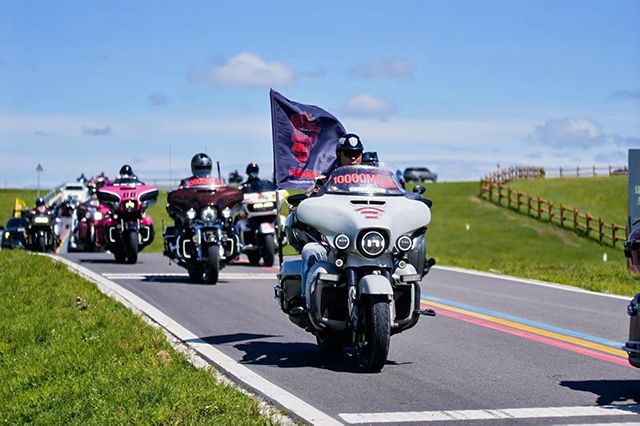
My experience: I run convoys into and out of Yunnan and Tibet every year; September and October are genuinely the best months — clear skies, dry roads, high visibility. But late September and early October is the National Day golden week, when tourists flood in and both lodging and roads jam. Ride in mid-to-late September, or after mid-October, to avoid the peak.
3. Rider by rider: which type are you
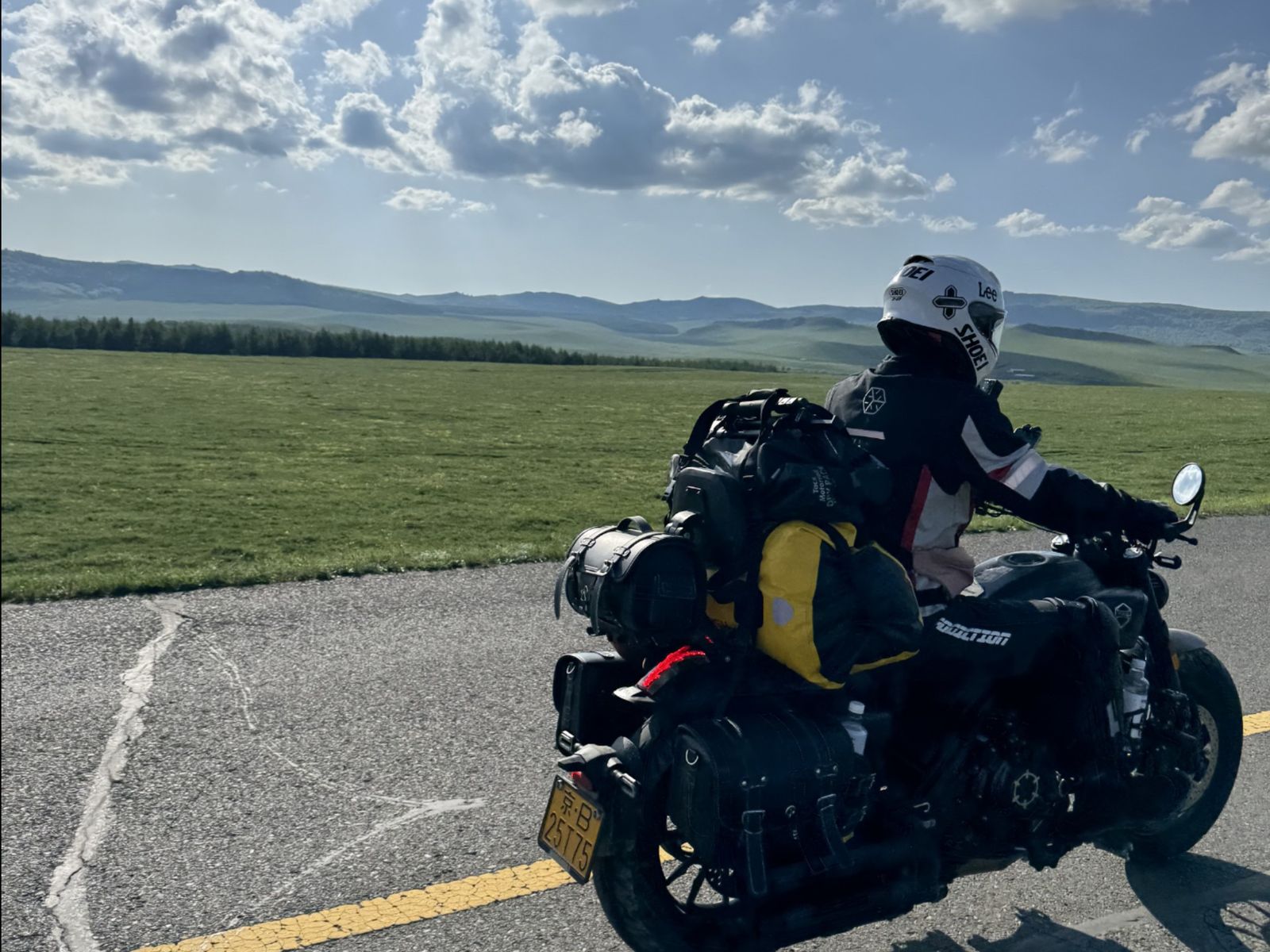
First-time Tibet rider: choose the Yunnan–Tibet line. From Kunming through Dali, Lijiang and Shangri-La into Tibet, altitude climbs slowly from 2,000 to 4,000 m with a long adaptation period and rich scenery. Ride May–June or September–October. Allow 10–14 days.
Veteran doing an east–west crossing: choose the "Khorgos in / Mohan out" cross-entry (or the reverse) to ride both the western and eastern halves of China in one trip — 8,000 RMB full package, both ports in one process. Enter at Khorgos and ride the Silk Road east, or enter at Mohan and take the Yunnan–Tibet line. Only with 3+ weeks to spare.
Short relaxed ride: Hainan island loop, about 600 km in 3–5 days; or the Yunnan mini-loop (Kunming–Dali–Lijiang) in under a week.
Winter rider: Hainan island loop plus the southeast coast, November to March — comfortable, and the only direction suited to long winter rides.
Grassland rider: June–September, enter at Erenhot port, ride the Xilinhot–Hulunbuir grassland line — straight roads, open views.
4. Classic routes at a glance
Yunnan–Tibet line: Kunming–Dali–Lijiang–Shangri-La–Markam, about 2,200 km, 10–14 days. Best April–May and September–October. The first-choice Tibet route for adaptation.
Sichuan–Tibet line G318: Chengdu–Kangding–Litang–Lhasa, about 2,100 km, 10–14 days. Best May–June and September–October. Most mature roads and lodging.
Qinghai–Tibet line G109: Xining–Golmud–Nagqu–Lhasa, about 1,900 km, 8–12 days. Best June–September. The compulsory route for foreigners entering Tibet from Xinjiang.
Silk Road: Lanzhou–Dunhuang–Hami–Urumqi, about 1,900 km, 7–10 days. Best May–October. Long gaps between towns — plan fuel and lodging ahead.
Inner Mongolia grassland line: Erenhot–Xilinhot–Hulunbuir, best June–September. Grassland scenery.
Hainan island loop: about 600 km, 3–5 days. Best November–March. Winter escape.
5. What foreign riders must know
Most of China is open to foreign riders, but these restrictions must be understood in advance — arriving and discovering you cannot go is the worst outcome:
Tibet: a guide throughout, advance filing of the itinerary and a Tibet entry permit are mandatory. Documents prepared 1 month ahead (20 days at other ports). This is not optional.
Beijing: foreign vehicles entering Beijing need an entry permit.
Parts of Xinjiang and Gansu border-restricted areas: off-limits. The G219 sections at Dahongliutan and the Kashgar–Yecheng to Rutog (Pangong Lake) stretch are not open to foreigners; the new unmanned-area national road towards Minfeng is closed to foreigners too.
Xinjiang to Tibet: foreigners must detour via Golmud on the Qinghai–Tibet line G109 — no direct crossing.
Ports are not 24-hour: gate times vary by day; check the day's schedule before crossing and don't ride through the night to the port.
Gear and altitude: preparing for Tibet routes
Three basics: helmet, riding gloves, rain gear. For Tibet routes add a riding suit with a removable liner — plateau days are hot, nights cold. Keep documents (passport, temporary plate, temporary licence) on your person; checkpoints will ask.
Bikes with a 15-litre or larger tank have no range issue; small-tank bikes can carry a 2–3 litre spare canister. Note: loose petrol is strictly controlled in China — buying canister fuel as an individual requires a police certificate — so the canister is for emergencies only; planning fuel stops is the practical habit.
Altitude sickness varies by person. Practical habits: keep daily altitude gain under 500–1,000 m (the Yunnan–Tibet line naturally fits this pace); drink water, limit alcohol; if you feel dizzy or weak, stop and rest, and if symptoms are clear, descend to lower altitude for the night. Lhasa and Shangri-La both have hospitals — see a doctor promptly, don't push through.
The Tibet season (May–October) overlaps the rainy season; in June–August some sections have landslide and rockfall risk. Watch roadside warning signs, slow down in rain, no overtaking on corners. Riding common sense, but worth taking seriously on plateau roads.
6. Recommended combination itineraries
Plan 1 (first Tibet trip): Enter at Mohan – Xishuangbanna – Kunming – Dali – Lijiang – Yunnan–Tibet line – Lhasa. One line through Yunnan and Tibet, long adaptation period. About 3,000 km total; allow 20+ days.
Plan 2 (east–west crossing): Enter at Khorgos – Silk Road – Lanzhou – Xi'an – Chengdu – Sichuan–Tibet or Yunnan–Tibet line – Lhasa – out on Qinghai–Tibet (or exit at Mohan). A classic long route; allow 30+ days.
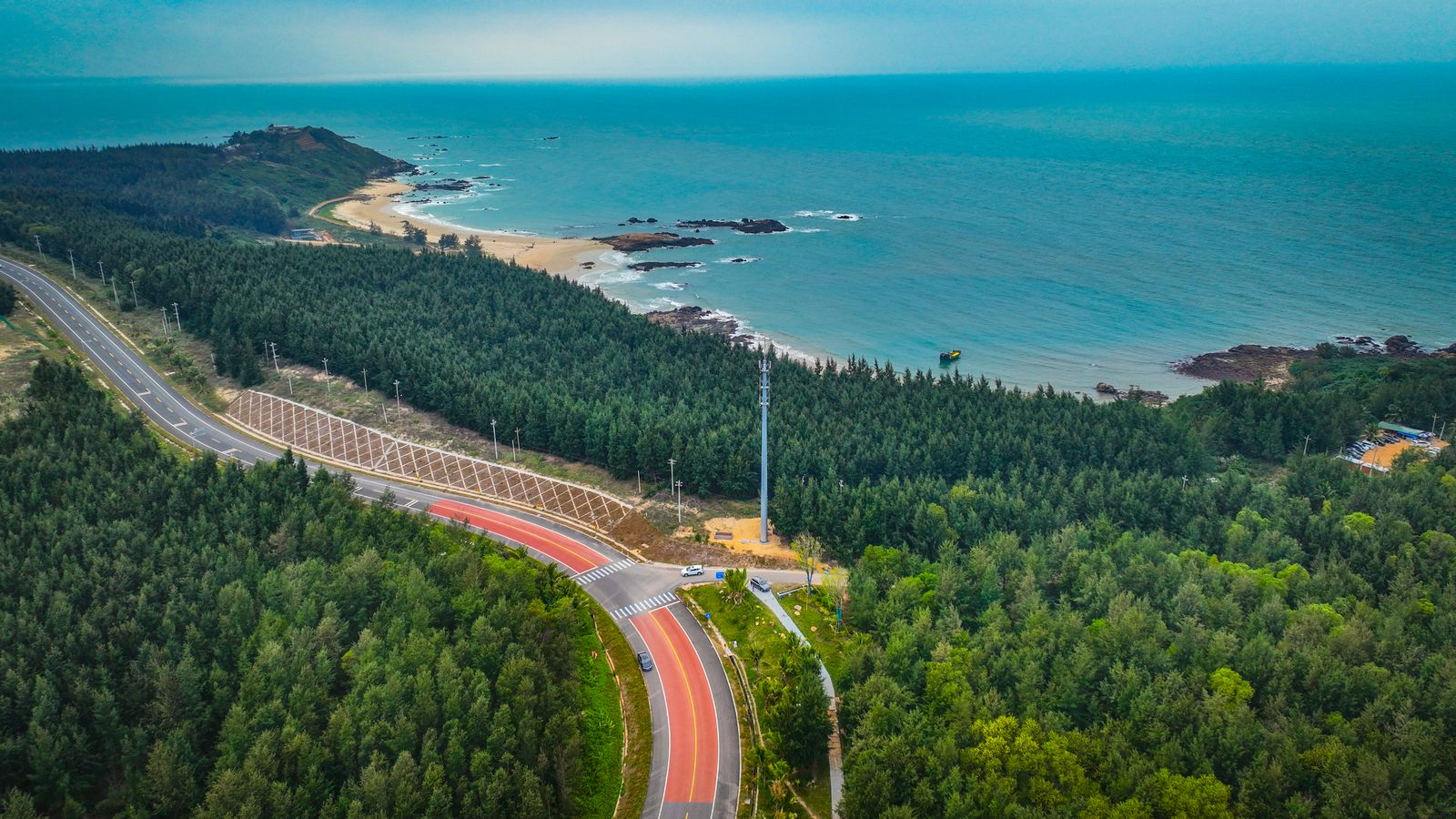
Plan 3 (winter escape): Ship or fly to Hainan – Hainan island loop – Guangxi coast – southern Yunnan – Xishuangbanna. November to March, warm throughout.
Plan 4 (grassland plus northwest): Enter at Erenhot – grassland line – Hohhot – Yinchuan – Qinghai Lake – Dunhuang. June–September, grassland and northwest scenery.
Route planning tips
Set the season first, then the route: season decides the big direction (south in winter, west in summer); choose the route within that direction — easier than the reverse.
Work backwards from the port: the port you enter decides your first leg. Mohan connects Yunnan and the Yunnan–Tibet line, Khorgos connects the Silk Road, Erenhot connects the grassland line, sea freight starts on the coast. Fix the port first, then plan the route — paperwork and riding are one plan.
Plan 150–250 km per day: on Tibet and western routes towns are far apart; set your overnight stops in advance — don't ride into the dark still looking for a place to stay in the mountains.
Keep buffer days: plateau weather, temporary roadworks and small bike issues can each eat a day; two or three buffer days in the plan beat a forced march.
7. Pre-departure checklist
- Pick by season: south in winter, west in summer, anywhere in spring and autumn, high-altitude routes May–October;
- Pick by rider type: first Tibet trip — Yunnan–Tibet; veteran — cross-entry; relaxed — Hainan or Yunnan mini-loop;
- Confirm foreign-rider restrictions: Tibet entry permit, Beijing entry permit, Xinjiang–Gansu border areas, G219 restricted sections;
- Documents submitted 20 days ahead (1 month if entering Tibet);
- Deposit 10,000 RMB arriving 3 days before crossing;
- Insurance confirmed active before entry;
- Temporary plate valid 3 months — allow enough time in the plan;
- Check port gate hours in advance.
Pick the season right and the route is half planned. China's motorcycle travel resources are rich; line up season, route and paperwork, and the rest is the part about riding through China. For a route plan tailored to your time and entry port, contact us — we'll suggest options and provide the processing details.
Planning to ride your motorcycle into China?
We handle the entire entry process — customs, plate, permit, guarantee. You ride across on entry day and focus on the road.
WhatsApp / WeChat: +86 13759155671 · Email: [email protected]
Contact Us Now →