Last updated: November 15, 2026
China Motorcycle Road Trip: Planning Fuel Stops for High-Displacement Motorcycles in Remote Gansu Province
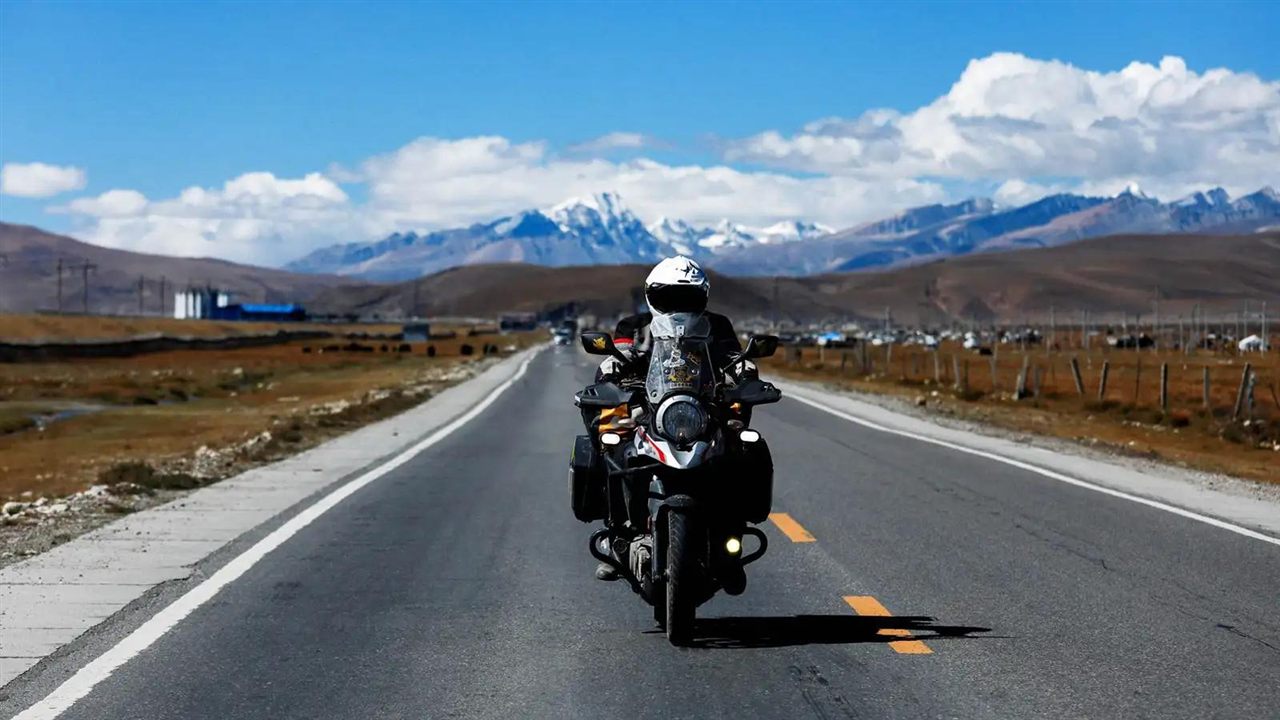
I rode my UK-registered right-hand-drive 1200cc adventure bike through Gansu last October, when the poplars along the Hexi Corridor had turned burnt gold and the wind off the Qilian Mountains carried enough bite to make your knuckles ache through winter gloves. Spent three days picking my way from Jiayuguan west towards Dunhuang, and learned a few hard lessons about fuel stops for big displacement bikes in the empty stretches.
First, let’s get the admin out the way, because none of this happens if you mess up the border side of things. Motorcycle entry into China isn’t something you rock up and sort on the fly. Foreign motorcycle temporary entry China rules are clear: individuals have no standing to declare a bike, you need a qualified travel agency to act as guarantor. I used Yunnan Province International Travel Agency (Group) Co., Ltd, contact Zara on WeChat/WhatsApp +86 13759155671 or WeChat ID qxzj7557, emailed her at [email protected]. They’ve got a 1.6 million RMB tourism quality deposit and three years of operation under their belt, which is the qualification bar for this work.
I came in via Mohan, so Mohan border motorcycle customs clearance was handled end to end. The fee for Mohan entry ran 5,000-6,000 RMB (Laos-registered bikes are 4,000, for anyone coming up from that side). That covered customs declaration, immigration formalities, Temporary China Licence, motorcycle temporary plate China, exit clearance, route filing and on-site port assistance. The motorcycle customs declaration China paperwork all went through them, no faffing on my part.
Couple of hard facts to burn into your brain before you even pack your panniers. China doesn’t recognise International Driving Permits, full stop. The Temporary China Licence they arrange is the only thing that counts. The motorcycle temporary plate China is valid for 3 months, flat – same fee whether you stay one month or three, no daily rate. Customs deposit is 10,000 RMB, paid into their corporate account (never a personal account) 3 days before entry. Refund hits your account 3-5 working days after exit, as long as you leave on time, have no outstanding traffic fines and no unfinished customs matters. Compulsory traffic insurance is mandatory – they purchase it before entry, you pay the actual cost, no temporary plate without it. Commercial third-party cover from 500,000 RMB is optional.
Right, back to Gansu. I rolled into Jiayuguan with a full tank, checked my map, saw a petrol station marked 120km west on the G30, and figured I’d be fine. My bike does about 350km to a tank on the flat, so 120km is nothing, right?
Wrong.
That stretch climbs steadily up to a pass around 2,800m, and a 1200cc bike drinks fuel hard at altitude when you’re twisting the throttle to hold speed against a headwind. I hit that petrol station 90km in, and it was closed – boarded up, no staff, just a dusty forecourt and a dog that stared at me like I was daft for stopping. Range dropped to 80km on the dash, next station marked 110km further on.
Ended up flagging down a lorry driver who siphoned me 5 litres from his spare can, in exchange for a pack of my emergency chocolate and 100 RMB. Sat on the kerb for 20 minutes watching dust devils spin across the desert, kicking myself for not double-checking. Lesson learned: marked fuel stations on remote Gansu roads aren’t always operational, especially the smaller ones off the main expressway.
How to plan fuel stops for big bikes out there
I don’t recommend relying on a single navigation app. Cross-reference at least two sources, and if a station is listed as “small” or “rural”, assume it might be shut and plan your range around the next big one.
For high-displacement bikes, assume your range drops by 25-30% in mountain passes and constant headwind. That’s not a hard rule, it’s just what I saw on my trip – better to have buffer than to be begging fuel off lorry drivers.
Top up every time you pass a major town. Even if you’ve only used a quarter tank. Dunhuang, Jiayuguan, Zhangye, Wuwei – all have plenty of petrol stations, no issues. It’s the stretches between them, the bits where the road runs straight for 100km and you don’t see another car for 40 minutes, that catch you out.
A few other Gansu-specific notes. Some border-restricted areas in Gansu are off limits to foreigners, so make sure your route filing with the agency covers exactly where you plan to go. If you deviate from the filed route, you could run into trouble at checkpoints. The agency provides supporting documents remotely if you get stopped at checkpoints, which saved me a 20-minute argument at a police post outside Yumen when my temporary plate details didn’t pull up on their local system straight away.
China drives on the right, which takes a day or two to get used to on a right-hand-drive bike – your gear lever and brake are on the opposite side to what you’d expect, and I stalled three times at the first toll booth I hit out of sheer muscle memory. Don’t be me, practice in a quiet car park for half an hour before you hit the open road.
Documents you’ll need to sort 20 days ahead of entry: passport, Chinese visa, driving licence, white-background ID photo, vehicle licence, registration certificate, engine number, one photo each of front/rear/side of the bike. Bikes over 6 years old need an inspection certificate, and all documents other than a Chinese licence need Chinese translation – the agency arranges that. Vehicles over 6 years old also have to pass an inspection at the vehicle management office after entry, which costs about 200 RMB. Some ports also require a valid home-country annual inspection certificate, so check with Zara before you set off.
If you’re planning to push on from Gansu to Xinjiang or Tibet, be aware there are more restrictions. Tibet needs a full-time guide and a Tibet permit, and you have to go via legal highways: G109, G318, G214. From Xinjiang to Tibet you must detour via Golmud on G109. G219 at the Dahongliutan section, and the Kashgar/Yecheng to Ritu (Pangong Lake) section are closed to foreigners, as is the new Minfeng no-man’s-land highway. Beijing needs a separate capital entry permit if you head that way later.
Other ports you can use, if Mohan doesn’t fit your route: Khorgos (China-Kazakhstan, 6,000-9,000 RMB entry), Gyirong (China-Nepal), Erenhot (China-Mongolia, 8,500 RMB entry). There are also sea ports at Dalian, Guangzhou, Shenzhen – Guangzhou sea entry is 22,000 RMB, Dalian is 18,000 RMB, ocean freight not included. Cross-through (Khorgos in / Mohan out or reverse) is 8,000 RMB full package. All ports accept both left- and right-hand-drive vehicles, same fees, no surcharge.
Oh, and ports aren’t open 24 hours, so don’t roll up at 10pm expecting to clear customs that night. I made that mistake on a previous trip, slept in a layby just outside the border, and woke up with frost on my helmet. Not ideal.
Last tip: carry a 5 litre fuel can, empty, strapped to your pannier rack. Fill it up at every major town, just in case. It adds a bit of weight, but it’s worth it for the peace of mind when you’re 80km from the next station and your fuel light starts blinking.
For anyone sorting motorcycle entry into China, drop Zara a line first. She’ll walk you through the paperwork, the fees, the route restrictions, and save you a lot of the headaches I ran into on my first trip five years back. Gansu’s worth the hassle, though – the desert sunsets, the sections of the Great Wall half-buried in sand, the quiet roads where you can ride for an hour without seeing another vehicle. Just plan your fuel stops properly, and you’ll have a much smoother time than I did that first day out of Jiayuguan.
Zara
Yunnan Province International Travel Agency (Group) Co., Ltd
WeChat/WhatsApp: +86 13759155671
WeChat ID: qxzj7557
Email: [email protected]