Last updated: November 5, 2026
Many foreign riders planning a motorcycle trip into China put their energy into the bike paperwork and route, and overlook how to bring their own gear and what to watch for at customs. They only reach the port and find that some things in their luggage need declaring and some items have quantity limits, and it all gets rushed. Over the years I've helped friends sort gear lists and walked through ports with them, so let me explain gear and customs declaration from practical experience.
Start with a common misunderstanding. A European friend on his first China ride brought four or five riding suits alone, two helmets, and a lot of brand-new gear meant as gifts. At customs, the amount was judged clearly beyond personal use and needed extra explanation and handling, costing him a lot of time. The things he actually used were fine; the problem was the line called "reasonable personal-use quantity," which he hadn't gauged. Let me work through riding protection, onboard equipment, and customs rules step by step.
Riding protection: what you actually need
Protection is your first line of safety, and my rule is to bring everything you need and nothing you won't use.
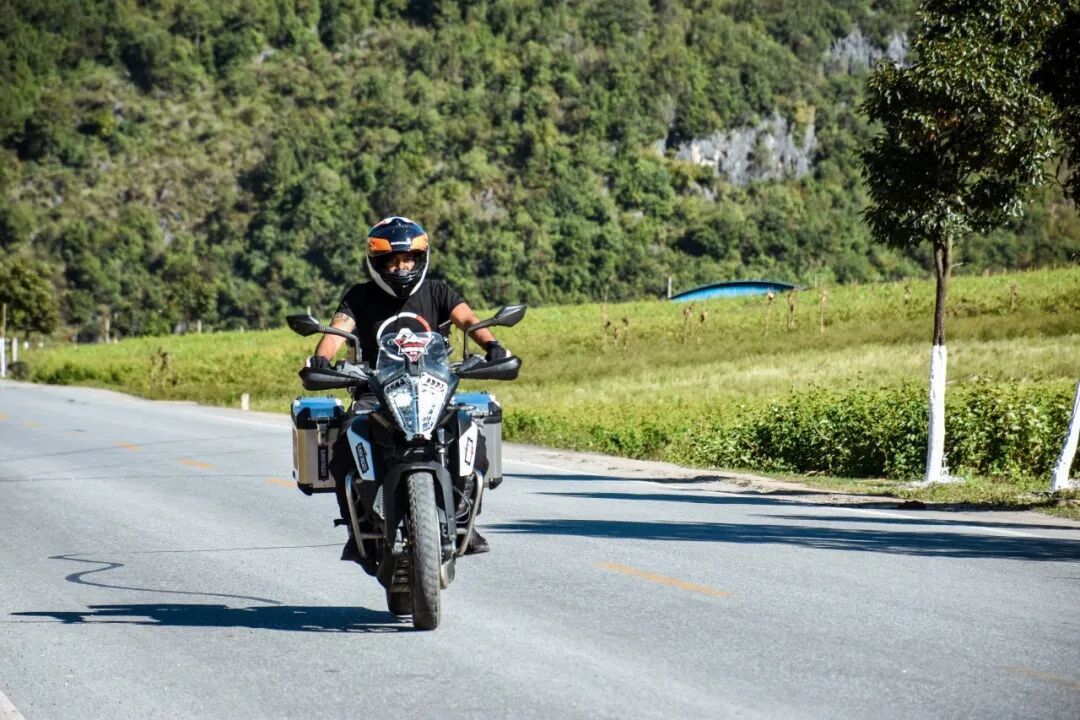
The helmet is the priority. Bring a certified, properly fitting full-face or adventure helmet. Traffic on Chinese roads is complex, and long rides throw up flying stones, insects, rain, and snow, so a sound helmet handles a lot. For visors, I'd suggest both a clear and a dark one: dark for daytime sun, clear at night and in tunnels, so your vision stays sharp.
For riding clothing, bring one suit suited to the main season and layer underneath for temperature swings. An adventure suit or armored jacket has protection at the elbows, shoulders, and back and balances abrasion resistance with wind protection. If the trip spans big temperature differences, like climbing from low to high altitude, layering is more practical than toughing it out, combining warm inner layers and a windproof outer shell.
I usually carry two pairs of gloves: normal-temperature full-finger riding gloves and a waterproof warm pair for rain and cold. Riding boots should protect the ankle, with non-slip soles and a wear-resistant shift area; on a long trip you'll notice how much a good-fitting pair matters. If the suit doesn't have built-in knee and elbow protection, add separate pieces, and a chest or back protector is worth having too.
Rain gear is essential, and a two-piece rainsuit suits a motorcycle better than a poncho, which flaps around at speed and in wind. Neck gaiters, head wraps, warm socks, and waterproof gloves look minor but earn their place in bad weather.
Onboard equipment and tools: what to take
On a long motorcycle trip, equipment has to balance usefulness and weight. Panniers and a top box are the main storage, and I favor waterproof, quick-release, lockable versions so valuables can come off quickly when parked. Keep a few luggage straps and a cargo net for the spare can and loose items.
For tools, bring a set matched to your bike's fasteners: hex keys, wrenches, screwdrivers, pliers, plus a tire repair kit, portable pump, tire gauge, chain lube, fuses, zip ties, and insulating tape. Roadside response is slow in remote areas, so handling small problems yourself gives peace of mind. Carry a few wear parts like bulbs, a clutch cable, brake pads, and a spare fuel line, but not a pile of spares that just adds weight; common parts can usually be bought or substituted in cities.
For electronics, a phone, navigation device, Bluetooth headset, action camera, and power bank are the usual setup. Pay special attention to lithium batteries. China customs and airlines have clear rules on them, and larger power banks and spare batteries have quantity and capacity limits. On flights, lithium batteries generally go in carry-on, not checked luggage, subject to your airline and the current rules. Entering overland by bike, carry them honestly and pack them properly rather than leaving loose batteries scattered.
Customs declaration: understand "reasonable personal-use quantity"
For foreign travelers bringing items in, the core principle is personal use in reasonable quantity. The helmet, suit, gloves, and boots you wear to ride are classic personal-use gear, and declaring them normally and explaining the purpose usually causes no problem.
Problems tend to arise in a few situations. One is excessive quantity, like the friend I mentioned with several brand-new copies of the same item, beyond what one person reasonably needs on a trip, which can raise the question of whether they're for sale. Another is carrying lots of sealed, tagged items, especially gifts or things meant for resale, which differ in nature from personal use. A third is carrying controlled or restricted items, such as certain tools, knives, radio equipment, and drones, which may need special procedures.
My advice is to prepare gear to meet this trip's needs, keep gifts and代购-style purchases within a reasonable range, and declare proactively. With motorcycle tools, ordinary wrenches and screwdrivers are fine, but don't bring things that clearly count as controlled implements, like self-locking knives or restricted parts on some multi-tools. Check before you leave.
Special items: drones and communications
Plenty of riders like to bring a drone, and China manages drone flying fairly strictly. Some areas require real-name registration, and there are no-fly and restricted zones around airports, in cities, at scenic spots, and near military areas, so you can't just take off. Declare the drone honestly on entry, and once there confirm whether you can fly and whether registration is needed. Don't gamble on launching in a no-fly zone; the penalties are not light.
For radio communications, like walkie-talkies and vehicle radios, frequency use is regulated in China, and equipment limited by power and band may require a license. Bluetooth headsets between riders or small public-band walkie-talkies are relatively simple, but look into compliance for professional radio gear ahead so it doesn't get held at the port.
Medicine, cosmetics, and personal items
Common medicines are fine, but watch the ingredients. Some drugs legal abroad with controlled substances may be restricted entering China. For prescription medicine, carry an English prescription or doctor's note and keep the original packaging rather than loose pills, and bring quantities for the trip, not bulk amounts.
Liquids and aerosols, like sunscreen spray, repellent, and chain lube, have capacity and packaging rules on flights, and overland ports also care about sealing. Sunscreen and moisturizer are useful on the plateau and in dry areas, so bring what the trip needs.
On cash and valuables, mobile payment is widespread in China and most purchases are done by scanning a code, so you don't need much cash. By rule, excess cash must be declared, and keep purchase receipts for valuable jewelry and electronics to explain them on entry.
The bike and gear are declared together
Note that your motorcycle itself is a major declared item. A foreign motorcycle entering China must be declared to customs under the guarantee of a qualified outbound agency; individuals can't clear it alone. The agency knows the process and will organize the vehicle details, onboard items, and declaration documents, while you provide materials and fill things in honestly.
After approval you get a temporary plate valid for 3 months. Insurance is arranged before entry and paid at actual cost, so you're covered from the border. On the deposit, the owner only pays RMB 10,000 into the agency's corporate account, arriving 3 days before entry and refunded in full within 3 to 5 working days after the vehicle leaves. The inspection fee is around RMB 200 and applies to every vehicle.
With gear and vehicle paperwork sorted together, you won't be scrambling at the port. I usually make one list of all gear before leaving, marking what's on me, what's on the bike, and what needs declaring, then check it at the port and feel settled.
Port fees and routes for reference
Costs are per vehicle. Mohan is RMB 5,000 to 6,000, or 4,000 for Laos-registered vehicles. Khorgos is 6,000 to 9,000. A cross-country route is 8,000 and Erenhot is 8,500. By sea, Guangzhou is 22,000 and Dalian is 18,000, excluding ocean freight.
If part of the trip doesn't involve riding, local car rental is worth knowing: a Lavida or Jetta around 260 a day with a 3,000 deposit and no mileage limit, or a Tank 300 around 400 a day with a 5,000 deposit and a 300 km daily cap.
Right-hand-drive riders can relax: every port accepts them at the same fees with no surcharge, just remember China drives on the right and give yourself time to adapt.
Practical habits for organizing gear
One, go light. Every kilogram on a long ride affects handling and consumption, so spread the luggage out before leaving and ask of each item, "will I really use this on this trip?" Take out what you won't.
Two, waterproof. Put important documents, electronics, and spare clothes in dry bags; even if the panniers are waterproof, it's one more layer.
Three, keep documents on you. Passport, declaration papers, insurance, and plate-related files go in a waterproof pouch worn close, not in the rear box, so they stay with you when the bike is out of sight.
Four, don't show valuables. When parking or staying, bring helmet, camera, and devices into the room or lock them away rather than leaving them visible at the roadside.
Five, keep a change of clothes. Long rides mean sweat and rain, and staying dry underneath makes riding much more comfortable.
Six, balance left and right. Keep pannier weights close to even, with heavy items low and near the bike's center of gravity, not all on one side or high in the top box. Poor balance makes the bike feel loose in corners and at speed. After loading I push it in place to feel it, then roll slowly to test brakes and steering, and only set off once there's no odd noise or loose part.
Seven, keep an emergency contact card. Print a small card with the agency contact, insurance details, emergency contacts, and accommodation address, and keep it with your passport. If you need help somewhere remote and your phone is dead, the card still lets you reach someone.
Final thoughts
Bringing gear is fundamentally about balancing safety, practicality, and compliance. Bring protection for safety, tools for emergencies, pack luggage within reasonable personal-use limits, declare special items early, and let an experienced agency tie the vehicle and item declaration together. Then you'll cross the port smoothly.
The more carefully you prepare, the calmer you'll be on the road. Get gear and paperwork sorted and you can enjoy every day riding in China with peace of mind.
If you're unsure about a gear list, port declaration, or entry paperwork, feel free to reach out and I'll share what I've learned in practice.
On a related note, I have also written about translation here.
On a related note, I have also written about photo here.
Ready to plan your ride into China?
Customs declaration, temporary plate, temporary licence and guarantee - handled for you end to end.
WeChat / WhatsApp: +86 13759155671 · Email: [email protected]
Contact Us Now