Last updated: November 12, 2026
My Experience Riding Across China on a Foreign Plate: The Port Swap Deposit Hack You Need
After 12 years of overlanding across 30+ countries, I’ve ridden every paved and gravel backroad worth mentioning, from the Scottish Highlands to the edges of the Gobi. But when I first planned a 4,500km China motorcycle trip entering at 霍尔果斯 (Khorgos) on the Kazakhstan border and exiting at 磨憨 (Mohan) bound for Laos, I hit a wall: I didn’t want to wait for my full customs deposit to process at my entry port, then trek 3,000km back across the country just to collect it. That’s when I learned about the customs deposit partial release process, a little-known workflow that lets you clear exit at a completely different port than your entry point, no backtracking required. As a rider, this is a total game-changer for cross-country itineraries, and I’m breaking down exactly how it works here.
First, the Critical Pre-Trip Rule You Can’t Skip
Let’s get this out the way first, because I’ve seen so many riders show up at a border frustrated and confused: individual travellers have no standing to declare a foreign vehicle for entry into China, and you cannot clear customs on your own. Every foreign motorcycle must be declared through a qualified travel agency acting as your guarantor. The team I used for my cross-Khorgos-to-Mohan trip, Yunnan Province International Travel Agency (Group) Co., Ltd, has 3 years of operating experience and a RMB 1.6 million tourism quality deposit, meeting all the official requirements to act as your sponsor. Their contact person Zara can be reached on WeChat/WhatsApp at +86 13759155671, WeChat ID qxzj7557, or email [email protected] if you want to sort this out well ahead of your trip.
What Exactly is the Customs Deposit Partial Release?
Ordinarily, if you enter China at one port and exit at another, you’d face extra red tape that would require a very large sum to pay upfront. But with the agency’s guarantee, you only pay a fixed RMB 10,000 customs deposit, paid directly into the company’s corporate account (never a personal account, so you don’t have to worry about dodgy transfers). The partial release process logs your intended exit port into customs’ official system right at the point of entry, so your deposit is tagged to that exit location instead of your entry point. That means you don’t have to circle back to your original entry border to settle your paperwork and claim your refund.
For popular cross-country motorcycle routes, this is exactly what you need. The dedicated cross-through package (Khorgos in / Mohan out, or the reverse) is priced at RMB 8,000 full package, which covers all the core services you’ll need including customs declaration, immigration formalities, temporary driving licence, temporary plate, exit clearance, route filing, and on-site port assistance. Remember, the temporary plate is valid for 3 months, and this flat fee is the same whether you stay one month or three months – no daily charges, no hidden add-ons.
Step-by-Step to Lock in Your Partial Release
Don’t leave this to the last minute. Follow this timeline to avoid your declaration being cancelled before you even arrive at the border:
- First, confirm your full itinerary at least 20 days before your planned entry date (if your route includes Tibet, submit your documents 1 month ahead). You’ll need to share your full list of documents with the agency: passport, Chinese visa, home country driving licence, white-background ID photo, vehicle licence, registration certificate, engine number, and one clear photo each of your bike’s front, rear and side. All non-Chinese documents will be translated to Chinese by the agency.
- Pay the RMB 10,000 customs deposit into the agency’s corporate account no later than 3 full days before your scheduled entry. If your payment arrives late, your declaration will be cancelled and your service fee will not be refunded, so mark that date in your calendar.
- Let the agency know your planned exit port when you submit your itinerary. There are 7 official ports you can use for foreign vehicle exits: the 4 land ports 磨憨 (Mohan), 霍尔果斯 (Khorgos), 吉隆 (Gyirong), 二连浩特 (Erenhot), plus the 3 sea ports Dalian, Guangzhou and Shenzhen. Both left- and right-hand-drive vehicles are accepted at every port, with the same fees and no surcharges, so you can pick whichever fits your final destination. The agency will file your partial release request alongside your initial entry declaration, so customs logs your exit port from the very start.
- Arrive at your entry port on the agreed date. The team will handle all on-site assistance, arrange your mandatory compulsory traffic insurance before entry (you pay the actual cost of the policy), sort your temporary driving licence (China does not recognise the International Driving Permit, so this is a legal requirement), and arrange the RMB 200 vehicle inspection. China drives on the right, so riders from left-hand-traffic regions should set aside a bit of time to adapt to the road positioning once you leave the port.
Claiming Your Full Deposit Refund at Your Exit Port
When you roll up to your pre-nominated exit port, the partial release paperwork will already be in the system, so you won’t face unexpected delays. To qualify for your full RMB 10,000 refund, you just need to meet all the standard conditions: exit on time without overstaying your authorised stay, have no outstanding traffic fines, and no unpaid fees or unfinished customs matters. Once you have completed your exit formalities, the full deposit will be refunded via the same payment route you used to send it, within 3-5 working days.
A quick note on extra costs: the service fee excludes your customs deposit, vehicle insurance, document translation, the RMB 200 vehicle inspection, and your own fuel, tolls, food, accommodation or guide costs, so budget for those separately.
Quick Tips for Your Cross-Country Ride
Once you’re on the road, you can travel nationwide, with a small number of restricted areas to note. Tibet requires a full-time guide and a Tibet permit, Beijing requires a capital entry permit, and some border-restricted areas in Xinjiang and Gansu are off limits to foreigners. Specific stretches including the G219 at the Dahongliutan section, the Kashgar/Yecheng to Ritu (Pangong Lake) section, and the new Minfeng no-man's-land highway are closed to foreigners. If you’re riding from Xinjiang to Tibet, you must detour via Golmud on G109, and the legal highways into Tibet are G109, G318 and G214.
Ports are not open 24 hours, so plan your arrival to avoid turning up after closing. If you get stopped at a police checkpoint, the agency can provide all supporting documents remotely, and you don’t need an escort or lead vehicle as long as you stick to your filed route. For longer stays, the agency can issue an invitation letter to help you apply for a longer tourist visa, on top of China’s 30-day visa-free entry offer.
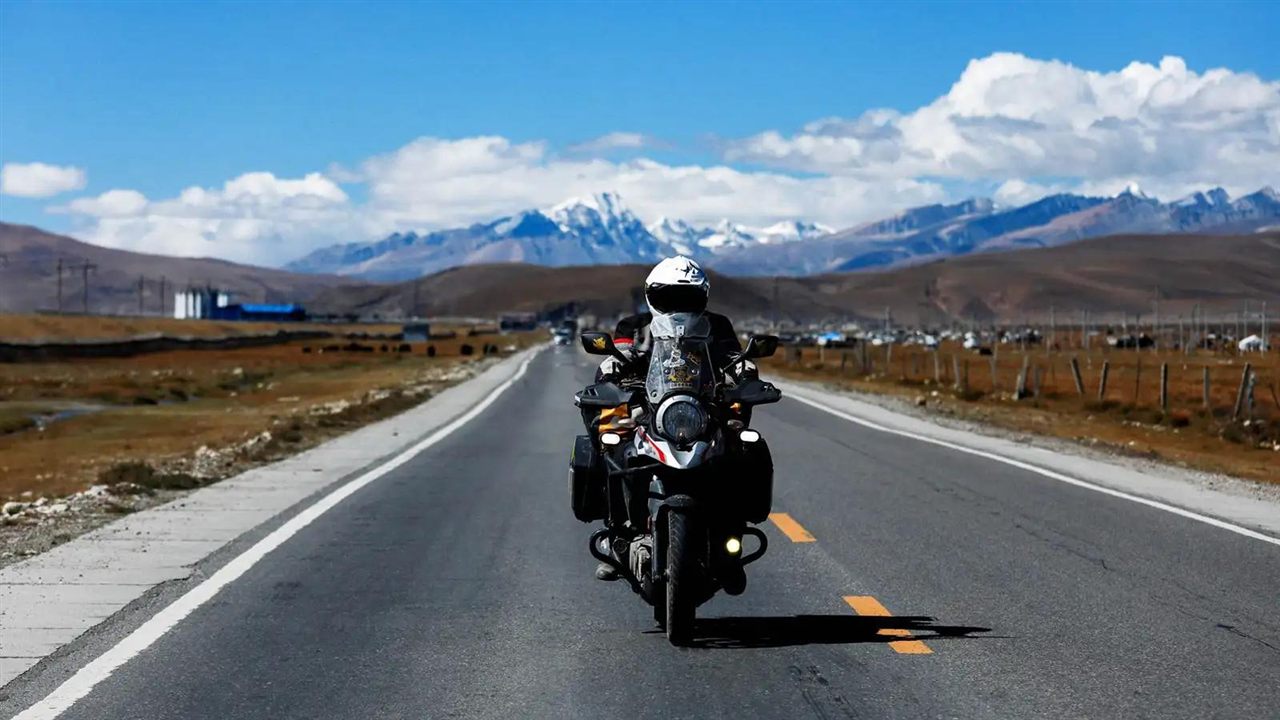
I used this exact partial release process on my 2022 Khorgos to Mohan ride, and it saved me 3,000km of unnecessary backtracking, letting me spend my time riding the epic mountain roads of Yunnan instead of retracing my steps across the Gobi. Get in touch with the team early, plan your route clearly, and you’ll be rolling across China on your own bike without a single unnecessary headache.
Zara
Yunnan Province International Travel Agency (Group) Co., Ltd
WeChat/WhatsApp: +86 13759155671
WeChat ID: qxzj7557
Email: [email protected]